I wrote the following post responding to a post by Cathy Cooper on Debunking Christianity. The response is at: FacePalm of the Day - Debunking Christianity: Christianity-- A Disingenuous Religion Based on Lies and Deception. Instead of responding in comments under her own name, she cowardly responded anonymously as if she too was a Christian. That's deceiving people as best and lying at worst. I thought that it could have been a "Christian" commenting because there are some people calling themselves "Christians" really think the hereasy she was spewing is true. I'm taking the comments that she made on the post for June 17, 2012 and responding to them here. She said she would post the same on her own blog. I hope she does and I think anyone who is interested should compare her post to what she commented on my blog.
Marcus, how sad! Why would I be a sinner to God when I have not committed any sins. I do not, nor have I ever had any dirty sexual thoughts. It is not the case that God made you a dirty sinner.
9 If we confess our sins, he is faithful and just and will forgive us our sins and purify us from all unrighteousness. 10 If we claim we have not sinned, we make him out to be a liar and his word is not in us. - 1 John 1:9-10
I never said that God never made us a sinner. The Bible does not say it.
12 Therefore, just as sin entered the world through one man, and death through sin, and in this way death came to all people, because all sinned — Romans 5:12
There are a lot of other ways to sin that have nothing to do with sex.
You can choose to be sinless. Of course I am better than a adulterer, murderer, or child molester!
Where does the Bible say you can choose to be sinless? No you are not better than an adulterer, murderer, or child molester. No one is. We are all depraved and deserving hell.
Again, Hebrews 10:26-27 makes it CLEAR that once you are saved you are to SIN NO MORE--or you go to the pit of fire.
26 If we deliberately keep on sinning after we have received the knowledge of the truth, no sacrifice for sins is left, 27 but only a fearful expectation of judgment and of raging fire that will consume the enemies of God. - Hebrews 10:26-27
I'm not saying that we can afford to deliberately keep on sinning. I don't deliberately keep on sinning. But you do. The passage does not say what you said it does. And you have misrepresented it, multiple times. Seems you have some repenting to God you should be doing.
Marcus, if you are a Christian and you have been saved, then it is easy to be sinless because your sin nature has been crucified and now you are led by the holy ghost--it is not a process--you are to sin no more!
And what scripture do you use to show that you can be sinless. Cathy, you are an atheist and you seem to think that you can be sinless without God. You can't. Pelagius even argued that we didn't need the crucifixion to be saved. He was wrong. Dead wrong. If we can be sinless, why did Jesus need to come to die to be our propititiation? Pelagius denies the fundamentals of the Gospel of Jesus Christ. You have brought him up multiple.
You need to get saved and stop faking and making excuses for being a sinner. Stop blaming God for for your own lack of faith and weakness! God is not forcing you to sin. God is not forcing you to have dirty bad thoughts, or what ever else you consider a sin unless you want to just make out that everything we do is a sin so you can keep sinning and claim you have too because Jesus needs you to--what a sad and monstrous conception you have of God and Jesus!!
Who said that God is forcing anyone to have dirty thoughts? God is not forcing anyone to sin. Jesus does not need us to do anything. Where are you getting such stupid theology?
12 Blessed is the one who perseveres under trial because, having stood the test, that person will receive the crown of life that the Lord has promised to those who love him.
13 When tempted, no one should say, “God is tempting me.” For God cannot be tempted by evil, nor does he tempt anyone; 14 but each person is tempted when they are dragged away by their own evil desire and enticed. - James 1:12-14
Marcus take responsibility for your own sins and quit blaming God.
Where have I blamed God? We deserve hell. That's not God's fault. You can't repent for your sin, without taking responsibility for them. But you deny that you sin. You seem to know a lot about avoiding responsibility.
Do you think that you can keep sinning because you sinned in the past and for God and Jesus that is ok because you were not perfect in the past--NO--that is not an excuse not to be perfect now, and by perfect I mean sinless.
No I don't think we should keep sinning. You keep misrepresenting Christian Theology. Do you think that that's okay? I don't. You might think that "perfect" equals sinless but that is not what the Greek word says in the passages I pointed out.
For example, lets say you start a new job and at first you make many mistakes. Do you think an employer will think that it is a good excuse for you to keep making the same mistakes years later because, after all you, were not perfect in the beginning--NO! It would not be acceptable and it is not acceptable to God or Jesus for you to keep sinning. Oh yea, I forgot, according to you, "To God we are all sinners."--and, Jesus needs you to keep sinning and you don't won't to let God and Jesus down--right Marcus!
@ Marcus, I meant to say:
Oh yea, I forgot, according to you, "To God we are all sinners."--and, Jesus needs you to keep sinning and you don't WANT to let God and Jesus down--right Marcus!
I never said that it's okay to keep sinning. Jesus does not need us for anything. No, I don't want to let Jesus down. I owe him too much. A Christian would not keep making the same mistakes. We will grow beyond our current state and stop sinning. We will grow and be more like Jesus.
28 And we know that in all things God works for the good of those who love him, who[a] have been called according to his purpose. 29 For those God foreknew he also predestined to be conformed to the image of his Son, that he might be the firstborn among many brothers and sisters. - Romans 8:28-29
The point of my Christian life is to be sinless like Jesus. As I learn more about God, I learn more about just how much sin God has saved me from.
@ Marcus--Yeah Marcus, it's me, and so are all of the "anonymous" comments above me. And thank you for illustrating my point. I will be posting this discussion on my blog post, A is for Atheist and Debunking Christianity to illustrate the absurdity of your way of thinking.
The truly absurd thing is that you don't know anything about God. You even deny that he exists and then pretend you can tell anyone what Christians believe.
The Christian philosopher Pelagius would be rolling over in his grave reading your post and comments, as he believed your way of thinking leads to "moral laxity." I bet you probably don't even know who Pelagius was though....
I know about Pelagius. He was wrong. St. Augustine was right. And Augustine shredded his arguments. Calling Pelagius a "Christian" is like calling David Koresh a "Christian" - not even close. Again Pelagius denied the need for Jesus' atonement as propititiation for sin. Of course he would disagree with me. He disagreed with the whole of the New Testasment - denying the whole point of it. I'm in good company referring to him as a heretic.
Personal blog that will cover my personal interests. I write about Christian Theology and Apologetics, politics, culture, science, and literature.
Showing posts with label Answering Atheists. Show all posts
Sunday, June 17, 2012
Sunday, February 20, 2011
My Common Sense is Tingling - Debunking Christianity: Two Mormon's Just Came To My Door
John Loftus wrote the following
Why doesn't it cross John Loftus' mind to apply his skepticism to his own position? Isn't he just as delusional assuming he's right and all believers are wrong? Yup, it is. He can't prove he's right. He's even gone as far as saying it could be true although there is no good evidence (and I disagree that there isn't good evidence) therefore he does seem to recognize he could be wrong but still refuses to stop calling others delusional when the same should be applied to him.
Debunking Christianity: Two Mormon's Just Came To My Door
Does it just not cross any believer's mind that you're all ridiculous when you claim to know with certainty you're right and all others are wrong? What is it with you people? Are you just that dense? "No," you'll say, "the Mormon's are wrong and we are the only ones right." Then still others will chime in: "I'm right!" "No, I am." "Am not." "Am too." Are not." "Are too." What idiocy! Do you just not realize what this looks like? Get a grip delusional people. Skepticism is the adult attitude. Grow up!
Why doesn't it cross John Loftus' mind to apply his skepticism to his own position? Isn't he just as delusional assuming he's right and all believers are wrong? Yup, it is. He can't prove he's right. He's even gone as far as saying it could be true although there is no good evidence (and I disagree that there isn't good evidence) therefore he does seem to recognize he could be wrong but still refuses to stop calling others delusional when the same should be applied to him.
Debunking Christianity: Two Mormon's Just Came To My Door
Friday, January 21, 2011
Lady Atheist: My Top Ten Grievances Against the Bible
Today, John Loftus linked to one of the blogs of one of his frequent commentators. I don't know this person at all excepts she is a lady and an atheist. She wrote a post on her own blog detailing 10 things she believes discounts the Bible as the Word of God. Surprise, Surprise, none of them are new. However they need to be answered whenever they are brought up. I don't know if she has searched all over for the answers to the objection she has raised and just didn't accept them, or if she doesn't know that there are answers. I don't want offend anyone by assuming that they don't know something they don't. I just can't imagine how someone can come to the conclusions she comes to given the amount of information available. I'm going to re-post her list and respond in italics. If I quote Bible text, it will be in bold text. One thing that really jumped at me was the attitude of LadyAtheist. I see it among many who follow John Loftus' blog. It's the thought that on;y stupid people believe the Bible and if you knew as much as they do you would reject it too. However I find many erroneous presuppositions and things they just don't seem to know. There is a lot of stuff just thrown out in this list as if everyone agrees with how she lays things out.
1. Authority -- NOT -- it was compiled, copied, edited, codified and translated by men. Men with agendas. Over the hundreds of years it was put together there were perhaps hundreds of "hands" tinkering with the unalterable "holy" words.
I've not heard of anyone who truly studies textual criticism claim that we have no idea what the autographs of the New Testaments says outside of Bart Ehrman's popular works. When he is pressed he admits that we know what the New Testament Greek texts say to a high percentage. Some say 97%. I posted a recent post from Dr. Frank Turek's blog in which Dr.Turek points out that Dr Ehrman says different things to different audiences.
You might know know Ryan Anderson who used to comment on Loftus' blog. He said I was wrong and Turek was wrong. He wrote:
2. Inconsistency. Two Adam & Eve stories. Two genealogies for Jesus. Discrepancies amongst the Gospels. Too many inconsistencies to mention, and anyway The Skeptics Annotated Bible did it already.
Two stores would require conflict and contradiction. There is not contradiction between Genesis 1 and Genesis 2. If anyone thinks so, they just throw it out and never backs it up. As for the two genealogies for Jesus, one must remember:
a. Ancient genealogies were not intended to exhaustively list every single human being in the line. There is a goal and an agenda in mind determining who is included and who excluded.
b. They don't match because Matthew's list is to show Jesus had right to the throne of Israel. Luke's is to show that Jesus was related to all of us - from a human point of view.
As for the Skeptics Annotated Bible, I wouldn't put much stock in it without looking at rebuttals and thoughts on the other side. The Skeptic's Annotated Bible: Comments is a good place to start looking at counter arguments. If you are interested in truth why wouldn't you look at counter arguments?
3. God's nature is fickle and inconsistent. He is forgiving or resentful depending on the situation. Sometimes he tinkers in the Affairs of Man and sometimes not. He wants you to follow his rules, but then there's the parable of the prodigal son. He made the world and all the animals, including people, and yet made all sorts of really horrible and stupid things. For instance, why do humans have "tail" bones if we don't have tails? Having broken mine I can tell you I'd rather not have it. If he wanted us to protect the useful parts of our spine in a fall, then why put nerve endings there?
How does having requirements and rules invalidate God's love? This objection is often raised but never validated. As for questioning the design of the universe and our bodies, how do you know it's horrible or not useful to have a "tail bone". As an engineer, I think it's silly to look at someone else's design and criticizing it without knowing what all the specifications are. Something you think is a problem may not be a bug at all but a feature to the design.
4. Miracles. They have no corroboration outside of the Bible. They could have been faked or made up as propaganda or exaggerated over time. If Jesus really did walk on water, how do we know he didn't go there in advance and put a table just under the water line? How do we know there wasn't a sandbar there? And yet he couldn't make a fig tree yield fruit out of season, which would have been a more difficult feat than appearing to be walking on water. Couldn't pop the nails out of his hands and feet and jump off the cross, either.
Excuse me? Haven't it ever occurred to people that the Sea of Galilee would have to be fairly deep in the middle of it? Today it is about 43 meters deep at its deepest. That would have to be a table with long legs. It could not have been a sandbar in the middle of the lake, that close to the surface - in the middle of a storm. By definition, a miracle is not repeatable. A miracle is when God intervenes in nature. Jesus was showing Himself to his disciples as God - only God can walk on water (according to the mindset of the day). As for the Fig remark, of course Jesus could have made the fig tree yield fruit out of season. He was using the fig tree to teach his disciples and his followers today a lesson. Of course Jesus could have come down off that cross. He didn't because he was up there on that cross instead of us. He did it to save us. He paid for our sins with his blood instead of believers paying for own sins with our blood. We can't pay this debt. That is what the Gospel is: God himself paid our debt for us.
5. Revelation. Dreams, voices, visions... they are all reminiscent of what today would be considered symptoms of psychosis. If they're psychotic symptoms now, they very likely would have been then, if they even happened. Primitive people can't be faulted for believing that dreams or migraine auras or psychotic breaks came from some supernatural entity, but we shouldn't believe them now. The opposite is possession by an evil spirit. Also mental illness that was misunderstood by bronze age superstitious people.
So who had a psychotic break in the Bible? The Bible tells us how to get out of our own psychosis that comes from being a sinner. Dreams, Revelation, Voices, and Visions are indeed wrong if there isn't anything outside of what we can perceive beyond the physical world. There is so little that we understand. There is so much of reality that we cannot get outside of our five senses. How can you be so sure that the people of the Bible did not experience what they say they experience? Do you really think that we are so much smarter?
6. Scientific inaccuracy. God could have revealed the truth about the Sun revolving around the Earth, at the very least. All of God's words seem to be consistent with what humans would have known at the time, and not at all revelatory or helpful. Every human culture has a creation story. The Judeo-Christian-Muslim one is just one of many with no claim to accuracy in the least.
Where does the Bible tell us that the sun revolves around the earth or vice versa? I think she made a mistake at this point but I think she understood what her thought was. I'd like to know what makes people think that the Bible tells us about this part. The Church was the one that says the sun went around the earth, not the Bible. It's also not completely true that the Bible reveals no important information. Look at Romans 8:18-21
It's clear that the creation being "subjected to frustration" is referring to its "bondage of decay". We call it the 2nd Law of Thermodynamics - entropy. There are scientists who agree that Genesis is accurate. Just go listen to the lecture from astronomer, Dr. Hugh Ross.
7. Similarity to mythologies in other Middle Eastern religions. Just a little too many similarities to dismiss. Mithras, for example.
Mithras is a bad example. There are no good examples showing what is alleged here. I've been posting and studying this issue for a while now. I've written many posts on this and have linked to other resources regarding this issue. Instead of rehashing all of that material here is a link.
8. Speaking of Paul, Paul's role is a little too important in early Christianity. He never met Jesus, yet he supposedly explains Christianity with authority. He has a completely different message from Jesus' supposed words. A lot of Biblical inconsistency right there. Why should anyone believe anything he said? None of it was of a nature that couldn't have come from psychosis, imagination, or calculation. If he was divinely inspired, he could have set people straight about the Sun, for instance.
Funny how both Muslims and Atheist tend to agree with this point. Should tell you something. The New Testament tells us that the original apostles agreed with him and what did Paul tell us. He tells us to follow Christ. One reason why I believe Paul because nothing he wrote contradicts any of the other other New Testament texts. Why do opponents of Christianity try their best to undermine Paul? Simple. His is a convert's story. He hated Christianity. He turned Christians over to die. What changed him? Here is a man who could have had anything he wanted. He had the access. The education. The intellect. The prestige. He gave it all up for being tortured, persecuted, and having many of his fellow Jews turn their back on him. Why did he adopt the religion he once sought to destroy and systematically lay out what they believed. There is only one answer. He met the risen Christ, just like he said he did. Why try to undermine Paul? Fear.
9. The Book of John. Written much later than the other "gospels" and seems very biased. Coincidentally, "fundamentalist" Christians are fond of quoting John. They like his brand of Christianity so much that their whole theology would crumble if that "book" was taken out of the Bible.
So which is it? Paul or John? Both. No Book bearing John's name or anything of Paul contradict one another. When people make the accusation that John's gospel is so much later, I wonder what they mean by later. By the standards of the rest of ancient texts all the Gospels are close to one another. Christians like the John's gospel because it does so much heavy lifting. However the deity of Christ and everything we need is actually in the other three Gospels too. Here is a post containing a video that carries this idea farther.
10. Disturbing "morality." Over and over there are truly disgusting examples of God or his favorite people doing the most heinous things. The worst of all for me is the central tenet of Christianity: that Christ was sacrificed for the sins of mankind... all of us or some of us, depending on your denomination. This means that a "loving" God practiced scapegoating, punishing his one good child for the sinfulness of all the others. No actual sinning is required to be defined as a bad child, since sinfulness is inherited. Inheriting the "sins of the fathers" is also imoral. Other repugnant practices are portrayed without any negative judgment: war, genocide, polygamy, rape (but only of women!), and slavery to name a few. Then this "loving" God will send everyone who doesn't say they "accept" him to eternal fire and pain. What kind of "love" is that?
Obviously there is a misunderstanding. Actual sinning is already in the equation. Everyone sins in word and deed. Everyone is deserving of hell. That is what is going to happen to everyone without Christ. It's not that everyone is basically good and given the choice are saved by choosing Christ and hell bound if they reject them. We have already rejected him. We deserve hell because of war, genocide, polygamy, slavery, and rape. God isn't the problem. We are are the problem and Jesus is the solution because of love. How is it God's fault you end up in hell because you didn't want to be part of the solution? Read Ezekiel 18 to see how God handles us and our parent's sin. As for Deuteronomy where God says he punishes people for their Father's sin, look at the difference between punishment and death. Of course it's possible to have to pay for things that your parents do. If you gamble away all the money, your children will suffer. If a mother does crack, her babies will be born addicted to drugs. That is the difference being made.
10a. Cannibalism. Yech! You can say it's just metaphorical and wine doesn't really turn into blood, but still, it's a repulsive practice and extremely barbaric. Early Christians already had the practice of baptism for the cleansing of sins, so they really didn't have to have eat their god in a repulsive ritual meal. That practice is also waaaay too similar to that of other religions to be taken seriously as a true historical tale.
No where does the Bible imply that communion is any more than symbolic. People who think otherwise don't understand what Jesus was telling us to do. It's not the same as other religions at all.
I could probably come up with more but these are the big ones for me. Much ink has been spilt explaining the problems in the Bible. People get Ph.D.s in something aptly called "apologetics." They call the Book "god-breathed" or inspired rather than taking it as the literal gods-ear-to-man's-pen truth, because they know deep down it's really a bunch of ridiculous nonsense. To believe in this book is to believe in a God that's mercurial, vengeful, narcissistic, and possibly insane.
That is a very big indictment of God that people have fallen for. It also pre-assumes that God is like us. If one of us said the things that God says then we would be vengeful, narcissistic, and insane because we are not omnipotent, omnipresent, or omniscient. However God is and has made everything. Like it or not, and you probably don't, but God has every right to demand of us whatever he wants.
Or... you could believe that the Bible is just like all the other holy books of all the other religions, just a bunch of fairy tales with supernatural buddies and/or bullies as the main characters.
Sure would like some substantiation for this.
Some of my smaller grievances don't get much attention, but for what they're worth:
Lady Atheist: My Top Ten Grievances Against the Bible
1. Authority -- NOT -- it was compiled, copied, edited, codified and translated by men. Men with agendas. Over the hundreds of years it was put together there were perhaps hundreds of "hands" tinkering with the unalterable "holy" words.
I've not heard of anyone who truly studies textual criticism claim that we have no idea what the autographs of the New Testaments says outside of Bart Ehrman's popular works. When he is pressed he admits that we know what the New Testament Greek texts say to a high percentage. Some say 97%. I posted a recent post from Dr. Frank Turek's blog in which Dr.Turek points out that Dr Ehrman says different things to different audiences.
You might know know Ryan Anderson who used to comment on Loftus' blog. He said I was wrong and Turek was wrong. He wrote:
I think where you guys are getting mixed up is the word "reliable". I don't know of many people, myself included, who would argue that the gospels are unreliable in the technical sense, i.e. what we have today is reasonably close to the originals, i.e. Matthew in the NIV is probably very close to the original gospel of Matthew. But in misquoting Jesus, that was not the point at all, in general (because I doubt you've read it), he's saying who knows what Jesus actually said because the completely reliable Matthew and the completely reliable John do differ in very important ways. So, it's another question entirely if the originals "reliably" depict real events.So Ryan Anderson, an Atheist, agrees that the Gospels are reasonably close to the originals. Dr. Bart Ehrman, "a happy agnostics", agrees. They disagree with Christians as to whether or not you should believe the text, but we should be able to agree on what the text says. This flies against what many atheists argue.
2. Inconsistency. Two Adam & Eve stories. Two genealogies for Jesus. Discrepancies amongst the Gospels. Too many inconsistencies to mention, and anyway The Skeptics Annotated Bible did it already.
Two stores would require conflict and contradiction. There is not contradiction between Genesis 1 and Genesis 2. If anyone thinks so, they just throw it out and never backs it up. As for the two genealogies for Jesus, one must remember:
a. Ancient genealogies were not intended to exhaustively list every single human being in the line. There is a goal and an agenda in mind determining who is included and who excluded.
b. They don't match because Matthew's list is to show Jesus had right to the throne of Israel. Luke's is to show that Jesus was related to all of us - from a human point of view.
As for the Skeptics Annotated Bible, I wouldn't put much stock in it without looking at rebuttals and thoughts on the other side. The Skeptic's Annotated Bible: Comments is a good place to start looking at counter arguments. If you are interested in truth why wouldn't you look at counter arguments?
3. God's nature is fickle and inconsistent. He is forgiving or resentful depending on the situation. Sometimes he tinkers in the Affairs of Man and sometimes not. He wants you to follow his rules, but then there's the parable of the prodigal son. He made the world and all the animals, including people, and yet made all sorts of really horrible and stupid things. For instance, why do humans have "tail" bones if we don't have tails? Having broken mine I can tell you I'd rather not have it. If he wanted us to protect the useful parts of our spine in a fall, then why put nerve endings there?
How does having requirements and rules invalidate God's love? This objection is often raised but never validated. As for questioning the design of the universe and our bodies, how do you know it's horrible or not useful to have a "tail bone". As an engineer, I think it's silly to look at someone else's design and criticizing it without knowing what all the specifications are. Something you think is a problem may not be a bug at all but a feature to the design.
4. Miracles. They have no corroboration outside of the Bible. They could have been faked or made up as propaganda or exaggerated over time. If Jesus really did walk on water, how do we know he didn't go there in advance and put a table just under the water line? How do we know there wasn't a sandbar there? And yet he couldn't make a fig tree yield fruit out of season, which would have been a more difficult feat than appearing to be walking on water. Couldn't pop the nails out of his hands and feet and jump off the cross, either.
Excuse me? Haven't it ever occurred to people that the Sea of Galilee would have to be fairly deep in the middle of it? Today it is about 43 meters deep at its deepest. That would have to be a table with long legs. It could not have been a sandbar in the middle of the lake, that close to the surface - in the middle of a storm. By definition, a miracle is not repeatable. A miracle is when God intervenes in nature. Jesus was showing Himself to his disciples as God - only God can walk on water (according to the mindset of the day). As for the Fig remark, of course Jesus could have made the fig tree yield fruit out of season. He was using the fig tree to teach his disciples and his followers today a lesson. Of course Jesus could have come down off that cross. He didn't because he was up there on that cross instead of us. He did it to save us. He paid for our sins with his blood instead of believers paying for own sins with our blood. We can't pay this debt. That is what the Gospel is: God himself paid our debt for us.
5. Revelation. Dreams, voices, visions... they are all reminiscent of what today would be considered symptoms of psychosis. If they're psychotic symptoms now, they very likely would have been then, if they even happened. Primitive people can't be faulted for believing that dreams or migraine auras or psychotic breaks came from some supernatural entity, but we shouldn't believe them now. The opposite is possession by an evil spirit. Also mental illness that was misunderstood by bronze age superstitious people.
So who had a psychotic break in the Bible? The Bible tells us how to get out of our own psychosis that comes from being a sinner. Dreams, Revelation, Voices, and Visions are indeed wrong if there isn't anything outside of what we can perceive beyond the physical world. There is so little that we understand. There is so much of reality that we cannot get outside of our five senses. How can you be so sure that the people of the Bible did not experience what they say they experience? Do you really think that we are so much smarter?
6. Scientific inaccuracy. God could have revealed the truth about the Sun revolving around the Earth, at the very least. All of God's words seem to be consistent with what humans would have known at the time, and not at all revelatory or helpful. Every human culture has a creation story. The Judeo-Christian-Muslim one is just one of many with no claim to accuracy in the least.
Where does the Bible tell us that the sun revolves around the earth or vice versa? I think she made a mistake at this point but I think she understood what her thought was. I'd like to know what makes people think that the Bible tells us about this part. The Church was the one that says the sun went around the earth, not the Bible. It's also not completely true that the Bible reveals no important information. Look at Romans 8:18-21
18 I consider that our present sufferings are not worth comparing with the glory that will be revealed in us. 19 For the creation waits in eager expectation for the children of God to be revealed. 20 For the creation was subjected to frustration, not by its own choice, but by the will of the one who subjected it, in hope 21 that the creation itself will be liberated from its bondage to decay and brought into the freedom and glory of the children of God.
It's clear that the creation being "subjected to frustration" is referring to its "bondage of decay". We call it the 2nd Law of Thermodynamics - entropy. There are scientists who agree that Genesis is accurate. Just go listen to the lecture from astronomer, Dr. Hugh Ross.
7. Similarity to mythologies in other Middle Eastern religions. Just a little too many similarities to dismiss. Mithras, for example.
Mithras is a bad example. There are no good examples showing what is alleged here. I've been posting and studying this issue for a while now. I've written many posts on this and have linked to other resources regarding this issue. Instead of rehashing all of that material here is a link.
8. Speaking of Paul, Paul's role is a little too important in early Christianity. He never met Jesus, yet he supposedly explains Christianity with authority. He has a completely different message from Jesus' supposed words. A lot of Biblical inconsistency right there. Why should anyone believe anything he said? None of it was of a nature that couldn't have come from psychosis, imagination, or calculation. If he was divinely inspired, he could have set people straight about the Sun, for instance.
Funny how both Muslims and Atheist tend to agree with this point. Should tell you something. The New Testament tells us that the original apostles agreed with him and what did Paul tell us. He tells us to follow Christ. One reason why I believe Paul because nothing he wrote contradicts any of the other other New Testament texts. Why do opponents of Christianity try their best to undermine Paul? Simple. His is a convert's story. He hated Christianity. He turned Christians over to die. What changed him? Here is a man who could have had anything he wanted. He had the access. The education. The intellect. The prestige. He gave it all up for being tortured, persecuted, and having many of his fellow Jews turn their back on him. Why did he adopt the religion he once sought to destroy and systematically lay out what they believed. There is only one answer. He met the risen Christ, just like he said he did. Why try to undermine Paul? Fear.
9. The Book of John. Written much later than the other "gospels" and seems very biased. Coincidentally, "fundamentalist" Christians are fond of quoting John. They like his brand of Christianity so much that their whole theology would crumble if that "book" was taken out of the Bible.
So which is it? Paul or John? Both. No Book bearing John's name or anything of Paul contradict one another. When people make the accusation that John's gospel is so much later, I wonder what they mean by later. By the standards of the rest of ancient texts all the Gospels are close to one another. Christians like the John's gospel because it does so much heavy lifting. However the deity of Christ and everything we need is actually in the other three Gospels too. Here is a post containing a video that carries this idea farther.
10. Disturbing "morality." Over and over there are truly disgusting examples of God or his favorite people doing the most heinous things. The worst of all for me is the central tenet of Christianity: that Christ was sacrificed for the sins of mankind... all of us or some of us, depending on your denomination. This means that a "loving" God practiced scapegoating, punishing his one good child for the sinfulness of all the others. No actual sinning is required to be defined as a bad child, since sinfulness is inherited. Inheriting the "sins of the fathers" is also imoral. Other repugnant practices are portrayed without any negative judgment: war, genocide, polygamy, rape (but only of women!), and slavery to name a few. Then this "loving" God will send everyone who doesn't say they "accept" him to eternal fire and pain. What kind of "love" is that?
Obviously there is a misunderstanding. Actual sinning is already in the equation. Everyone sins in word and deed. Everyone is deserving of hell. That is what is going to happen to everyone without Christ. It's not that everyone is basically good and given the choice are saved by choosing Christ and hell bound if they reject them. We have already rejected him. We deserve hell because of war, genocide, polygamy, slavery, and rape. God isn't the problem. We are are the problem and Jesus is the solution because of love. How is it God's fault you end up in hell because you didn't want to be part of the solution? Read Ezekiel 18 to see how God handles us and our parent's sin. As for Deuteronomy where God says he punishes people for their Father's sin, look at the difference between punishment and death. Of course it's possible to have to pay for things that your parents do. If you gamble away all the money, your children will suffer. If a mother does crack, her babies will be born addicted to drugs. That is the difference being made.
10a. Cannibalism. Yech! You can say it's just metaphorical and wine doesn't really turn into blood, but still, it's a repulsive practice and extremely barbaric. Early Christians already had the practice of baptism for the cleansing of sins, so they really didn't have to have eat their god in a repulsive ritual meal. That practice is also waaaay too similar to that of other religions to be taken seriously as a true historical tale.
No where does the Bible imply that communion is any more than symbolic. People who think otherwise don't understand what Jesus was telling us to do. It's not the same as other religions at all.
I could probably come up with more but these are the big ones for me. Much ink has been spilt explaining the problems in the Bible. People get Ph.D.s in something aptly called "apologetics." They call the Book "god-breathed" or inspired rather than taking it as the literal gods-ear-to-man's-pen truth, because they know deep down it's really a bunch of ridiculous nonsense. To believe in this book is to believe in a God that's mercurial, vengeful, narcissistic, and possibly insane.
That is a very big indictment of God that people have fallen for. It also pre-assumes that God is like us. If one of us said the things that God says then we would be vengeful, narcissistic, and insane because we are not omnipotent, omnipresent, or omniscient. However God is and has made everything. Like it or not, and you probably don't, but God has every right to demand of us whatever he wants.
Or... you could believe that the Bible is just like all the other holy books of all the other religions, just a bunch of fairy tales with supernatural buddies and/or bullies as the main characters.
Sure would like some substantiation for this.
Some of my smaller grievances don't get much attention, but for what they're worth:
- If all of creation was 'good' then wouldn't Adam and Eve have been exiled to a pretty nice place?
- Why is it an "abomination" for men to have sex with men but not for women to have sex with women? Isn't that also homosexuality?
- Why was there no judgment against Lot's daughters after they got him drunk then got pregnant by him? His wife was turned into a pillar of salt just for looking over her shoulder at her former home. That seems a little harsh.
- If Jesus' conception was immaculate, then why does he have a genealogy traced through Joseph's side of the family?
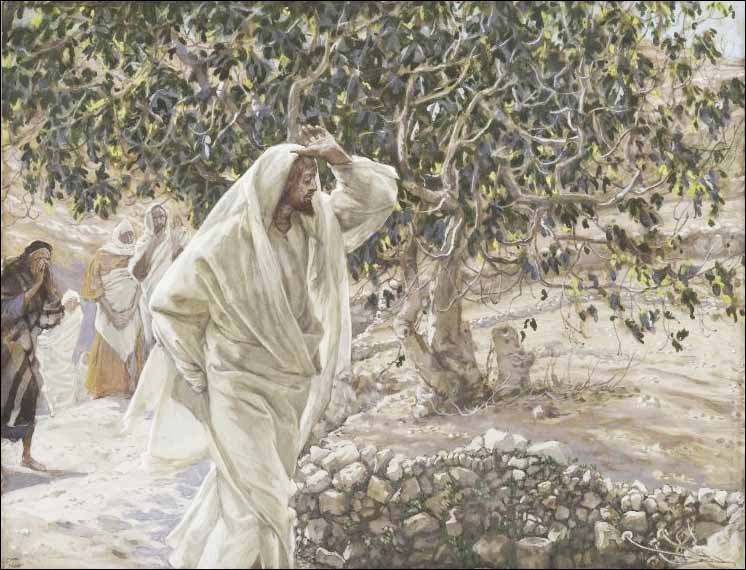
- And the fig tree, wtf? Why doesn't Jesus regret his temper tantrum if he's such a great guy? Come to think of it, why did he smite the tree in the first place? Is this some kind of metaphor that a woman who won't have sex during her off-cycle will be smote?
Lady Atheist: My Top Ten Grievances Against the Bible
Subscribe to:
Posts (Atom)