Showing posts with label Superheroes. Show all posts

Sunday, December 1, 2024

Top 100 Superheroes of All Time

Summary

A countdown of the top 100 superheroes highlights their powers, storylines, and popularity, showcasing diverse characters from comics.

Highlights
🌂 Umbrella Academy: A dysfunctional family of superheroes navigating time and identity.
💥 Peacemaker: A controversial hero enforcing his own brand of justice through extreme measures.
🐴 Valkyrie: A powerful warrior from Asgard known for her combat skills and leadership.
❄️ Iceman: A young mutant who balances his ice powers with his LGBTQIA+ identity.
🦸‍♀️ Jessica Jones: A street-smart detective with super strength, tackling personal demons and crime.
🎭 Deadpool: A humorous anti-hero who breaks the fourth wall while delivering chaotic justice.
🦇 Batman: The iconic Dark Knight representing the pinnacle of heroism with a complex moral code.
Key Insights
🌟 Diverse Origins: Superheroes like the Umbrella Academy and Peacemaker show how characters can emerge from unconventional backgrounds, blending humor with serious themes.
⚔️ Moral Complexity: Characters like Peacemaker and Punisher illustrate the blurred lines of heroism, showcasing that not all heroes operate within a strict moral framework.
🦸‍♂️ Empowerment Through Identity: Heroes like Iceman and Jessica Jones highlight the importance of self-acceptance and representation, resonating with diverse audiences.
🌪️ Power and Responsibility: Spider-Man and Superman embody the classic hero’s journey, emphasizing that great power comes with the responsibility to protect others.
💔 Family Dynamics: Teams like the Umbrella Academy and Doom Patrol explore themes of family and belonging, showcasing that heroism often stems from personal relationships.
🕶️ Cultural Impact: Icons like Wonder Woman and Black Panther have transcended their comic roots, becoming symbols of empowerment and representation in broader society.
🦸 Enduring Popularity: The timeless appeal of characters like Batman and Marvel’s first family, the Fantastic Four, shows that well-crafted heroes resonate across generations.

Sunday, June 16, 2013

Is Man of Steel all about Jesus? Warner Bros hopes Christians think so

I saw Man of Steel last Friday and all I can still say, even after several hours to process it, is: WOW!  The movie is at least the best live-action depiction of Superman ever released! It is one of the best movies based on a comic book that has ever been put to screen. Not trying to spoil any of it for those who have not seen it, but I saw an article about the connection to Christianity in the movie.

Warner Bros. paid a theologian, Pepperdine University's Craig Detwiler, to prepare a nine-page set of "sermon notes" for ministers who want to preach about Man of Steel, titeld "Jesus: The Original Superhero." The sermon notes ask, "How might the story of Superman awaken our passion for the greatest hero who ever lived and died and rose again?" And then the sermon includes stuff about the themes and ideas of Man of Steel, after which the pastor is encouraged to say, "Let’s take a look at the trailer for Man of Steel." 

The comments made on the article are also interesting. The issues here are very central. Is a movie like this just symbolizing Jesus, or are the artists that created this movie just using themes and concepts familiar to western civilization? Does art in this way bolster the message of Christianity or in some way cheapens it? To be clear, the makers of Man of Steel or Superman in general are not in anyway trying to inspire people to be come Christians like C.S. Lewis intended through his work in Chronicle of Narnia. Given the other films made by Zach Snyder it makes sense that Man of Steel would have some Christian iconography. Big surprise. Even the earlier Superman films included many allusion to "Savior" and "Messiah". It kind of goes with the character.

Let's not forget that Superman's first creators were young Jewish men who were inspired by Samson and Moses - which are according to Theology archetypes and predecessors who foreshadowed Jesus Christ. As the character grew through the years, Superman became more Christ centered.  I won't give examples from the movie to avoid spoilers but there were at least 4 that I thought that were very blatant examples of making Superman look like Jesus.

I would avoid reading the following article until after you see the movie, but it is good to bear in mind that using Christian iconography and concepts to point an audience to Jesus Christ is a good thing. There is a danger of actually trying to equate Jesus with Superman. That's a problem. I don't think the film-makers do that and as a rule the comics books and cartoons don't. Superman clearly does not consider himself above humanity or better than humanity and certainly not a god and not divine. He does not consider himself worthy to determine who lives and who dies so he tries to save and help everyone. This isn't bad but a good and moral ethic to live by. It is one of the tent poles for Christian ethics.

Is Man of Steel all about Jesus? Warner Bros hopes Christians think so

I'd be remiss if I didn't point out two of the darker sides of this. Some folks make a serious error (sometimes tongue-in-cheek) in trying to argue that Superman is better than Jesus Christ and that like Superman Jesus is fictional. Really dumb, but there you go. I wrote an article about this while ago. Read it here: 10 Reasons Why there is No Comparision Between Jesus and Superman. And my brother -in-Christ, whom I really respect and if you haven't read his work you should,  posted a video about the occult symbolism in Man of Steel.  If you look our culture is steeped in it and many of our movies have them in them. You should be aware. Check out his video.


Saturday, October 20, 2012

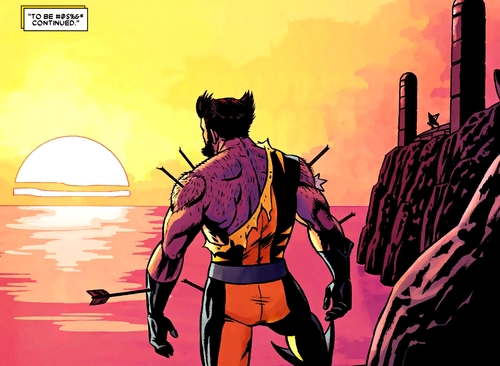
Who is Wolverine? - A WIP Just Like You

This is why I like the superhero genre: the characters. Take Wolverine for example. Wolverine is an amazing character that has been around for almost 40 years to become one of the most popular characters...ever. It has been said to best understand a person you should look at what people say about him. I found these panels on Tumblr today. We get several of Wolverine's colleagues and friends attempt to sum up who Wolverine is. It is real interesting.


One thing I notice is that what everyone says about Wolverine depend on their relationship with him. I think the writer of this not just nails Wolverine's personality but the personalities of all the other characters. Based on what I know about his interactions with each of them, I'd expect each of them to say what they said about Wolverine. learn not a lot about who Wolverine is to each of these characters but we also see who each of these speakers are. This demonstrates that when we judge anyone our thoughts are influenced by who we are. It reminds me to be careful and remember that not one of us can truly be fully described or known to each other. When it really comes down to it...we are all "...works in progress".

Who is Wolverine? - Super Heroes Behaving Badly

Friday, June 8, 2012

FacePalm of the Day - Debunking Christianity: King David and Jesus: The Bible’s Mythic Super Heroes

McCall posted the following paragraph. 

A decade ago, I read Steven McKenzie’s King David: A Biography(Oxford University Press, 2002). What I soon realized was that the Bible creates propaganda to sell faith in its God, especially though famous characters created to promote belief in Israelite monotheism; be they Abraham, Moses, David or Jesus. These embellished Super Heroes function like our comic book (now in movies) Super Heroes such as Superman, Batman and Spiderman battling the forces of evil for a world of good. But these idealized figures simply function to serve our fantasies in a world where reality is fraught with suffering and injustice


Debunking Christianity: King David and Jesus: The Bible’s Mythic Super Heroes


It is not a new argument. I have posted and talked about this subject a lot on this blog. Instead of dredging them up, let's instead look at how Chris Sims answered this question.


Chris Sims is a blogger, comics writer, and simply brilliant and he happens to be an atheist. I do not agree with everything he says and writes but he is spot-on here.

The idea of Superman as a Christ figure is the herpes of pop culture criticism. No matter how hard you try to get rid of it, it just won't go away.

It's a popular interpretation, but the thing is, it just doesn't work. As I understand it, the entire deal with Jesus in a nutshell is that he was the Son of God, divinity made flesh who was sent to Earth in order to instruct us as a teacher and then sacrifice His life, redeeming the whole of humanity for its sins through His suffering on both a literal and metaphorical level. There's a little more to it, of course, but for more details, you can check out around 90% of the rest of Western art and literature.

Superman's story, on the other hand, has nothing to do with any of that. The core of his character isn't about sacrifice or redemption at all, it's about having power and choosing to use it for the benefit of everyone rather than just using it for yourself. The comparison seems to be entirely based on the idea that Superman's a really nice guy who came from somewhere up in the sky. That's about where the similarities end.

Jor-El is not Space God. He doesn't send Superman to Earth for our benefit, he sends Superman to Earth because it's the one place in the universe where his son can survive and thrive. He's protecting him, not sacrificing him, and humanity's need for someone to fight robots and Brainiacs doesn't even cross his mind. And, to paraphrase Grant Morrison, I'm pretty sure Heaven didn't explode shortly after Jesus was launched down to Bethlehem.

Superman's morality isn't divine or innate, either. It's not something that he was born with, and it's not something that sets him apart from humanity. Morally speaking, anyone can be as Good as Superman; the only advantage he has is that he was brought up by a couple of really nice farmers. He's an aspirational figure rather than a redemptive one, who shows us that we all have the ability to use our talents for good, we just have to choose to do so.


Similar arguments can be made showing that there is no more than a superficial argument that can be made equating anyone with the Bible and pagan myths or people in the Bible and modern fictional characters.