
Showing posts with label Old Testament. Show all posts
Showing posts with label Old Testament. Show all posts
Saturday, April 4, 2026


Sunday, May 15, 2022
Saturday, July 24, 2021
Saturday, October 22, 2016
Wednesday, November 12, 2014
Monday, October 27, 2014
The 613 Commandments

classification by Maimonides in the 12th century. He lists 613 laws
along with their references in the Torah.
You
can tell which commands are civil, ceremonial, moral, and some that fit
under more than one heading and some don't belong to either category.
If you need some more clarity about which commands belong to what
category, we can discuss further. As for which commands are binding on
us today - they are the commands that we can follow. I'm perfectly
willing to discuss this further if more questions are being asked. I
would further say that one must remember that Jesus perfectly fulfilled
the laws and we haven't and we can't. That's not saying that the the Law
is wrong - we are. Please re-read Galatians 3:15-22 because Paul
explains what the use of the law is and how it fits in our lives today.
The 613 Commandments
Monday, February 17, 2014
Truthbomb Apologetics: How We Got the Bible: Ancient Versions: The Old Testament
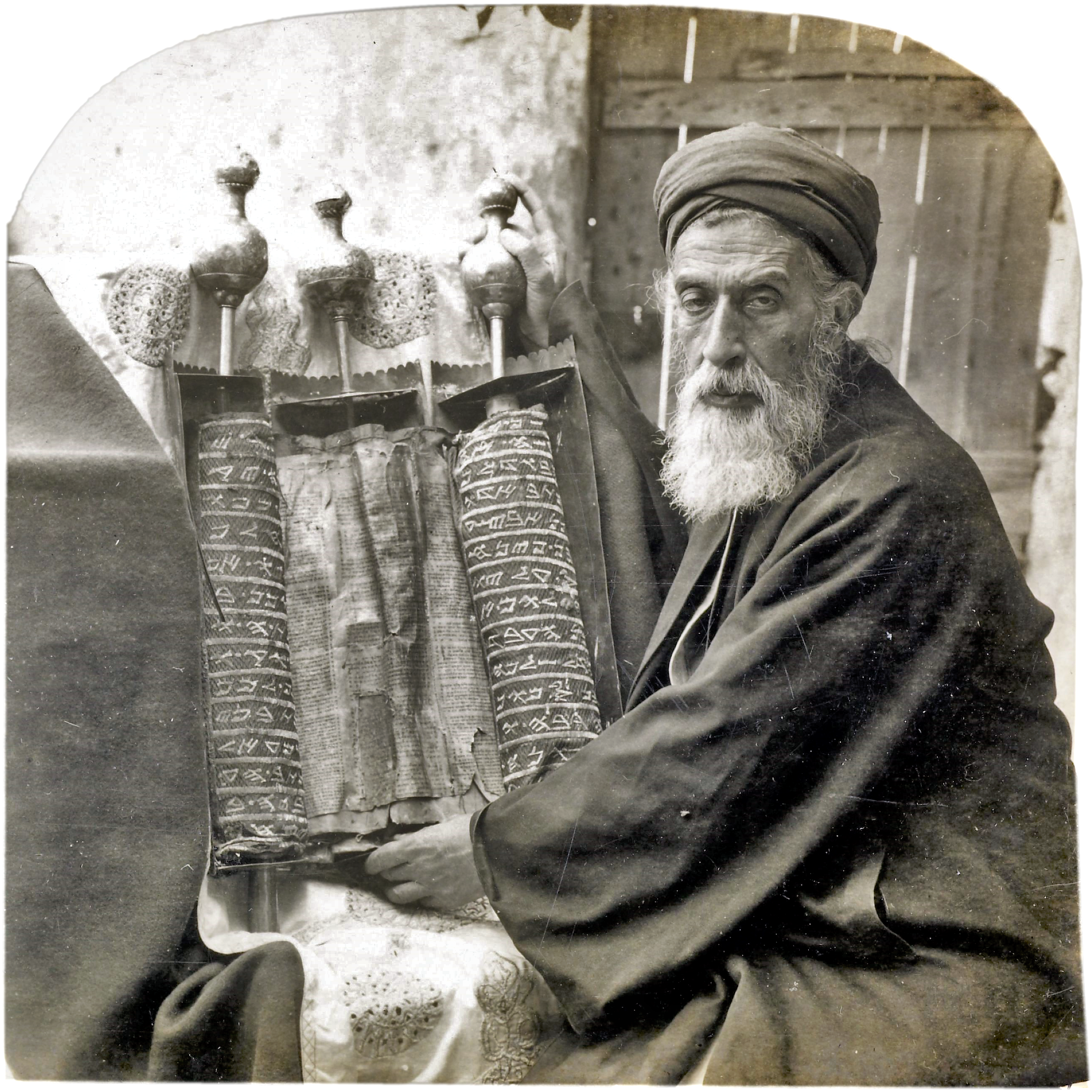
Truthbomb Apologetics: How We Got the Bible: Ancient Versions: The Old Testament
Monday, June 10, 2013
Dr. Claude Mariottini - Professor of Old Testament: Cain and His Offering

Dr. Claude Mariottini - Professor of Old Testament: Cain and His Offering

Friday, January 18, 2013
Old Testament & the New Atheists: Peter J. Williams - Apologetics 315

Old Testament & the New Atheists: Peter J. Williams - Apologetics 315

Sunday, December 16, 2012
Jesus - The Ultimate Christmas Gift - Director's Cut
The following post is a kind of "director's cut" of a sermon I had the privilege of preaching earlier today. It's not a verbatim transcript of what I said, but it is a kind of a write up, followed by the power point I used.
 Good afternoon, Evangelist Temple.
Merry Christmas! We say that
“Jesus is the Reason for the Season”. The truth is that Jesus is the
reason for everything. What we want to do today is to scratch the surface of
what that means. Everything points to Jesus including mathematics,
science, and history.
Given that Christmas is just in a couple of days, let’s take a closer look at Jesus. Starting at Colossians 1:15-20
Jesus is the Son. He created all things and put all things in their place. Everything that makes God what God is is in Him. It is through Jesus, that we are redeemed from sin and death.
I’d like to spend some time looking at how History and science come together in Christ. And they come together in prophecy. The Old Testament points us to Jesus. The Old Testament scriptures are full of prophecies that points to Jesus Christ. There are over 300 of them.
Here are 8 of them
http://www.bibleprobe.com/365messianicprophecies.htm
http://www.goodnewsdispatch.org/math.html
Think of how probable for one human being to just fulfill one of them let a lone all of them in a single life time. Any one person that would fit that many prophecies must be the messiah. It’s like a fingerprint. No one before Jesus or after Jesus would be able to say this.

When you are asking about the odds of something, a visual aid could help. What we are saying is that one person fulfilling those eight prophecies is like the following:
Filling the state of Texas:

With Quarters

We could use all kinds of examples of how God has acted throughout history but I don’t have enough time, so instead we are going to focus on one particular example. Let’s put this in a larger historical context with cultural relevance.

It was the story of King Xerxes of Persia (the same King in the story of Esther I the Bible) invasion of Greece. The movie is fictionalized and stylized, but it is based on true events. It even contained some direct language taken from the historical account. The story of King Leonidas - when few stood against many - is dated to 486 BC. Although the Greeks lost that battle (sorry for the spoiler) they set the stage for a larger Greek victory not long after that. If you want to see a good documentary on what happened and why and how history is really different than the movie I’d recommend watching the History Channel’s Battle of Thermopylae - Last stand of Leonidas & the 300 Spartans
It is available on YouTube. Anyone who wants to know more please let me know I’ll make sure you get the link.

 What I’m saying is that Jesus birth, death, and resurrection
was not a coincidence. It wasn’t an
accident. Goad wasn’t just crossing His
fingers hoping that all of this would work out. God sovereignly put everything
and everyone in their place according to what HE wants to do. Fortunately, He wanted to save us. Jesus came to do exactly that. He died for us
in our place to atone for the sins of His people. If you confess with your
mouth and believe in your heart, you are one of God’s people and your sins are
not counted against you. This is the point of Christmas. Jesus is the ultimate Gift – at the right
place and at the right time.
At this point, I really should give some attention to potential objections and why they offer nothing against the point that God worked through History and we can see that in the fact that Jesus fulfilled prophecies that were given centuries before his birth.
Objection 1: The messianic prophecies are so vague they could describe anyone. Anyone telling you this does not know enough about what the prophecies are. For example, the prophecy that the messiah would be betrayed by someone close to him, the place the messiah would be born, and many other details make it impossible to claim that the prophecies are vague.
Objection 2: The prophecies were not really written by the men tradition says they were. Some claim that Isaiah's prophecies were not really written by the prophet Isaiah or during the time the Bible says that Isaiah lived. They claim that the majority of scholarship backs up their conclusion. Don't buy it. Not in the slightest. Most people who come to this conclusion think that because they are looking for a reason not to believe that. Even if you grant that them the point ( and I would not) the entire Hebrew Bible predates Jesus by almost 400 years. So the point is moot. The prophecies and their fulfillment still evidence that God is behind History.
Objection 3: Jesus purposely fulfilled the messianic prophecies so that he could take credit for being the messiah. Not much of an objection. Think about it. It's assuming that Jesus prearranged not only his being baptized by John the Baptist but also that he pre-arranged his birth in Bethlehem. Why stop there? That means if he could do that then he could also arrange a virgin birth. If Jesus did that is that a problem if you are Christian? Nope. That is exactly what we are saying - Jesus did arrange it - all. But of course, wouldn't he have to be God in order to do all of that? Duh! Exactly what we are saying. Making this objection actually concedes the argument. Thanks.
There are two last things I’d like to cover today.
Jesus is that gift. God’s Word, love, and forgiveness personified. I want to end with a video that Pastor Stewart showed us 4 years ago. We need to remember and celebrate Christ – all year round. He just wasn’t a baby in a manger. Jesus is far more. Let’s end with Dr S.M. Lockridge asking the fundamental question: “Do you know Him?” And then he answers the question by telling you who Jesus is: “That’s My King”.
Here is a video of the slides
Here are slides served from slideshare

On December 14 we just saw that a man walked into an elementary school
and shot killed over 20 children and 6 adults! We have people shocked and
amazed. The question on people’s minds: “How could God allow such an evil thing
to take place? Why were some people spared and some people were not?” Some
conclude that there couldn’t be a God because there is no good reason for such
a thing to happen and blame God. The reason why the subject we are talking
about today is so important is that you’ve got to wonder over the course of
history how many such inexplicable things have happened. Such things in your
own lives have happen that left you scratching your head – with differing
levels of despair. Just like God has guided everything for Jesus to come at
just the right time to save us, God directs everything even when we don’t
understand where things are going and why. This is the good news that Christmas
rests on. God is in control and He loves you
- and you can hold on that even when the unthinkable happens.
Given that Christmas is just in a couple of days, let’s take a closer look at Jesus. Starting at Colossians 1:15-20
15 The Son is the image of the invisible God, the firstborn over all creation. 16 For in him all things were created: things in heaven and on earth, visible and invisible, whether thrones or powers or rulers or authorities; all things have been created through him and for him. 17 He is before all things, and in him all things hold together. 18 And he is the head of the body, the church; he is the beginning and the firstborn from among the dead, so that in everything he might have the supremacy. 19 For God was pleased to have all his fullness dwell in him, 20 and through him to reconcile to himself all things, whether things on earth or things in heaven, by making peace through his blood, shed on the cross.
Jesus is the Son. He created all things and put all things in their place. Everything that makes God what God is is in Him. It is through Jesus, that we are redeemed from sin and death.
I’d like to spend some time looking at how History and science come together in Christ. And they come together in prophecy. The Old Testament points us to Jesus. The Old Testament scriptures are full of prophecies that points to Jesus Christ. There are over 300 of them.
Here are 8 of them
Old
Testament Prophecy
|
New
Testament Fulfillment
|
Probability
|
Christ
to be born in Bethlehem
(Micah 5:2) |
And
Herod asked where Christ had been born ... they answered Bethlehem
(Matt 2:4-6) |
2.8
x 105 or 1 in 280,000
|
Forerunner
of Christ
(Malachi 3:1) |
1
x 103 or 1 in 1,000
|
|
Christ
to enter Jerusalem riding on a donkey
(Zech 9:9) |
1
x 102 or 1 in 100
|
|
1
x 103 or 1 in 1,000
|
||
Judas
sold out Jesus for 30 pieces of silver
(Matt 26:15) |
1
x 103 or 1 in 1,000
|
|
1
x 105 or 1 in 100,000
|
||
Although
innocent, Christ kept silent when on trial
(Isaiah 53:7) |
1
x 103 or 1 in 1,000
|
|
Jesus
was crucified
(John 19:17, 18) |
1
x 104 or 1 in 10,000
|
http://www.bibleprobe.com/365messianicprophecies.htm
http://www.goodnewsdispatch.org/math.html
Think of how probable for one human being to just fulfill one of them let a lone all of them in a single life time. Any one person that would fit that many prophecies must be the messiah. It’s like a fingerprint. No one before Jesus or after Jesus would be able to say this.
No one else could have done this and nor would anyone ever
be able to fulfill these.
Paul wrote:6 You see, at just the right time, when we were still powerless, Christ died for the ungodly. 7 Very rarely will anyone die for a righteous person, though for a good person someone might possibly dare to die. 8 But God demonstrates his own love for us in this: While we were still sinners, Christ died for us. - Romans 5:6-8

So let’s look at
just how probable it is for a single person to fulfill just eight of these
prophecies. The chances of a single person fulfilling eight of these prophecies
are 1 in 1 x 10 to the 28th power. Here is a little bit of
math and science. 1 times 10 to the 28th means the number 1 with 28
zeroes after it. That is huge. That is more people who have ever lived on
earth. Our best estimates are that there are just under 8 Billion people on
earth right now and that there are more people alive now than who have ever lived.
Put it into perspective: The more digits that number has, the bigger the number
is. 1 Billion means 1 with 9 zeroes. 9 is a lot smaller than 28. If you think
just fulfilling 8 of these is such a low probability, what about 16 of them?
32? 300? This is real quantifiable evidence that Jesus is who Jesus said He
is.
When you are asking about the odds of something, a visual aid could help. What we are saying is that one person fulfilling those eight prophecies is like the following:
Filling the state of Texas:

With Quarters
1 x 1028 quarters would fill Texas to height of 2 ft, marking one of these quarters, using bull dozers to mix them all up,
and then blind folded picking the marked quarter at random. We are talking
about one quarter out of 1 times 10 to 28th quarters.
We could use all kinds of examples of how God has acted throughout history but I don’t have enough time, so instead we are going to focus on one particular example. Let’s put this in a larger historical context with cultural relevance.
Remember the movie “300”?

It was the story of King Xerxes of Persia (the same King in the story of Esther I the Bible) invasion of Greece. The movie is fictionalized and stylized, but it is based on true events. It even contained some direct language taken from the historical account. The story of King Leonidas - when few stood against many - is dated to 486 BC. Although the Greeks lost that battle (sorry for the spoiler) they set the stage for a larger Greek victory not long after that. If you want to see a good documentary on what happened and why and how history is really different than the movie I’d recommend watching the History Channel’s Battle of Thermopylae - Last stand of Leonidas & the 300 Spartans
It is available on YouTube. Anyone who wants to know more please let me know I’ll make sure you get the link.
Thermopylae sets the stage for Greece to
become unified world power. They finally defeated the Persians under Alexander
the Great. By this time, you may be wondering what does all this has to do with
Jesus? Everything! Alexander standardized
Greek as a language and a culture and
spread it out all around the known world. Greek became the language of
commerce, politics, literature, and diplomacy. If it was important and from the
Greek or Roman Empire chances are it was in Greek. When the Romans conquered the Greeks, they
kept much of their technology and culture and just incorporated them with their
own – including the use of Greek. Because Greek was the dominant language
in use even before Jesus, the Old Testament had been translated into Greek centuries before Jesus. All of the New Testament was written in Greek and
because the Romans wanted to be able to be able to deploy their professional
army anywhere in their empire and beyond, they built roads. Roads that were also great for commerce – and
God had them in place for the Gospel to be spread throughout the Roman Empire
quickly.
At this point, I really should give some attention to potential objections and why they offer nothing against the point that God worked through History and we can see that in the fact that Jesus fulfilled prophecies that were given centuries before his birth.
Objection 1: The messianic prophecies are so vague they could describe anyone. Anyone telling you this does not know enough about what the prophecies are. For example, the prophecy that the messiah would be betrayed by someone close to him, the place the messiah would be born, and many other details make it impossible to claim that the prophecies are vague.
Objection 2: The prophecies were not really written by the men tradition says they were. Some claim that Isaiah's prophecies were not really written by the prophet Isaiah or during the time the Bible says that Isaiah lived. They claim that the majority of scholarship backs up their conclusion. Don't buy it. Not in the slightest. Most people who come to this conclusion think that because they are looking for a reason not to believe that. Even if you grant that them the point ( and I would not) the entire Hebrew Bible predates Jesus by almost 400 years. So the point is moot. The prophecies and their fulfillment still evidence that God is behind History.
Objection 3: Jesus purposely fulfilled the messianic prophecies so that he could take credit for being the messiah. Not much of an objection. Think about it. It's assuming that Jesus prearranged not only his being baptized by John the Baptist but also that he pre-arranged his birth in Bethlehem. Why stop there? That means if he could do that then he could also arrange a virgin birth. If Jesus did that is that a problem if you are Christian? Nope. That is exactly what we are saying - Jesus did arrange it - all. But of course, wouldn't he have to be God in order to do all of that? Duh! Exactly what we are saying. Making this objection actually concedes the argument. Thanks.
There are two last things I’d like to cover today.
How do we talk to people about who Jesus is? Dr Ravi
Zacharias had the opportunity to speak to one of the leaders of Hamas. When Dr
Zacharias had the opportunity to talk to one of the founders of Hamas during a
Middle East peace negotiations, he made the most of it. And centered the brief
time he had on Christ.
Here is what he said
Jesus is that gift. God’s Word, love, and forgiveness personified. I want to end with a video that Pastor Stewart showed us 4 years ago. We need to remember and celebrate Christ – all year round. He just wasn’t a baby in a manger. Jesus is far more. Let’s end with Dr S.M. Lockridge asking the fundamental question: “Do you know Him?” And then he answers the question by telling you who Jesus is: “That’s My King”.
Here is a video of the slides
Jesus – Ultimate Christmas Gift - online version
More PowerPoint presentations from Marcus McElhaney
Here are slides served from slideshare
Wednesday, June 13, 2012
FacePlant of the Day - Debunking Christianity: Why the Crucifixion ofJesus was a Waste and Rejected as Atonement by Yahweh (God)
 |
A. The Roman method of crucifixion, which included the beating Jesus received before he was nailed to the cross, was done by non-consecrated pagan gentile men who were not set apart as holy in God’s sight. Plus the fact that Jesus’ beating and crucifixion generally was not any different from the thousands of other rebels and criminals the Romans made examples out of. (1)
The closest Old Testament sacrifice that most closely foreshadows what Jesus did is the Day of Atonement. Those rituals are where one should look to see the parallels. The day-to-day sacrifices was offered for an individual by an individual through a priest. The Day of Atonement was performed by the High Priest on behalf of the whole Jewish nation. The fact that Jesus was killed by Gentiles shows that the sacrifices is about all people not just Jews.
B. There is no recorded sacrificial animal in the Hebrew Bible that was ever tortured or made to suffer as atonement to God. The animal was ritualistically sacrificed with a knife, and bled to death quickly. Afterwards, its whole body was brunt (or only its fat and organs burnt) with the sweet smell in the form of smoke of the burning flesh rising up to God.
Of course the animal was not mean not mean to be sacrificed. The wrath of God was not being poured out on the animal. The animal was a stand-in for the person. This was a substitution. Death was not enough. It had to be be a man. Blood innocent of all sin because animals could not justly take our place. Not sin offering! Not all sin offering were burnt offering. Notice in Numbers 6:11 there is a distinction made between burnt offering and sin offerings. They are not always equivalent. Jesus as a sin offering offered in propitiation for us.
By contrast, Jesus was purposely made to suffer under pagan gentile Roman law (not under God’s law as found in Leviticus 1-18). Jesus was neither quickly killed by proper bleeding, nor was his body burnt as recorded in the Gospels. Also even the innocent women, children and babies who were slain with the sword at Jericho and Ai died quickly and then their bodies were burnt so Yahweh could enjoy the sweet aroma of cooking flesh (Joshua 6: 21 & 24).
The people killed at Jericho and Ai were not sin offerings.
Counter to this fact, Jesus’ death failed to qualify as a consecrated sacrifice under any of the Priestly laws of the Hebrew Bible. Again, Jesus’ body was not burnt as a human sacrifice as set by the examples in the in the Hebrew Bible (the Book of Leviticus), and thus Yahweh (God) could not feast upon the smell of its smoke.
There is nothing that says that a sin offering must be a burnt offering.
C. No sacrificial animal, be it human or beast, could still be alive (that is resurrected) after the act of sacrifice was completed and still be a true offering to God. Its life (as carried in its blood) was drained and the victim was sealed in death to God forever in the heavens by the rising smoke from the burning sacrificial flesh.
No where does the Bible say that - Old or New Testaments. Jesus' Resurrection is the guarantee that his sacrifice was accepted.
Keep in mind that the sacrificial system was always meant to be replaced by something greater.
“The multitude of your sacrifices—
what are they to me?” says the Lord.
“I have more than enough of burnt offerings,
of rams and the fat of fattened animals;
I have no pleasure
in the blood of bulls and lambs and goats. - Isaiah 1:10-12
It was a stop gap. A picture of Jesus.
3 But those sacrifices are an annual reminder of sins. 4 It is impossible for the blood of bulls and goats to take away sins.
5 Therefore, when Christ came into the world, he said:
“Sacrifice and offering you did not desire,
but a body you prepared for me; - Hebrews 10:3-5
but a body you prepared for me; - Hebrews 10:3-5
D. No one single one time offering ever atoned once for every sin of the Jewish people, much less all those of the entire future gentile world (contra Paul’s theology in Romans). Plus the fact that Jesus is said to be sinless is only a subjective truth: To the educated religious Jews, he was a Godless blasphemer. To the Christians, he was the perfect sinless lamb of God. .
See Hebrews 10. I don't see how Jesus' see how Jesus' sinlessness could be subjective. Either he kept the law or he didn't. No one dared bring up a single fault. Even Pilate found no fault in him. Those same "educated Jews" knew Jesus was blood innocent. He had done nothing wrong. For proof look at their reaction when Judas tried to give back the money they had given him for betraying Jesus to them.
3 When Judas, who had betrayed him, saw that Jesus was condemned, he was seized with remorse and returned the thirty pieces of silver to the chief priests and the elders. 4 “I have sinned,” he said, “for I have betrayed innocent blood.”
“What is that to us?” they replied. “That’s your responsibility.”
5 So Judas threw the money into the temple and left. Then he went away and hanged himself.
6 The chief priests picked up the coins and said, “It is against the law to put this into the treasury, since it is blood money.” 7 So they decided to use the money to buy the potter’s field as a burial place for foreigners. 8 That is why it has been called the Field of Blood to this day. 9 Then what was spoken by Jeremiah the prophet was fulfilled: “They took the thirty pieces of silver, the price set on him by the people of Israel, 10 and they used them to buy the potter’s field, as the Lord commanded me.”[a] - Matthew 27:3-10
E. There are also two other major factors that would reject the death of Jesus as a sacrifice:
1. Jesus’ blood was shed away from the Temple’s altar on non-consecrated ground.
There are several examples of examples of God accepting sacrifices that had nothing to do with the Temple's altar. For example: Elijah's sacrifice on Mt Carmel. And what about all the sacrifices offered before the temple was even built? What? Aaron's sacrifices as Israel's first High Priest didn't count? Better try that one again.
2. The theology of the late Priestly School that compiled the Levitical Law which controlled the Torah, would have never allowed nor accepted any human sacrifice.
It's not really a question of what the Levitical Law would allow or accept. What does God allow and accept? The thing to remember is that none of us are good enough to atone for our sins. It is like trying to pay off the national debt with a penny. We owe a debt we could never pay and Jesus paid that for those who will accept that gift.
Plus another problem for the early Christians who were seeking to validate the life of Jesus with proof texts from the LXX (and Hebrew Bible) was the fact that the Jewish scriptures (Deut. 21:22 - 23) condemns a person who is hung on a tree as a sinner rejected by God. This problem gives us an insight into just how Paul’s hermeneutics (Gal. 3: 13) reworked the plain meaning of this text when dealing with Jesus.
Finally, the problem of Jesus bleeding to death as he was crucified between two criminals (who were also executed in the same exact same manner) caused a major theological problem. To counter this, medieval artists painted the two other criminals as being simply tied to their crosses (in contrast to Jesus who was the only one the artist depicted as nailed to his cross). This church art work was often commissioned to leave no doubt that it was and could only have been Jesus who shed his blood as a sacrificial atonement for the sin of the world.
So because some people changed the situation to on the cross to fit with their sensibilities, we should accept that as proof that Jesus' was just killed and his death held no greater significant. That is a real poor argument. Contrast that with what Paul said.
Perfectly fits with scripture
End Notes
1. See Josephus, The Jewish War Book 2, Chapter 308 and Philo In Flaccum 72; 84-85.
2. J. Milgrom, Sacrifices and Offering in the Old Testament in The Interpreter’s Dictionary of the Bible: Supplementary Volume, edited by K. Crim ( Nashville, Abingdon Press 1976) pp. 763 - 771).
Harry McCall
The reason why the Resurrection is so important is that it validates the fact that the sacrifice was accepted.
22 “Fellow Israelites, listen to this: Jesus of Nazareth was a man accredited by God to you by miracles, wonders and signs, which God did among you through him, as you yourselves know. 23 This man was handed over to you by God’s deliberate plan and foreknowledge; and you, with the help of wicked men,[d] put him to death by nailing him to the cross. 24 But God raised him from the dead,freeing him from the agony of death, because it was impossible for death to keep its hold on him.25 David said about him:
“‘I saw the Lord always before me.
Because he is at my right hand,
I will not be shaken.
26 Therefore my heart is glad and my tongue rejoices;
my body also will rest in hope,
27 because you will not abandon me to the realm of the dead,
you will not let your holy one see decay.
28 You have made known to me the paths of life;
you will fill me with joy in your presence.’[e]
29 “Fellow Israelites, I can tell you confidently that the patriarch David died and was buried, and his tomb is here to this day. 30 But he was a prophet and knew that God had promised him on oath that he would place one of his descendants on his throne. 31 Seeing what was to come, he spoke of the resurrection of the Messiah, that he was not abandoned to the realm of the dead, nor did his body see decay. 32 God has raised this Jesus to life, and we are all witnesses of it. 33 Exalted to the right hand of God, he has received from the Father the promised Holy Spirit and has poured out what you now see and hear. 34 For David did not ascend to heaven, and yet he said,
“‘The Lord said to my Lord:
“Sit at my right hand
35 until I make your enemies
a footstool for your feet.”’[f]
“Sit at my right hand
35 until I make your enemies
a footstool for your feet.”’[f]
36 “Therefore let all Israel be assured of this: God has made this Jesus, whom you crucified, both Lord and Messiah.” -Acts 2:22-36
Tuesday, February 28, 2012
Sugarcoating the Bible | Claude Mariottini - Professor of Old Testament

In previous posts I have argued for translating the biblical text as literally as possible and as readable as necessary. I rather prefer that the reader struggle with the text as it is than to offer a reading that is more of an interpretation than a translation of the text.
I could not agree more!!
Sugarcoating the Bible | Claude Mariottini - Professor of Old Testament

Monday, February 20, 2012
The Rape of Bilhah | Claude Mariottini - Professor of Old Testament
The Rape of Bilhah | Claude Mariottini - Professor of Old Testament

Monday, February 13, 2012
Why God Allows Himself To Lose | Claude Mariottini - Professor of Old Testament

Why God Allows Himself To Lose | Claude Mariottini - Professor of Old Testament

Sunday, December 4, 2011
Steven Pinker Argues That People Are Now Less Violent
 |
| Image by Better Than Bacon via Flickr |
Here is a longer presentation:
I'm planning a longer response but in the meantime here is rebuttal to his conclusions.
Refuting Steven Pinker’s “A History of Violence” by Jonathan Shockley
Delusions of peace by John Gray
I think that this actually illustrates a passage in the Old Testament
13 “From the least to the greatest, all are greedy for gain; prophets and priests alike, all practice deceit. 14 They dress the wound of my people as though it were not serious. ‘Peace, peace,’ they say, when there is no peace. 15 Are they ashamed of their detestable conduct? No, they have no shame at all; they do not even know how to blush. So they will fall among the fallen; they will be brought down when I punish them,” says the LORD. - Jeremiah 6:13-15Sure God was speaking to Jeremiah's contemporaires but it sure matches today also.

Tuesday, October 4, 2011
Questions Steve Ray Thinks "Bible Chrisians" Can't Answer - Answered

1) "Where did Jesus give instructions that the Christian faith should be based exclusively on a book?"
2) "Other than the specific command to John to pen the Revelation, where did Jesus tell His apostles to write anything down and compile it into an authoritative book?"
3) "Where in the New Testament do the apostles tell future generations that the Christian faith will be based solely on a book?"
4) "some Protestants claim that Jesus condemned all oral tradition (e.g., Matt 15:3, 6; Mark 7:813). If so, why does He bind His listeners to oral tradition by telling them to obey the scribes and Pharisees when they “sit on Moses’ seat” (Matt 23:2)?"
5) "Some Protestants claim that St. Paul condemned all oral tradition (Col 2:8). If so, why does he tell the Thessalonians to “stand firm and hold to the traditions which you were taught, whether by word of mouth or by letter” (2 Thes 2:15) and praises the Corinthians because they “hold firmly to the traditions” (1 Cor 11:2)? (And why does the Protestant NIV change the word “tradition” to “teaching”?)"
6) "If the authors of the New Testament believed in sola Scriptura, why did they sometimes draw on oral Tradition as authoritative and as God’s Word (Matt 2:23; 23:2; 1 Cor 10:4; 1 Pet 3:19; Jude 9, 14 15)?"
7) "Where in the Bible is God’s Word restricted only to what is written down?"
8) "How do we know who wrote the books that we call Matthew, Mark, Luke, John, Acts, Hebrews, and 1, 2, and 3 John?"
9) "On what authority, or on what principle, would we accept as Scripture books that we know were not written by one of the twelve apostles?"
10) "Where in the Bible do we find an inspired and infallible list of books that should belong in the Bible? (e.g., Is the Bible’s Table of Contents inspired?)"
11) "How do we know, from the Bible alone, that the individual books of the New Testament are inspired, even when they make no claim to be inspired?"
12) "How do we know, from the Bible alone, that the letters of St. Paul, who wrote to first-century congregations and individuals, are meant to be read by us as Scripture 2000 years later?"
13) "Where does the Bible claim to be the sole authority for Christians in matters of faith and morals?"
14) "Most of the books of the New Testament were written to address very specific problems in the early Church, and none of them are a systematic presentation of Christian faith and theology. On what biblical basis do Protestants think that everything that the apostles taught is captured in the New Testament writings?"
15) "If the books of the New Testament are “self-authenticating” through the ministry of the Holy Spirit to each individual, then why was there confusion in the early Church over which books were inspired, with some books being rejected by the majority?"
16) "If the meaning of the Bible is so clear—so easily interpreted—and if the Holy Spirit leads every Christian to interpret it for themselves, then why are there over 33,000 Protestant denominations, and millions of individual Protestants, all interpreting the Bible differently?"
17) "Who may authoritatively arbitrate between Christians who claim to be led by the Holy Spirit into mutually contradictory interpretations of the Bible?"
18) "Since each Protestant must admit that his or her interpretation is fallible, how can any Protestant in good conscience call anything heresy or bind another Christian to a particular belief?"
19) "Protestants usually claim that they all agree “on the important things.” Who is able to decide authoritatively what is important in the Christian faith and what is not?"
20) "How did the early Church evangelize and overthrow the Roman Empire, survive and prosper almost 350 years, without knowing for sure which books belong in the canon of Scripture?"
21) "Who in the Church had the authority to determine which books belonged in the New Testament canon and to make this decision binding on all Christians? If nobody has this authority, then can I remove or add books to the canon on my own authority?"
22) "Why do Protestant scholars recognize the early Church councils at Hippo and Carthage as the first instances in which the New Testament canon was officially ratified, but ignore the fact that those same councils ratified the Old Testament canon used by the Catholic Church today but abandoned by Protestants at the Reformation?"
23) "Why do Protestants follow postapostolic Jewish decisions on the boundaries of the Old Testament canon, rather than the decision of the Church founded by Jesus Christ?"
24) "How were the bishops at Hippo and Carthage able to determine the correct canon of Scripture, in spite of the fact that they believed all the distinctively Catholic doctrines such as the apostolic succession of bishops, the sacrifice of the Mass, Christ’s Real Presence in the Eucharist, baptismal regeneration, etc?"
25) "If Christianity is a “book religion,” how did it flourish during the first 1500 years of Church history when the vast majority of people were illiterate?"
26) "How could the Apostle Thomas establish the church in India that survives to this day (and is now in communion with the Catholic Church) without leaving them with one word of New Testament Scripture?"
27) "If sola Scriptura is so solid and biblically based, why has there never been a full treatise written in its defense since the phrase was coined in the Reformation?"
28) "If Jesus intended for Christianity to be exclusively a “religion of the book,” why did He wait 1400 years before showing somebody how to build a printing press?"
29) "If the early Church believed in sola Scriptura, why do the creeds of the early Church always say “we believe in the Holy Catholic Church,” and not “we believe in Holy Scripture”?"
30) "If the Bible is as clear as Martin Luther claimed, why was he the first one to interpret it the way he did and why was he frustrated at the end of his life that “there are now as many doctrines as there are heads”?"
31) "The time interval between the Resurrection and the establishment of the New Testament canon in AD 382 is roughly the same as the interval between the arrival of the Mayflower in America and the present day. Therefore, since the early Christians had no defined New Testament for almost four hundred years, how did they practice sola Scriptura?"
32) "If the Bible is the only foundation and basis of Christian truth, why does the Bible itself say that the Church is the pillar and foundation of truth (1 Tim. 3:15)?"
33) "Jesus said that the unity of Christians would be objective evidence to the world that He had been sent by God (John 17:20-23). How can the world see an invisible "unity" that exists only in the hearts of believers?"
34) "If the unity of Christians was meant to convince the world that Jesus was sent by God, what does the ever-increasing fragmentation of Protestantism say to the world?"
35) "Hebrews 13:17 says, "Obey your leaders and submit to their authority. They keep watch over you as men who must give an account. Obey them so that their work will be a joy, not a burden, for that would be of no advantage to you." What is the expiration date of this verse? When did it become okay not only to disobey the Church's leaders, but to rebel against them and set up rival churches?"
36) "The Koran explicitly claims divine inspiration, but the New Testament books do not. How do you know that the New Testament books are nevertheless inspired, but the Koran is not?"
37) "How does a Protestant know for sure what God thinks about moral issues such as abortion, masturbation, contraceptives, eugenics, euthanasia, etc.?"
38) "What is one to believe when one Protestant says infants should be baptized (e.g., Luther and Calvin) and another says it is wrong and unbiblical (e.g., Baptists and Evangelicals)?"
39) "Where does the Bible say God created the world/universe out of nothing?"
40) "Where does the Bible say salvation is attainable through faith alone?"
41) "Where does the Bible tell us how we know that the revelation of Jesus Christ ended with the death of the last Apostle?"
42) "Where does the Bible provide a list of the canonical books of the Old Testament?"
43) "Where does the Bible provide a list of the canonical books of the New Testament?"
44) "Where does the Bible explain the doctrine of the Trinity, or even use the word “Trinity”?"
45) "Where does the Bible tell us the name of the “beloved disciple”?"
46) "Where does the Bible inform us of the names of the authors of the Gospel of Matthew, Mark, Luke, or John?"
47) "Where does the Bible [tell us] who wrote the Book of Acts?"
48) "Where does the Bible tell us the Holy Spirit is one of the three Persons of the Trinity?"
49) "Where does the Bible tell us Jesus Christ was both fully God and fully man from the moment of conception (e.g. how do we know His Divinity wasn't infused later in His life?) and/or tells us Jesus Christ is One Person with two complete natures, human and Divine and not some other combination of the two natures (i.e., one or both being less than complete)?"
50) "Where does the Bible that the church should, or someday would be divided into competing and disagreeing denominations?"
51) "Where does the Bible that Protestants can have an invisible unity when Jesus expected a visible unity to be seen by the world (see John 17)?"
52) "Where does the Bible tell us Jesus Christ is of the same substance of Divinity as God the Father?"
Questions Steve Ray Thinks "Bible Chrisians" Can't Answer - Answered

Subscribe to:
Posts (Atom)