Showing posts with label Christian. Show all posts

Thursday, October 9, 2025

62K Nigerian Christians Murdered


Saturday, June 8, 2013

Beggars All: Reformation And Apologetics: Clever satire exposing heresies of the Trinity

Here is a great video that in an extremely humorous way explains the various ways that people have tried to explain the Trinity. No metaphor or example is perfect because it is our finiteness trying to wrap human understanding around the infinite nature of God. Good tries though.


Beggars All: Reformation And Apologetics: Clever satire exposing heresies of the Trinity
Enhanced by Zemanta

Saturday, April 20, 2013

Can Fandom Take the Place of Religion?

Jesus in the Gospels
Jesus in the Gospels (Photo credit: Wikipedia)
 I came across the following post on Tumblr

doctorstarkidgames:

hellsbellssinclub:

emerald-soul:

melanie-jade:

im-the-muthafucking-leaf:

the-grand-microcosm:

trusting-the-disgusting:

domestic-avengers-archive:


Well why not its just another moralistic interpretation of fiction isn’t it?

oh god is this actually making my fandoms my religion

You mean they weren’t already?

don’t watch or like quite a bit on this list but I quite like the message.

Well, what is art/entertainment for if not self-discovery?

Bless this post.
 My Response:

It’s interesting that one can learn those morals from television and movies. The question to ask is: “How do these help you live up to these morals because you know you don’t?” You don’t need “Religion” because you need Jesus. We all do.

I like butts • doctorstarkidgames: hellsbellssinclub: ...
Enhanced by Zemanta

Tuesday, March 26, 2013

Eight Issues That Do NOT Make or Break Christianity - Apologetics 315

Recently I ran across an article on Apologetics 315 by C. Michael Patton. He writes an article about what he thinks are 8 subjects that often divide Christians and are often mistaken for drop dead arguments against Christianity. It's an important article. I really have to disagree with him on the inspiration of scripture, the flood, and the inerrancy of scripture. Here is the article.

Eight Issues That Do NOT Make or Break Christianity - Apologetics 315

Dr James White commented on this article last Thursday. Listen to it from this link:

Yesterday on the Dividing Line
Enhanced by Zemanta

Saturday, February 16, 2013

Debunking Christianity: What Will Christians Do In Heaven For All Eternity?

There is something I just don't get about the mind of an apostate: Why do they think they only started thinking when they left God?  I mean did Loftus ever stop to ask the question he is is considering in this post? I know some people like apostates claim that when they asked other Christians questions like this they were shamed and told that it was disrespectful to question God. I know there are some people who don't really think and that is wrong but even if you are one of the laity this is no excuse. Church leaders even have less excuse. Loftus claims to be a former pastor and claims to be education in theology and philosophy. What was his excuse when people in his flock came to him questions like this? How did he answer this question for himself? Obviously he would not have answered it the same way he does now. Some of his "scenarios" he outlines in this post tells us he has no idea what he is talking about. Did he ever know?

Christians concoct many different scenarios about what they'll do in heaven for all eternity. None of them make good sense. Will they eternally play golf? Baseball? How about hockey, football, or even rugby? Boxing anyone? What about bear hunting? Hey, guys, how about having everlasting sex with a harem of 70 virgins? Oh, sorry, wrong religion. Regardless, what if YOU were part of a harem of 70 guys for some nymphomaniac in heaven who is just as ugly as YOU are? More seriously, what about being in a prostate position eternally worshiping God? This just seems boring to most Christians, that's all. I can hear some of the saints in heaven now:
Hey, God, can I get up and do something productive? Do you sincerely not want me to do anything now that I'm here? Doing productive activities is self-fulfilling and makes me happy. Let me do something, please, anything. Can I at least get up and stretch, or go catch up with the "few" family and friends I have that made it here? If nothing else, your wonderfulness, can I go to the bathroom? ;-)
So most Christians envision they'll be given other worlds to rule over by God when they die depending on how well they behaved here on earth, even though I can hear murmurs of dissatisfaction: "Hey God, you said you forgave all of our sins so why does that guy get a bigger world to rule over than me?" However, if believers are given their own worlds to rule over, just who do they think they'll rule over? Will these creatures have free will and will they also rebel? Will the ruler of each of these worlds have to be crucified as Jesus was in order to save them from the wrath of God? I can't imagine believers signing up for a future excruciating crucifixion when they signed up to be in heaven. But if the creatures to be ruled over don't rebel then Jesus was a failure as a ruler over his world. I know I know, "ours is not to question why, ours is but to do and die."

If Loftus wasn't leading so many people astray by letting them think their doubts and skepticism actually have weight his lack of biblical knowledge would be laughable. He paid lip service to the fact that various people would answer the question differences, and then pretended that Christians don't really know anything although the Bible give us firm facts about things we can know for sure about heaven. Also I'd like to know how bear hunting is "productive".  

1. We will be like the angels - so no marriage according to Jesus (Matthew ). Sorry, Muslims and Mormons.

29 Jesus replied, “You are in error because you do not know the Scriptures or the power of God. 30 At the resurrection people will neither marry nor be given in marriage; they will be like the angels in heaven. 31 But about the resurrection of the dead—have you not read what God said to you, - Matthew 22:29-31

2. No suffering. No pain. No sin.

3. No way is it going to be boring, exploring the new created order. For example, will there be entropy? What will be the limitations to our new bodies be?

4. We won't be gods of our own planets. Sorry, Mormons.

5, Even if we spend all of our time prostrate before the throne of God, in worship and adoration - it won't be boring because everytime we look at the throne we will see something different.

6. If we spend an eternity in worship of God, it won't be enough, God is worthy of more. 

7. Whatever we do in heaven it will be be better to what apostates and people who reject Jesus is going to be doing. 

Debunking Christianity: What Will Christians Do In Heaven For All Eternity?
Enhanced by Zemanta

Thursday, February 14, 2013

FacePlant of the Day - Debunking Christianity: Five Definitive Answers When Christians Say We Never Were Christians

I am actually glad to see Loftus attempt to try to deal with the question of whether or not a person can be a truly born-again Christian and then fall away. from being a Christian. The technical term is "Apostasy". As many of Loftus' arguments often do, this one turns into a faceplant. The important thing is to recognize Biblically speaking what an apostate is and what an apostate is now. I will be exploring that in responding to Loftus' answers.

When I first went online I was repeatedly told by Christians that I was never a Christian. At first I got upset because it was personal with me. In my mind it was as if they were calling me a liar. I answered pretty much as former pastor's wife Theresa did right here, by trying to express my devotion to Christ and his church. Over the years I have developed better answers. Here are the five definitive answers to such drivel:


Take note of how emotional Loftus' response is on this. He interprets the very idea that maybe he was never a Christian as a personal attack. It isn't. It's either true or it's not. If you once believed and then decide you don't believe it shows that you have not been born-again. In John 3, Jesus tells us that becoming one of His followers is like being born as second time. Just like natural birth, being  "born from above" cannot be undone. Once you are born, you can die but you cannot be unborn. Same thing when you become a true Christian. There are so scriptures to back this up. Many of them will be coming up in this post.

1) What does this have to do with my arguments? If was never a Christian how does that affect your judgment of them? If some skeptics were never Christians does it mean you don't have to take their arguments seriously? If you must do so with them, why is this an issue when it comes to me?

If you don't want the validity of your conversion to be questioned, then don't use it to explain why anyone should listen to you about why we should leave God. I mean really think about it. Loftus and others use their past experiences in Christianity to give their arguments weight that they know what we believe and why we should not believe it because they once believed it too. This is a really a terrible argument. Atheists really should not use it. If you want to argue that a skeptic who becomes a Christian was never a skeptic, fine,. The Bible teaches Predestination. Therefore a true Christian was called to be a Christian when God created everything.

2) If you think this of me then that's just one of the delusions you have. There are many others. ;-)

True. I have many delusions So do all of us. That is why we need Jesus to help us.  Get help;

3) So let me get this straight, your God promised to save me if I believed, and I did, and he didn't keep his promise? What does that say about your God?

A better question is what does it say about the apostate? God promised that if we believe that God will save us. If God did not save the Apostate, maybe the Apostate really didn't believe. You only thought you believed. The parable of the sower (Matthew 13) really is applies here.

3 Then he told them many things in parables, saying: “A farmer went out to sow his seed. 4 As he was scattering the seed, some fell along the path, and the birds came and ate it up. 5 Some fell on rocky places, where it did not have much soil. It sprang up quickly, because the soil was shallow. 6 But when the sun came up, the plants were scorched, and they withered because they had no root. 7 Other seed fell among thorns, which grew up and choked the plants. 8 Still other seed fell on good soil, where it produced a crop—a hundred, sixty or thirty times what was sown. 9 Whoever has ears, let them hear.” - Matthew 13:3-9

 Maybe Loftus and other apostates are rocky places, shallow soil, or had no root.

4) I actually don't think any Christian has real faith, so at least I honestly admit I'm a non-believer.

So Loftus is agreeing that when he was a "Christian" he didn't have real faith. 


 As I said before in a letter to Christians who claim that deep down I really believe:
You think you believe but you really don't. You see, your behavior itself tells on you. You don't live every waking hour of every day the way you would if you truly believed. I don't even have to know you, but if you're a man you probably peek at pornography on the web--say it isn't so? You don't give your money to Christian causes like you would if you truly believed. You don't pray enough. You don't read the Bible like you should, or evangelize as you should. You're not truly grateful for the purported sacrifice Jesus made for you that saved you from hell. Nor do you really care about the fate of unbelievers who are heading to hell. If you truly believed unbelievers will be eternally punished for their unbelief then your whole life would be radically different. So your behavior tells on you. You do not believe. Underneath all of the protestations to the contrary you simply do not believe. You are in denial. You deny that you are an atheist.

You probably have someone in your life that rubs you wrong—a relative?—that you simply cannot forgive, and you may even dislike someone to the point where you may even hate them. Some Christians are even having extra-marital affairs right now, or they are pilfering from the church treasury, or beating their wives. Are you? You have guilt running through your veins for all of this and yet you claim that you stand forgiven in the eyes of God—is that not a contradiction?

You claim to believe you should or should not do this or that, and you even claim there is a Holy Spirit who only helps Christians, but you continue to behave as you actually believe, which is not much better than non-Christian neighbors you know.

If I believed there was a brick wall in front of me, I wouldn't walk into it. But your life is nothing but walking through your self proclaimed wall of beliefs. You daily walk through that wall because you really do not believe there is a wall where you claim it is!

So don't tell me I really believe. I do not. It's you who are in denial. You simply are going through the motions because of the social benefits of the people whom you respect and whom are your helpers through life. You need some father godlike figure in the sky so you can feel secure and comforted both here and in the afterlife, so you believe this father figure in your mind. But he just doesn't exist, and deep down you know this.
The bottom line is that there are people who claim to be Christians but don't do live up to what the Bible says we should. So what? That does not describe all Christians at all. There are some people doing all the things that Loftus says that Christians don't  do  but should do. God is not holding you accountable for what anyone else did. You aren't going to hell because of  the sin of someone else. You have more than enough of your own.

18 The wrath of God is being revealed from heaven against all the godlessness and wickedness of people, who suppress the truth by their wickedness, 19 since what may be known about God is plain to them, because God has made it plain to them. 20 For since the creation of the world God’s invisible qualities—his eternal power and divine nature—have been clearly seen, being understood from what has been made, so that people are without excuse. - Romans 1:18-20

5) But more than all of this I actually agree. I was never a Christian if being a Christian means there is a God, that he sent Jesus to atone for my sins, that he was raised from the grave and that I'll spend eternity in heaven for believing. So as I wrote in more detail:
There are two perspectives to describe our lives as former Christians. On the one hand, from our former Christian perspective, we can describe ourselves as having truly been Christians, in that we experienced salvation, regeneration, the Holy Spirit, and answered prayer. We had accepted Jesus’ death on the cross for our sins, and believed he bodily arose from the dead and would return to earth in the parousia. We repented from every known sin, again and again. We confessed “Jesus is Lord.” We prayed the non-Biblical sinner’s prayer (where is that in the Bible?) by inviting Jesus to come to live inside us. We thought we had a personal relationship with God in Jesus Christ just like you do now. We tried to live a spiritual life in gratitude for God’s grace by reading the Bible and obeying what we read in it. So we evangelized, tithed, attended worship services, Bible studies, and became leaders in our respective churches.

Some of us were ministers, pastors,and preachers. Others were Sunday school teachers, superintendents, elders, deacons, and/or Bible study leaders. I taught people who are now in ministry at a Bible College. There are at least three men presently in the ministry because of my influence.

 More is necessary. You can lead people to God and be  used of God but you yourself can be lost.

26 I therefore so run, not as uncertainly; so fight I, not as one that beateth the air:
27 But I keep under my body, and bring it into subjection: lest that by any means, when I have preached to others, I myself should be a castaway. - 1 Corinthians 9:26-27

For you to reject our testimony you will probably have to reject the testimony of someone you know right now in your church whom you look up to as a Christian who may reject Christianity in the future. The problem is that you just may not personally know someone like that. But the chances are that you will. Then what will you think?

Simple answer: I do know apostates. I pray for them. I continue to love them. I continue to live after the calling that God has on my life regardless as to if they abandon theirs.

On the other hand, from our present skeptical perspective, the Christian faith is false and based upon ancient superstitions. We believe we were deluded about it. We were never true Christians in the sense that there is no truth to Christianity. If being a Christian means that we had a personal relationship with God-in-Jesus Christ, then we never had such a relationship, for such a supernatural being is based upon non-historical mythology. There is no divine forgiveness because there is no divine forgiver. There was no atonement because Jesus did not die for the world’s sins. There was no God-man in the flesh to believe in. Our petitionary prayers were nothing but wishful hoping. And we believe this is true about your claim to be a Christian too. You are not a Christian, either, because there is no Christ, no Messiah, no God-in-the-flesh, no Holy Spirit regeneration, no devil and no heaven to go to when you die.
Or you just traded one delusion for another. 

------------------

I have an additional answer to this question that some others don't have. Discounting the potential slanderous accusation that William Lane Craig levels at me in this video excerpt, he thinks I was a Christian because he still has hopes I'll return to the fold. Since he thinks real apostasy is impossible, by saying my rejection of Christianity is only temporary he's saying I was a Christian at one time. So let him be my witness against anyone who claims I never believed in the first place. Take it up with Craig if you think that. He knew me when I was a believer and his testimony is that I really believed. The problem is that if anyone has ever committed the unforgivable sin then I have. I wrote a detailed post on the sin of blaspheming the Holy Spirit about six years ago. According to Jesus I can never be saved now even if I did turn to him in faith and repentance.

I think this pretty much covers it. Q.E.D.
 
I think William Lane Craig is correct. Maybe the Holy Spirit revealed to him that God will call Loftus back from his backslidden condition. Loftus does not know what blaspheming the Holy Spirit means just like he does not really understand the Bible. I've seen God do this very thing in other people's lives. I hope Craig is right then Loftus will not be going to hell and maybe used by God to turn others to God. He has a lot to make up for. We all do. 

This will help to clarify things.


Debunking Christianity: Five Definitive Answers When Christians Say We Never Were Christians
Enhanced by Zemanta

Tuesday, January 22, 2013

Ravi Zacharias on the Problem of Evil - Apologetics 315

English: Ravi Zacharias signing books at the F...
English: Ravi Zacharias signing books at the Future of Truth conference (2004) at Moody Memorial Church in Chicago, Illinois. (Photo credit: Wikipedia)
Brian Auten posted the following quote from Dr. Ravi Zacharias. It's a gem!

"When you say there's too much evil in this world you assume there's good. When you assume there's good, you assume there's such a thing as a moral law on the basis of which to differentiate between good and evil. But if you assume a moral law, you must posit a moral Law Giver, but that's Who you're trying to disprove and not prove. Because if there's no moral Law Giver, there's no moral law. If there's no moral law, there's no good. If there's no good, there's no evil. What is your question?"

—Ravi Zacharias

In response to the objection, "There cannot be a God, because there is too much evil in this world."
Can Man Live Without God?, p. 182 [HT]


Ravi Zacharias on the Problem of Evil - Apologetics 315
Enhanced by Zemanta

Saturday, December 29, 2012

The Deen Show's "Aspiring Baptist Minister" Reviewed and Refuted

The Deen show is a Islamic show that attempts to convert non-Muslims to Islam. It often attempts to air the testimonies of former Christians. They also attempt to give these converts some weight and credentials to give their apostasy from Christianity some legitimacy. Unfortunately, they are not honest about it. This is a case-in-point. Dr James White talks about a recent show featuring Khalil Meek and points out the glaring inconsistencies and errors. Neither the Muslims putting the show together or the former Christian seem to know what Christians believe.

The Deen Show's "Aspiring Baptist Minister" Reviewed and Refuted

Also read David Wood's post on this at: Khalil Meek Exposed by James White
Enhanced by Zemanta

Saturday, December 8, 2012

FacePalm of the Day - Debunking Christianity: Dr. Doug Geivett Strongly Recommends Against My Book Proposal.

John Loftus has posted a recent conversation he had with Dr Doug Geivett on Facebook regarding an idea he had regarding a book written by Christians and Atheist about Biblical interpretation. When Dr Geivett politely declined, John Loftus took it badly and personally. I think it's worth looking at what was said.

Previously I made a book proposal:
Let's have a four -five -six views book with this as a question: "Why are there so many ways to interpret the Bible?" A proposed title might be this: "Five Views on Why Christians Disagree," or something like that. Then invite me as a contributor. I've written on this issue, calling it The Problem of Divine Miscommunication. See here.
Doug Geivett, a Professor of Philosophy of Religion and Ethics at Talbot School of Theology strongly recommends against it. Now isn't that interesting? Why would he do so? He doesn't explain. He refuses to explain.

On the face of it, one might wonder with Loftus why would Christian think that such a proposal is a bad idea. But in light of Loftus' attitude in response and what the Bible says about unbeliever's abilities to understand the Bible, Dr Geivett's response makes sense. Maybe the reason that he does not answer Loftus in the way Loftus wants is because Geivett recognizes that it's a waste of his time. 

Here's the story:


I messaged him on Facebook with a link to my proposal asking if he or anyone else he knows might be interested in editing such a book. His response:
Hi, John. To be honest, I really would not be interested. And if I were advising Christian publishers of the sort you have in mind, I'd strongly recommend against it. This isn't a personal thing. But I don't think it serves the cause. My recommendation is that you continue to pursue secular avenues. Maybe they would be interested in your proposal.
Feeling a bit slighted and testy I responded:

So why did Loftus feel "slighted and testy"? Dr Geivett was not rude or dismissive and suggested a different take. Loftus' ego was bruised in my opinion. 
So, you don't think my arguments can be answered or what? It would be an apologetics work. Someone must answer them. Or, is it your view that it's best to ignore arguments whenever needed? I'm puzzled. I do have a few bites though. One Greek Orthodox scholar can argue it's because of Romanism and sola Scriptura. A liberal wants to argue that there are simply different voices in Scripture. An evangelical wants to argue it's because as human beings we lack understanding. In any case, thanks for the response. I'm certainly happy I'm not an apologist in this day and age, that's for sure.
Oh wow. Nice way to stay civil, Mr Loftus. Loftus gets meaner as the thing goes on. 

Geivett:
John, this is just the sort of response that leaves me cold, this tendency to jump to certain conclusions without adequate evidence, and to psychoanalyze those you disagree with. Take your two questions and ask yourself, "What is the most likely thing Geivett believes about these things, given his record?"
Notice the condescending tone?

Geivett was condescending?  So how is saying I'm certainly happy I'm not an apologist in this day and age, that's for sure. or saying that he can't answer his arguments is not condescending? It is. Pointing out that Loftus psychoanalyze people he disagrees with and jumping to conclusions is not condescension or insulting because it's true.


Loftus:
I don't know your record enough to know what you believe. I do know you're into guessing games. You could have told me why you think it doesn't serve the cause, but you didn't. No, I don't think a deluded person such as yourself thinks he cannot answer my arguments. I was giving you an opportunity to answer them. Now why does this project not serve the cause?
Hmmm...an admission that Loftus does not know Geivett's record so that the rest of the comment is pointless. Oh...and I guess referring to a person as deluded whom you don't know enough to know what they believe or that they can't answer your arguments is never insulting or condescending? I see! I sure hope Loftus does not really think that because that is stupid.

Geivett:
John, I got your message, which is why I replied. Think what you will about "guessing games," but understand that this kind of rhetoric is bound to alienate people you seem to want to talk to.
More condescension. I want to talk to him and so I must be more humble since, after all, I'm talking to the great and mighty Geivett. If you want to get my ire think or say that. Sooo...

Looks like Loftus has some kind of inferiority complex. Why else would he take Geivett's comments so negatively and offensively? He said, "No, I don't want to work with you on this." So what? Is Loftus so immature that he cannot take a "No"? Looks that way.

Loftus:
Ahhh, you fail to understand me then. I can't convince you that you're wrong. I intend to marginalize you. Play guessing games if you want to. I am dead serious. I think I understand full well what you mean when you say this book project will hurt the cause. You are afraid.

I suppose you think Randal Rauser hurt the cause by co-writing a book with me too, eh? Tell me straight up what you mean, that's all, no more guessing games.
I sent that yesterday morning. His response? Click on the red button in the upper right. ;-)

Crickets? LOL. Like threatening to marginalize him and calling him a coward fosters good will and open dialogue? Nope. 

So I was wondering aloud. Why would he say my book proposal doesn't serve the cause? I'm supposed to figure this out on my own. Any suggestions?

Yup. Let's look at the Bible's  answer. It answers the question in more than one place, but here is two of my favorite.

6 The mind governed by the flesh is death, but the mind governed by the Spirit is life and peace. 7 The mind governed by the flesh is hostile to God; it does not submit to God’s law, nor can it do so. 8 Those who are in the realm of the flesh cannot please God. - Romans 8:6-8

It's pretty clear that a person who is an unbeliever cannot understand God's Law - the Bible. Therefore an Atheist like John Loftus is ill-equipped to critique interpretations of the Bible. They cannot understand it let alone submit to it.

13 This is what we speak, not in words taught us by human wisdom but in words taught by the Spirit, explaining spiritual realities with Spirit-taught words.[a] 14 The person without the Spirit does not accept the things that come from the Spirit of God but considers them foolishness, and cannot understand them because they are discerned only through the Spirit. 15 The person with the Spirit makes judgments about all things, but such a person is not subject to merely human judgments, - 1 Corinthians 2:13-15

Bottom line is that John Loftus, or any Atheist, is not equipped to discuss why people who claim to be Christian interpret the Bible differently or who is right or who is wrong. I think a book about how different people interpret the Bible and why is a good idea. I would like to see the contributing author breakdown be the following scholars:

a. A Jew
b. A Mormorn
c. A Jehovah Witness
d. A  Reformed Baptist
e. An Anglican
f. A Lutheran
g. A Methodist
h. A Roman Catholic
i. A Liberal
j. A Greek Orthodox
k. A Baptist
l. A Calvary Chapel

It would be good if each scholar discussed what makes their denomination distinctive and define what the Gospel is.  They could even include a brief historical of each church and discussions of core theology and why they look at the Bible the way they do. Focus on how they view Sola Scriptura and Biblical inerrancy. Can you have Bible inerrancy without Sola Scriptura? The core idea is a good idea but I don't think that Atheism has anything to add to the conversation.
 
Debunking Christianity: Dr. Doug Geivett Strongly Recommends Against My Book Proposal.
Enhanced by Zemanta

Thursday, November 29, 2012

Debunking Christianity: Pat Robertson Admits He Was Wrong About the Election

John Loftus attempted to shame Pat Robertson because he admitted he was wrong about Romney winning the Presidency. The truly stupid thing is that Loftus and others seem to think that if a Christian is wrong about something its proof that God does not exist. There is no logical reason for that conclusion. Bottom line is if I am wrong about something, it is I that is wrong but not God. If I'm right, God gets the credit I don't. I've seen Robertson makes some mistakes over the years and that doesn't make him less saved than anyone else - just wrong. In this case he admitted the error. God did not tell him that Governor Mitt Romney was going to win. So what? No bearing on anyone's salvation or damnation.


Debunking Christianity: Pat Robertson Admits He Was Wrong About the Election
Enhanced by Zemanta

Friday, October 26, 2012

FacePlant of the Day - Debunking Christianity: The God of the Bible Knows Nothing About Modern Psychology and Why it Offers No Real Solutions

John Loftus has again made an attempt to argue that the Bible is deficient and the Christianity has no solutions to the conundrums of life. He keep professing his view point but has of yet failed to provided any really good reason to agree with him. Does this post change his fail record? Nope.

A study done by Nicholas Epley from the University of Chicago tells us all believers think God agrees with what they do about a host of non-related issues.

Hmmm...a study that shows that all believers hold the same viewpoint? Does that really make sense?  I mean really? Does the study include every Christian? Every Muslim? Epley didn't ask me what I think. I'm a Christian. And I don't agree that God agrees with me. One of the reasons why I am a Christian is because I want to agree with  God. I want to know what God thinks about what I should do so I can do it instead of "leaning on my understanding". Do these people who come to such conclusions that God agrees with believers ever read Proverbs 3:5,6 or Isaiah 55? From the start we are not agreeing with God, about anything, by default. Being a believer means that I think I need to agree with God, not the other way around.  So my very existence demonstrates that not all believers would agree with that survey, therefore it's conclusions are flawed. Let's see more fail.

We know this. And it's dangerous. If this study shows us anything at all it should make believers less certain of what they pontificate about. In fact, this study falsifies faith itself, for there is no independent way to determine what God thinks, if he exists at all. Believers simply create their own religion, their own Gospel, and their own God in their own image.

There is an independent way to determine what God thinks: the Bible.  God isn't going to tell you anything that is going to contradict or undermine scripture. And an honest reading of scripture clearly demonstrates a coherent and ordered way to look at the world. People like John Loftus will disagree with that but for the moment set aside whether or not it is true and just judge it for what it says. Anyone who can read can understand what the commandments are and with study can learn to apply them.  Whether or not you agree with whether or not it's true of binding on you is quite another issue. An honest reading of the scripture in context will not produce the failed interpretation that Loftus gets of promoting racism, slavery, or misogyny. People who get such nonsense don't read the Bible as carefully as they would something else that they agree with.


There is something else, a few corollaries that need highlighted. What believers think about God is also what believers think that God thinks about God. Why not? Not only this, but what believers think about God is dependent on what they think of their parents and themselves to a large degree.

If you are a born-again Christian you are agreeing with God that you need a savior and God's constant guidance because you are too flawed and enslaved by sin to make correct and proper judgments apart from God's help! Therefore John Loftus' corollaries are wrong along with the inital conclusions. 

The real causes of one's beliefs are almost never addressed and since that's the case believers cannot offer real solutions because they aren't to be found in the Bible.

Written like a man who has never been born-again or knows what it's like to have a change of heart.

In the Bible people who are selfish, unruly, prideful, lustful, divisive, unforgiving, doubting, lazy, liars, disobedient, un-pure in heart, and who cannot love their enemies, are simply told not be like that.

Nope,. When we look at their lives, we see God come along side and mold them into people who are unselfish, humble, self-controlled, forgiving, faithful, industrious, honest, courageous,  obedient, pure in heart,  and lovers their enemies. If I can name a single person in the Bible that disproves Loftus he is wrong and I can name several: Abraham, Moses, Jacob, Joseph, David. Jeremiah, Isaiah, Daniel, and many many others. They grew as people through their relationship with God.

[Yes, yes, I know, the New Testament promises God's Holy Spirit to help, but if that's the case then why didn't he communicate his will more effectively so that eight million Christians would not have slaughtered themselves during and after the Protestant Reformation?]

 Eight Million? Really? I would really like to see how he counts that. And let's face it the reason for amy schisms is people doing what Loftus does - making it up as they go insteasd of depending on God.

In any case, I think this can be tested when it comes to the supposed "spiritual gifts" Christians claim to have been given by their God.

This oughta be good. Can he show that there are no spiritual gifts in play today or ever?


First, I'll grant that faith is self-fulfilling such that someone who was raised to feel guilty or raised to loathe themselves that personal faith can help them.

Ever really looked in the mirror? Ever measured your righteousness along side what the scripture says righteousness is? It doesn't take being raised in Christianity to do that. Lofuts likes the OTF so much but interesting enough, that isn't brought in when he wieighs the truth claims of Christianity.

 It doesn't matter what kind of benevolent or forgiving or gracious God they had faith in though. That's why believers will forever struggle with their faith because it has to overcome how they were raised.

Oh wait, you mean people lean on their own understanding instead of what God has revealed? Yup. 

That's why some believers are optimists while others are pessimistic, why some have little trouble believing while others forever struggle with it, while some feel forgiven while others always feel guilty, why some believers view God as a harsh judge while others picture a jolly Santa Claus, why some believers hate anyone who argues against their faith (after all, doesn't God?) while others love non-believers and wish to help them, why some Christians like the Old Testament while others like the New Testament, while some like picturing non-believers in hell while others deny the existence of hell or mitigate its horrors, and the list goes on and on.

It's true that there are these broad range of perspectives among people who claim to be Chrtistians. People have opinions and will push them on others. So what? That doesn't matter. This is why 

5 Trust in the Lord with all your heart
    and lean not on your own understanding;
6 in all your ways submit to him,
    and he will make your paths straight. - Proverbs 3:5-6


You have to know scripture for yourself. The Bible addresses every single things Loftus is offering as to how people think. The Bible is clear enough to tell us which of those persepectives is God's and which are not.  As my own relationship with God has grown and I have found out more and more about God, I've had to change my own views about many, many things because they did not align with scripture. It's called growth. 

But whatever believers think of God or themselves they think God shares that same view. For some believers this is tragic. For others it's liberating, and there are various responses in between. The real causes of one's beliefs about God or themselves are almost never addressed, and since that's the case they cannot offer real lasting solutions.

Loftus does make a point. The "that's what my momma taught me" reason isn't good enough. However we can and should do better than that. 

Believers have psychological problems due to the experiences they have had in life. Only psychological probing can offer lasting healing. A person who has trouble with faith doesn't need a Bible verse. He or she needs to understand why trusting is a problem for him or her. A stingy person doesn't need to be told to tithe. He or she needs to know why security is a problem. A hateful person doesn't need to just hear the parable of the Good Samaritan. He or she needs to understand where his hatred comes from.

The insecurity comese from an inabillity to trust God. Hatred comes from sin. The Bible is clear on this and how to get around it. 

That's why preachers like Joel Osteen are so successful even though evangelicals are not happy he doesn't preach "true" doctrine. It's because he's offering some real solutions to the problems that afflict people, including believers. He merely uses the Bible as a platform for offering some good psychological advice that people could get from listening to Dr. Phil (although they both annoy me). Preachers who preach "true" doctrine alienate their people with guilt, with hate, with self-loathing, and fear.

True doctrine does not produce guilt, hate, or self-loathing, or fear. Those come about from rejecting the Gospel and trying to do things on your own. 

So let's test this. Take for example the lists of "spiritual gifts" in the New Testament:


Most of these aren't "miraculous" gifts given by God even on Christian terms, and I think none of them are. God doesn't give these gifts. People gain them mostly by their upbringing. Identifying them is merely identifying who you are. I'd like just once for evidence that a person who was brought up to be stingy to have the gift of giving, or a shy unassuming person who was given the gift of leadership, or dense person without common sense or education given the gift of teaching, and so forth.

So laying hands on a sick person and they are healed, is not a miracle?  A person who was brought up to be stingy could not have been raised a Christian and according to Loftus' own delusions that people are in the religion they are in because of upbringing, his own "proof:" can't happen.

Folks this just does not happen, ever!

Lofuts' is wrong. God does raise shy people to leadership, make stingy people generous, and uneducated people int prolific teachers. I've seen God do it.. For example there have been many great teachers with minimal education in the Black church given that for year black people were not granted access to education. Charles Harrision Mason, had a thrd grade education, yet God used him to found my denomination and he was an awsome leader,. preacher,  and teacher - but of course he did pray 6 hours a day. - staying plugged in to the Holy Spirit. 

Where the Bible does help believers it's self-fulfilling because of one's faith, or based on what anyone could figure out for themselves without it.

So many things wrong with that sentence. 

 But it offers no real solutions to the problems that afflict people because modern psychology had not yet arisen. In the Bible the only solution offered to people is to have faith in God, in his Word, and/or in the Holy Spirit--self-fulfilling things like that.

Modern Psychology is not able answer ever question about why we do what we do nor can it because we don't always know. "The wicked know not why they stumble."  And that applies to everyone of us.

The Book of Proverbs might be thought of as the exception but the practical advice in it could be figured out by anyone without divine inspiration at all. It only talks about the consequences of one's actions and why doing bad things will not be good for one's future. It doesn't speak to why we are who we are and how to fix that.

The Proverbs do tell us why we are who we are - we are sinners. And if we want to change that we have to obey God's instructions. Much of what the Proverbs teach about does indeed  include the consequences of your own actions but it's done in a way to keep you from having to figure it out through trial and error. But becausse we refuse to humble ourselves and obey God, many of us end up "figuring it out" by a lot of trial and much costly error that could have been avoided. 

In the Bible God knows nothing about modern psychology. I wonder why? Why is it there is nothing in the advice offered in the Bible except that which was understood by the ancient people of that time? Oh, I know. It's the same reason why Martians who visited us never spoke about anything but current events: That Which Disconfirms UFOs From Mars Also Disconfirms God’s Existence

Just how much does the Bible know about modern psychology? I'd argue that it's a lot.  Take the prescription of tithing as a vehicle for learning how to be giving. There are all kinds of psychological treatments that revolve around changing a character trait by performing tasks that cause desirable habits to form in ones's life.  Developing a habit of tithing teaches you to give. It changes your attitude towards otherse. God knows how we tick and this is an example .

Debunking Christianity: The God of the Bible Knows Nothing About Modern Psychology and Why it Offers No Real Solutions
Enhanced by Zemanta

Saturday, September 8, 2012

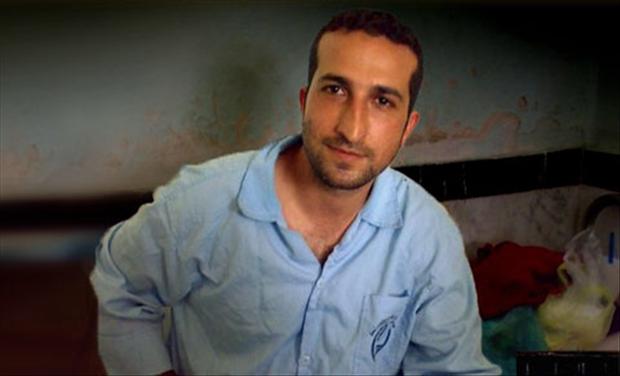
Answering Muslims: Pastor Youcef Nadarkhani Goes Free

Praise God!!!! This is excellent news Iran was going to sentence Pastor Nadarkhani to death for apostasy from Islam to Christianity.  He's been convicted of evangelizing Muslims, but he's been released for time served. This is proof that if Christians stand with our brother and sisters who are being persecuted we can actually help them. 


Answering Muslims: Pastor Youcef Nadarkhani Goes Free
Enhanced by Zemanta

Wednesday, September 5, 2012

Alleged Contradictions in the Gospels (2) by Tim McGrew - Apologetics 315

Brian Auten has recently posted the second part of Tim McGrew's lecture on alledged contradictions in the Gospels. I've really been enjoying this series. Take a look at the video, listen to the mp3, review the slides and the PDF. Enjoy it. I know I do.


Alleged Contradictions in the Gospels (2) by Tim McGrew - Apologetics 315
Enhanced by Zemanta

Saturday, July 28, 2012

FacePlant of the Day - Debunking Christianity: According to the Bible: Christians and Atheists Will Rot In Their Graves

Harry McCall continues to try and fails to use the Bible to demonstrate that the Bible makes Christianity wrong.The problem is that he fails to correctly understand what the Bible says in favor of his conclusions that the Bible does not support the idea of an afterlife in general or heaven and hell in particular. He even pretends that he can support his claims with the Bible. It'd be cute if it wasn't an utter failure. The Bible does not support him.


“for God is not a God of confusion but of peace, as in all the churches of the saints>.” 1 Corinthians 14:33

I totally agree with this scripture. McCall attempts to use this scripture to show that there is confusions as to what Christians and Jews have believed about the afterlife.


Some Modern Christian Afterlife Myths:

1. Last week a Christian woman who - had just lost her year old daughter (her first and only child) - was interviewed on TV. She said that at the time of her daughter’s death, she begged God to kill her so she could go to Heaven and be with her daughter.


So what myth does McCall think is being believed here? Is he saying that  the woman's daughter is not in heaven? If he wants to show that she believes a myth you would have to prove that either the baby didn't go to heaven or that there is no heaven.  Let's see if he can do that.

2. Southern Gospel songs such as “When We All Get To Heaven”, “I Won’t Have To Cross Jordan Alone”, “I’ll Fly Away” as well as the Carter Family’s favorite, “Will the Circle Be Unbroken” were written and sung based on the belief that at death, the righteous human soul goes immediately into the presence of the Lord (God / Jesus) in Heaven to be joined for eternity with loved ones.


Again, McCall would have to show that there is no heaven or that people are not really going to be present with God upon death.


3. Christian testimonial stories abound were the newly departed human soul either hovers above their body or is “ascended to Heaven or descended to Hell” only to be called back to the body doing resuscitation as a testimonial. This legend is then peddled to promote “proof” that an afterlife does exist and usually nets the claimant thousands of dollars as they travel the Christian circuit giving hope and inspirational talks on the Near Death Experience .


The Bible in no way tells us that this is how things really happen. So I'm going to ignore this one.  I see no reason to try to explain or defend this one - it's not about the Bible. As for whether it is true or not, I find it amazing that atheists almost never discuss the fact that unbelievers also have near-death experiences where they experience hell.


4. Based on two of the largest Christian denominations (Roman Catholic and LDS Mormon), one is given the theological legend that Christian dead go immediately to Heaven being reunited with their loved ones (though at just what age and state of metal maturity is open to question, that is; will dad be a child, young man or an elderly person as he was known before he died which begs the question as to how Christian dead will know one another?).


LDS Mormons one of the largest Christian denominations? LOL!!!!!!! I'll ignore such a stupid mistake for now but not having answers to such questions does not mean that heaven is not true.
 

5. On the other hand, I’ve also heard believers project an afterlife in order to get justice on corrupt politicians or evil people with statements such as; “They got away with it here, but they won’t get away from the judgment of God.”; thus again vindicating an afterlife. With the theme of Heaven being the largest selling points of Christianity, it is little wonder that pop Christian culture keeps this theological myth alive.
Again in order to show this as a myth, McCall would have to show that the Bible does not tell us that corrupt politicians or evil people are not punished in Hell or that there is no hell or heaven. 


6. Finally, the common Christian statement on the death of a loved one: “They are in a better place now.”


McCall would have to show that there is no heaven or that heaven is not better than here.
 

For the purpose of this post and for the sake of argument, let’s assume the Bible is an inspired book from God that contains revelations on the State of the Dead. As such, I’ll list a Biblical timeline on how the popular view of an afterlife evolved followed by some major Christian dogmas on the subject.\


Yes, let us agree to that. The Bible tells us about the state of the dead. The problem is that the Bible does not always agree with dogmas of churches.


A Chronology of the Evolution of the Christian Afterlife

A. Pre-Exilic Israel (9 – 8 century BCE to 586 BCE): Like all her neighbors, Israel (a term used by the Northern Kingdom (exiled 722 BCE) and taken over by the Southern Kingdom of Judah (exiled 586)), or the Hebrews believed the souls of all people (both good and bad) continued to exist in Sheol - a place darkness and loneliness under the earth and opposite from the gods who lived on top of a sacred mountains (such as Sinai).


What part of the Bible tells us that sheol is "a place darkness and loneliness under the earth and opposite from the gods who lived on top of a sacred mountains (such as Sinai)."? Sinai isn't even in Israel. Also the Bible never describes Sinai as the place YHWH lives. Projecting the beliefs and practices of ancient Israelites is truly an epic fail when there is no Biblical basis aside from the fact that the Old Testament records continually admonishes Israel to reject them. Fail number one.
 
B. Exilic / Post-Exilic Israel 586 BCE to the Hellenistic Period 332 BCE: Theological monotheism theism (Yahweh only party) suppresses Pre-Exilic theology’s polytheism and human sacrifice. Ancestral cult worship (divinatory and magical practices with the dead) are prohibited in both the Torah and the Deuteronomistic History. Persian theological influence began to shape the ideas of good and evil and an afterlife. Now at death, there is no consciousness in Sheol nor is there any contact there with this world and God (Psalms 6:5, 30: 8 – 10, 88: 3-12, Job 3: 11-19, 14: 10 – 14, 21: 19 – 21; and Ecclesiastes 9: 3-10).


Israel's Canaanite neighbors surely practiced polytheism and human sacrifices and divination and magic, but Israel wasn't supposed to and there is not enough evidence to conclude that this only began after 586 BC. McCall references several scriptures the he claims shows that there "is no consciousness in Sheol nor is there any contact there with this world and God ". Is he right? Take a look for yourself: link. These scriptures do not expressly tell us that there is no consciousness in Sheol. They are about the finality of death and how once you die, it is not normative that you are coming back to the life you knew. I agree that these scriptures do not give as much revelation about the state of the dead as other scriptures in the Bible. These writers wrote down the parts of the revelation that they had and they didn't have the whole revelation. For example: why isn't there a discussion about heaven or being in the presence of God? Simple. The Bible doesn't really address that question. We can't say that the Old Testament righteous was not in the presence of God before Jesus' death, burial and Resurrection. I mean Elijah and Enoch were taken into heaven not Sheol. I think the vast majority of people went to Sheol before Jesus completed his mission. Fail number two.

C. Hellenistic Period 332 BCE to the Roman Period 63 BCE): The view that the righteous Jew will be either rewarded while the unrighteous Jew will be punished is made 
theologically orthodox in such forged texts as the book of Daniel (especially Daniel 12: 2 “Many of those who sleep in the dust of the ground will awake, these to everlasting life, but the others to disgrace and everlasting contempt.”) Theologically, this verse in Daniel was in direct conflict with the afterlife position of the Testament of Abraham which teaches that immediately at death, Jewish souls receive judgment before Abel (Adam’s son) for either salvation or fiery torments (Test. Abraham 12 -13). Text such as Trito-Isaiah 66: 24 ("Then they will go forth and look on the corpses of the men Who have transgressed against Me. For their worm will not die and their fire will not be quenched; and they will be an abhorrence to all mankind.") will influence the writer of the Gospel Mark to have Jesus state in “Where their worm dieth not, and the fire is not quenched.” (Mark 9: 48) Also Paul uses the theology of the Hellenistic book of the Wisdom of Solomon to paint the human race with Original Sin.


I'd like to see McCall demonstrate that the Book of Daniel is a forgery. And so what if Daniel is in direct conflict with the Testament of Abraham? The Testament of Abraham is not just non-canonical for Christians but for Jews too. Why would you think Daniel is a forgery but the Testimonial of Abraham is not a forgery? Paul did not need the book the Wisdom of Solomon to get that Original Sin is a teaching. It is all over the Jewish canon.  Fail number 3.

D. The Roman Period 63 CE to the Council of Nicaea 325 CE: The conflict and tension of the theology of the so-called “Intertestamental Period” with its forge texts in the names of famous Israelite Patriarchs continued the confusion of an afterlife for Christianity with Paul view of an End Time bodily resurrection by stating in his final theological work of Romans 8: 10- 12 “But if the Spirit of Him who raised Jesus from the dead dwells in you, He who raised Christ Jesus from the dead will also give life to your mortal bodies through His Spirit who dwells in you. So then, brethren, we are under obligation, not to the flesh, to live according to the flesh” now contrast with that of the late Gospel of John having Jesus state that the Christian’s soul has eternal life immediately ““Truly, truly, I say to you, he who hears My word, and believes Him who sent Me, has eternal life, and does not come into judgment, but has passed out of death into life.” (John 5: 24). However, Christian eschatology remains in contradictory tension in that if the righteous soul is ALREADY with God in Heaven, then why would there ever need to be a resurrection of the body? Thus, Christians must face the fact that the majority of the New Testament (likely 99%), especially Paul’s letters and the Book of Revelation both teach that all souls (both good and evil) sleep in the earth (much like the Israelite dead did in Sheol) until the general resurrection and Final Judgment when Jesus returns. Soul Sleep is also the theme of other the Nicaea Creed and other Christian Creeds. Finally, the Bible never tells us how a place under the earth where all the dead go (Sheol) becomes modern Hell or how Christians go up into the sky to live with God (proof positive that a the theology of an afterlife is “subject to change without notice!).


So many errors...so little time. The "intertestamental period" can't be between the years he gives because "intertestamental" means between the old and new testaments. And the New Testament was completed during the first century but the Council of Nicea was in the fourth century. One of the Epistles of Paul, 1st Corinthians,  tells us that some in the early church did not think that there was a need for a physical resurrection but Paul and the other Apostles made it clear that there is and the quote from John also points that Jesus did teach a Physical resurrection. In the New Testament it is pointed out that the body does go into the ground - not the soul. When evaluating Creeds, you should ask yourself "Does the Bible agree with the creed?" In many cases it doesn't. Hell and Sheol are not that dissimilar. McCall seems to forget how Jesus described the state of the dead in Sheol. Read Luke 16:19-31. I realize that some might think that does not mean that Solomon understood Sheol this way when he wrote Ecclesiastes, but I think its the most complete description of Sheol in the Bible. I leave it to those who disagree to show that it's not.

E. Beginning with Cyprian of Carthage (died 258 CE) some theologians came to view Heaven as a place where people will meet their relatives and friends forming an eternal society with them.


So what? Bible doesn't talk about that. The Bible refers to the full relationship we will know God for all eternity.


F. Purgatory: This Catholic dogma as founded by Pope Gregory the Great (540 – 604) and is an afterlife place where all souls of the faithful must be purified before being allowed into Heaven.


Purgatory is not in the Bible. Does not matter if its wrong and it is. Fail number 5.


G. Limbo: To counteract the claim of St. Augustine that all unbaptized infant are damned, a state of both none suffering and no Heaven was invented. This place for unbaptized babies has basically been discontinued since 1950 when Catholic dogmas on non-baptized babies were changed.


Limbo is not in the Bible. I think that Augustine was wrong about all unbaptized infants going to hell, but it's moot. The Bible does not tells us that Limbo exists and just because the Catholic church changed it's position does not mean the Bible is wrong about hell or heaven.  Fail number 6.
 

H. The Peal of Great Price: The Latter Day Saint Books of Moses and especially Abraham (as “translated” by Joseph Smith) that states that all faithful Temple Mormons can become gods in the afterlife and populate other planets with “Spirit Children” just like the Christian God is doing now on earth.


One of the many reasons I reject Mormonism. There is nothing absolutely nothing in the Bible supports this. Failure number 7.


Though the Bible tells us that in Hebrews 13: 8 “Jesus Christ is the same yesterday and today and forever.” apparently the doctrine of an afterlife never was!


Dude, Jesus did not change. Biblical teaching on the afterlife never changed. Pointing out how men has changed their beliefs about the  life, even to comical extremes (I'm looking at you, Mormons), does not show confusion or contradiction with what God has revealed about the afterlife.
 

So as an atheist, I must say: Welcome to the grave Christian . . . you’re not alone! 

Harry McCall


So, to the atheist, I must reply: "Thanks for the welcome to the grave, but I'm passing through." So what are we left with? I know: A failed attempt to show that the Bible conflicts with itself regarding what happens when you die. 

Let's look at what the Bible says:


We are confident, I say, and would prefer to be away from the body and at home with the Lord.- 2 Corinthians 5:8


And I think its sheer and utter nonsense to claim that the Old Testament says nothing about Resurrection.  Job is one of the oldest books in the Bible and many think Job's story took place before or during Abraham's time.


23 “Oh, that my words were recorded,
    that they were written on a scroll,
24 that they were inscribed with an iron tool on[b] lead,
    or engraved in rock forever!
25 I know that my redeemer[c] lives,
    and that in the end he will stand on the earth.[d]
26 And after my skin has been destroyed,
    yet[e] in[f] my flesh I will see God;
27 I myself will see him
    with my own eyes —I, and not another.
    How my heart yearns within me! - Job 19:23-27

Debunking Christianity: According to the Bible: Christians and Atheists Will Rot In Their Graves
Enhanced by Zemanta