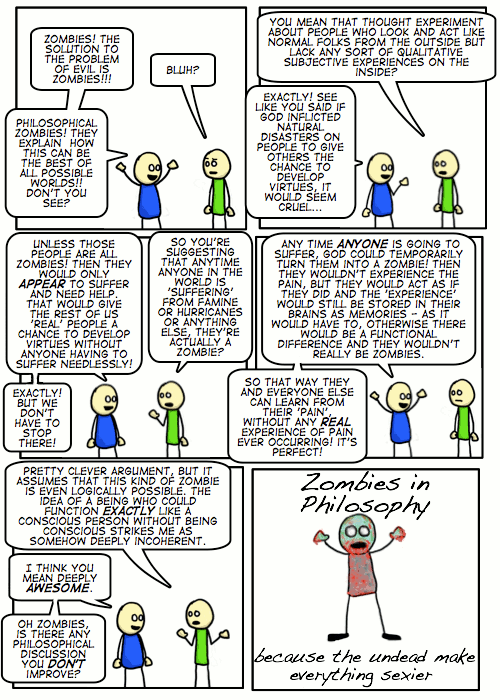
I think "zombie culture" is all well and fine. I think books, movies, and video games are just another form of entertainment. However, I think stating that there is "zombie imagery" in the Bible is not just dishonest but wrong. Some proponents of this silliness want to insist that they are merely defining "zombie" as meaning that dead people coming back to life from death. Many of these people then go on to make fun of the Bible insisting on equating the same kind of zombies we see in popular culture with people we see raised from the dead in the Bible.
Professor Gilmour of Providence University, Manitoba, Canada, has listed his favorite zombie imagery of the Bible. See his Top 10 Zombie Scenes in the Bible.
Zombies loom large in popular culture these days. Max Brooks' "World War Z: An Oral History of the Zombie War" (2006), the Jane Austen, Seth Grahame-Smith mashup "Pride and Prejudice and Zombies" (2009), and Melissa Marr's "Graveminder" (2011), to name but a few recent novels, enjoy a wide readership. There are also graphic novels, the AMC television show "The Walking Dead," video games, and of course movies. Some of my recent favorites in the latter category include the Norwegian Nazis-as-zombies film "Dead Snow" (2009) with its delightful tagline "Ein! Zwei! Die!" and Drew Goddard and Joss Whedon's "The Cabin in the Woods" (2012). With all of this going on, there is little surprise to come across the open-source, collaborative Stinque Zombie Bible. It was just a matter of time, I suppose, and the King James Bible will never be quite the same.
I think that the only reason for such a thing as a "zombie bible" is due to ignorance as to what the Bible really says about the people who were raised from the dead.
I am an unabashed zombie fan but also teach "classic" English literature and the New Testament so I can't quite bring myself to desecrate the literary and religious masterpiece that is the Authorized (King James) Version by contributing to the Zombie Bible. Still, wanting to get into the spirit of things, I can't resist noting a few biblical scenes and themes -- a top 10 list -- that come to mind each time I watch or read the latest version of the zombie apocalypse to come along. At least in some passages, a zombie-Bible mashup requires very little editorial interference.
If there are any scenes in the Bible that remind you of fictional zombie apocalypse, I doubt that you seriously understand what the Bible is describing.
1. The Gospel of Luke: "Why do you look for the living among the dead? He is not here, but has risen" (Luke 24:5). Such a suggestive phrase. Note also that the angels asking the question and those they address are standing inside a tomb at the time (Luke 24:2-4).
Suggestive? The Angel is pointing out that Jesus is not dead. He is alive. He was dead. Jesus' Resurrection is unique. Jesus was the first to be Resurrected - meaning all the other people who died and was raised from the dead before Jesus later died again. Jesus' Resurrection was qualitatively new and different. Jesus did not just come back in the same body he had before. That body was transformed - not deformed.
2. The Book of Revelation: "the sea gave up the dead that were in it" (Revelation 20:13). John the Seer's creepy statement reminds me of a scene in George A. Romero's "Land of the Dead" (2005) that features slow-moving corpses walking out of the surf, and Max Brooks' "World War Z" with its account of the boy returning from a swim with a bite mark on his foot. He also describes the zombie hoards roaming the world's oceans: "They say there are still somewhere between twenty and thirty million of them, still washing up on beaches, or getting snagged in fisherman's nets."
A deformed hoard walking out of the sea? Is that really what you get when you read Revelations 20:13? I don't. Why? Because 1 Thessalonians 4:16-18 paints a different picture and gives us a good picture of what Revelations 20:13 will look like when it happens.
16 For the Lord himself will come down from heaven, with a loud command, with the voice of the archangel and with the trumpet call of God, and the dead in Christ will rise first. 17 After that, we who are still alive and are left will be caught up together with them in the clouds to meet the Lord in the air. And so we will be with the Lord forever. 18 Therefore encourage one another with these words.
3. Deuteronomy: "Your corpses shall be food for every bird of the air and animal of the earth, and there shall be no one to frighten them away" (Deuteronomy 28:25-26; cf. 2 Samuel 21:10; Psalm 79:1-2; Isaiah 34:2-3; Jeremiah 7:33). The ancients worried about the exposure of their body after death. Improper care of one's corpse was a terrifying prospect, so it is no wonder it features in prophetic warnings of divine wrath. Qoheleth insists that even though a man lives a long life and has many children, if he "has no burial ... a stillborn child is better off than he" (Ecclesiastes 6:3). The indignity of non-burial presumably accounts for the honor bestowed on the poor man Lazarus in Jesus' parable; the rich man receives proper burial but Lazarus "was carried away by the angels to be with Abraham" (Luke 16:22) because there was no one to care for his remains.
I don't see how one could equate an undead existence as a zombie with the improper burial. And the point of the parable of Lazarus and the rich man turn his argument all around. Lazarus' was carried away by Angels because he was righteous. The rich man was not because of his wickedness.
4. The Book of Job: "Why is light given to one in misery, and life to the bitter in soul, who long for death, but it does not come, and dig for it more than for hidden treasures...?" (Job 3:20-21). Job is angry he did not die at birth (3:11), adding that he loathes his life and does not want to live forever (7:16). Others prefer death to life out of principled anger against God, like the prophet Jonah (4:3; cf. 4:8). Physical death eludes a surprising number of people in the Christian Bible, and this is not always a welcome thing. The prophet John refers to some who "seek death but will not find it; they will long to die, but death will flee from them" (Revelation 9:6). The prospect of an elusive death, as every zombie fan knows, terrorizes the living. The "stricken" Charlotte Lucas in "Pride and Prejudice and Zombies" agrees to marry the tedious and obsequious minister Mr. Collins because she wants "a husband who will see to [her] proper Christian beheading and burial." This is no small task for most survivors left with such a grim assignment, as Shaun well knows: "I don't think I got it in me to shoot my flat mate, my mom, and my girlfriend all in the same evening" ("Shaun of the Dead," 2004).
It's erroneous to say that physical death eludes a lot of people in the Bible. Realize that the Bible says that, so far, only Enoch and Elijah have not died. The reference to Revelations 9:6 describes events and situations that have not happened yet and has nothing to do with the Zombies like those in "Shaun of the Dead" and "Pride and Prejudice and Zombies".
5. The Gospel of Matthew: "The tombs also were opened, and many bodies of the saints who had fallen asleep were raised. After [Jesus'] resurrection they came out of the tombs and entered the holy city and appeared to many" (Matthew 27:52-53). Unwanted persistent life is a recurring image in biblical literature and so too is language referring to the impermanence of bodily death. The dead do not stay dead. The psalmist is confident he will not "see decay" (Psalm 16:10 New International Version; cf. Acts 2:27; 13:35). We read of the physical resurrections of specific individuals (e.g., 1 Kings 17:17-24; Luke 8:49-56; maybe Acts 20:7-12) and expected mass revivals (e.g., 1 Thessalonians 4:16-17). Some of these accounts of un-dying involve reference to un-burying. Mary and Martha's brother Lazarus walks out of his tomb when "they took away the stone" (John 11:41). On Easter morning, mourners find "the stone, which was very large, had already been rolled back" (Mark 16:4). A second century writer describes further the events preceding Jesus' emergence from the tomb: "That stone which had been laid against the entrance to the sepulchre started of itself to roll and gave way to the side, and the sepulchre was opened" (Gospel of Peter 9.35).
Unwanted persistent life is a recurring image in biblical literature and so too is language referring to the impermanence of bodily death. No way. No one in the Bible is raised from the dead despite the will of God. Lazarus' walked out of his tomb. He was not deformed and he did not want to eat anyone's brains.
6. Ezekiel: Ezekiel receives a vision promising the restoration of Israel (37:11). Seeing a valley full of bones, the Lord instructs him to speak to them, saying, "O dry bones ... I will cause breath to enter you, and you shall live. I will lay sinews on you, and will cause flesh to come upon you, and cover you with skin, and put breath in you, and you shall live" (37:4-6). When Ezekiel does so, "there was a noise, a rattling" as bones come together and sinew and skin appears and the breath of life returns. The dry bones "lived, and stood on their feet, a vast multitude" (37:7-10).
No where does the passage tells us that they were deformed or went to look to eat brains/flesh afterward.
7. Zechariah: "their flesh shall rot while they are still on their feet; their eyes shall rot in their sockets, and their tongues shall rot in their mouths" (Zechariah 14:12). They seem to resemble extras in a George A. Romero film.
It is another prophecy. It has not happened yet. I doubt that Jerusalem's enemies will be walking around after they get a taste of this plague.
8. The Gospel of Mark: "hell, where their worm never dies" (Mark 9:48; alluding here to Isaiah 66:24). Gehenna (here symbolically representing "hell," and usually translated so, as in Mark 9:44, 45, 47) refers to the Valley of Hinnom located to the south and southwest of Jerusalem. Following the reign of Israel's righteous King Josiah (see 2 Kings 23:10-14), it became Jerusalem's garbage heap, a place with maggots and rotting corpses. Jesus refers to this burning garbage in Mark 9:48, a place where residents of the city would leave the rotting corpses of humans and animals to the worms that do not die, to maggots. The image suggests the corpses of the damned rot in gehenna/hell -- maggot ridden -- in perpetuity.
That's not an image suggested. Gilmour imposes the images. A fundamental problem with his interpretation is that zombies do not go to hell. Jesus was not only just referring to Jerusalem but to all those who refuse to accept him.
9. 2 Maccabees: "[Antiochus IV Epiphanes] was seized with a pain in his bowels, for which there was no relief, and with sharp internal tortures -- and that very justly, for he had tortured the bowels of others with many and strange inflictions ... he fell out of his chariot as it was rushing along, and the fall was so hard as to torture every limb of his body. ... the ungodly man's body swarmed with worms, and while he was still living in anguish and pain, his flesh rotted away, and because of the stench the whole army felt revulsion at his decay. Because of his intolerable stench no one was able to carry the man who a little while before had thought that he could touch the stars of heaven" (2 Maccabees 9:5-6, 7, 9-10). The Syrian ruler's physical body rots away zombie-like while he still lives. The cause is divine, as the God of Israel strikes this enemy of the Jews with "an incurable and invisible blow" (2 Maccabees 9:5).
But he wasn't turned into a zombie.
10. Genesis with the Book of Revelation: "the earth was a formless void and darkness covered the face of the deep"; "the first heaven and the first earth has passed away, and the sea was no more" (Genesis 1:2; Revelation 21:1). With the disappearance of chaos, Eden returns: "On either side of the river is the tree of life with its twelve kinds of fruit" (Revelation 22:2; cf. Genesis 2:9). Horrors stories often wander back and forth between forms of paradise (ordered society) and chaos (some variant of an apocalyptic hellscape) thus recalling biblical stories with similar alternations. Zombie stories typically depict the disintegration of the modern world, and often hint at a return from the wilderness to the paradisiacal garden for survivors (cf. Genesis 3:23-24). Danny Boyle's "28 Days Later" (2002), for one, ends with a developing romance between Jim and Salina, happy in the cultivated lands around a cottage that echoes Adam and Eve in the Garden of Eden. The sequel "28 Weeks Later" (2007), however, depicts a failed attempt to restore Eden. After the spread of the disastrous infection in the first film, the sequel documents efforts to repopulate the United Kingdom. Survivors return to their homeland, to what the director's commentary refers to as "a new world" and a "Garden of Eden." Naturally, mayhem ensues and the infection spreads as the movie unfolds. It wouldn't be much of a horror movie otherwise.
Overall there is no reason to equate anything in the Bible with zombie fiction. There is much fiction that borrows from the Bible the idea of Eden lost and regained. So what? The reason I think zombie fiction and horror has so much commercial success is because it is based on two major fears: fear of not being at the top of the food chain and the fear of loosing people we love. The Bible gives us real answers as to giving us understanding of what is true and and what is not true. God does not want us to be living in blind ignorance. You know the truth by knowing him.
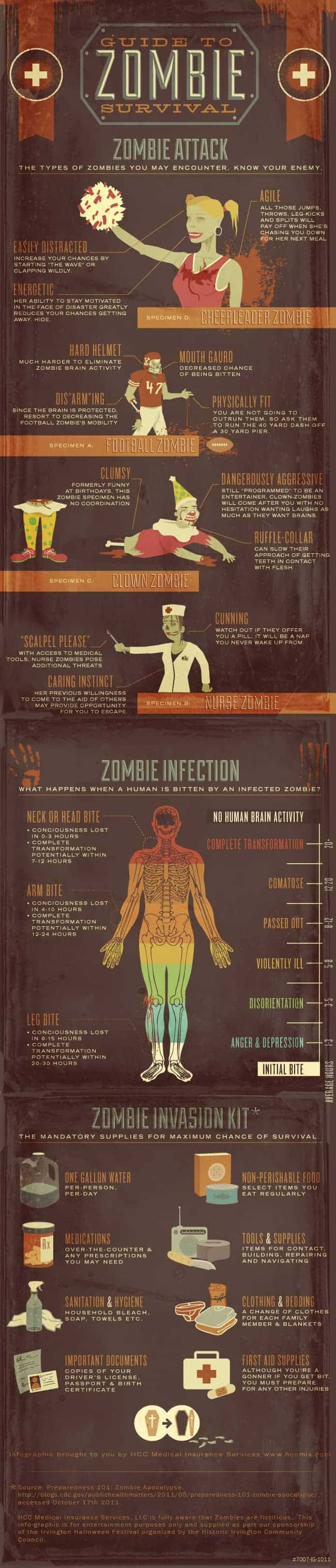
I know what some think: that no one really thinks that the equates the people who are raised from the dead with the brain-eating zombies of fiction. For any of those people I have one question. How is this:

Different than this?

Yup, Definitely a faceplant.
Michael Gilmour: Top 10 Zombie Scenes in the Bible




![Reblog this post [with Zemanta]](https://lh3.googleusercontent.com/blogger_img_proxy/AEn0k_uOIKn_Ouihnt5TpR66tkLC_0yG8wBPALXfbqM8hiquNywqiMVfVEwxUVI0Qav1DDLOWsH2dZc_vFyK3yKGgxNopi3908u8uiWoVSuttd-7xOfdiUtHfrUfB4wVn5ao-NRHgzmZgT0o86UL8cfFyiik=s0-d)

![Reblog this post [with Zemanta]](https://lh3.googleusercontent.com/blogger_img_proxy/AEn0k_tABBl9z33vDaotHxIycMg1c28t_-SHpCoI2-C8sEx3OZEwpf3zzv4CjhnFsOqoVCmslgl8Zu3DX1ivT_OFruMjOQ_nJ_KcQAw8AFbyYnc3GK0g4q3VoTUxBDv89n1-3DEagnUPeCvefccWtYwF2rk=s0-d)