Showing posts with label Technology. Show all posts

Tuesday, February 10, 2026

The Architect of the Digital Revolution: Meet Jesse Russell

If you’ve sent a text message today, scrolled through social media on your commute, or made a crystal-clear call without being tethered to a car dashboard, you owe a debt of gratitude to Jesse Russell.

Often called the "Father of 2G," Russell is the visionary engineer who took the "mobile" out of the automobile and put it into our pockets. While the first generation of cellular tech (1G) was analog and largely restricted to bulky car phones, Russell’s work in digital signal processing laid the groundwork for the modern smartphone era.


Major Contributions & Inventions

Jesse Russell holds over 100 patents (60+ of which are major U.S. patents) that transformed how we interact with the world. His work didn't just improve phones; it reinvented the entire network infrastructure.

  • The Digital Cellular Base Station: Perhaps his most significant achievement, this invention allowed for the transition from analog to digital. It enabled high-power linear amplification and digital modulation, which are essential for handling the massive amounts of data smartphones use today.

  • 2G Digital Communications: In 1988, Russell led the Bell Labs team that introduced digital cellular technology. By digitizing speech, he reduced the bandwidth required for calls, effectively allowing four times as many people to use the same spectrum compared to analog systems.

  • Mobile Cloud Computing: Long before "the cloud" was a household term, Russell was pioneering the concept of mobile cloud computing, shaping the direction of 4G and 5G networks.

  • The Fiber Optic Microcell: He developed technology that used fiber optics to improve cellular coverage in buildings and dense urban areas, ensuring your phone doesn't lose signal the moment you step indoors.


  • Key Patents:

    • Base Station for Mobile Radio Telecommunications Systems (1992)

    • Mobile Data Telephone (1993)

    • Wireless Communication Base Station (1998)


Personal Life: From the Inner City to Bell Labs

Jesse Eugene Russell’s story is a testament to the power of opportunity. Born on April 26, 1948, in Nashville, Tennessee, he grew up in a large family with ten siblings in an economically disadvantaged neighborhood.

In his early years, Russell was more focused on athletics than academics. However, a turning point came when he participated in a summer educational program at Fisk University. This sparked an intellectual fire that led him to Tennessee State University, where he graduated as a top honor student in Electrical Engineering in 1972.

Breaking Barriers

Russell was a true trailblazer in the corporate world:

  • He was the first African American hired directly from a Historically Black College or University (HBCU) by AT&T Bell Laboratories.

  • He continued his education at Stanford University, earning his Master’s in Electrical Engineering in 1973.

  • Throughout his 30-year career at AT&T, he rose to become the Chief Wireless Architect, proving that brilliance and persistence can shatter any glass ceiling.


Legacy and Awards

Today, Jesse Russell serves as the CEO of incNETWORKS, focusing on next-generation broadband. His mantle is crowded with prestigious honors, including:

  • Induction into the National Academy of Engineering (1995).

  • U.S. Black Engineer of the Year (1992).

  • The Medal of Technology (awarded to his group at Bell Labs).

  • Wireless Hall of Fame induction (2025).

The next time you look at your smartphone, remember the man from Nashville who saw a car phone and decided it belonged in the palm of your hand.

Sources:

  1. Trusted Future: Jesse Russell Profile

  2. Wikipedia: Jesse Russell

  3. Wireless History Foundation: Hall of Fame

  4. African American Registry: Jesse Russell Biography


Monday, March 3, 2025

You Owe Marion Croak A Lot


Thursday, December 5, 2024

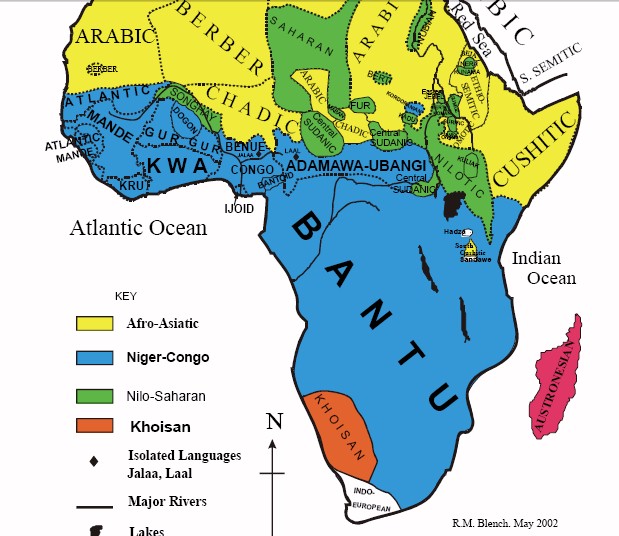
A History Of Technological Bantu Achievements


### Summary

The video explores the technological achievements of Bantu peoples, debunking myths of their primitiveness and highlighting their innovations in agriculture, ceramics, iron production, and architecture.


### Highlights

- 🌍 African history is often misrepresented by non-Africans.

- 📜 Bantu peoples share a Proto Bantu culture and language.

- 🌱 Bantu agricultural innovations transformed marginal soils into fertile land.

- 🍶 Bantu women invented ceramic technology long before the Middle East.

- 🔥 Bantu iron smelting techniques predated European advancements.

- 🏛️ Great Zimbabwe showcases impressive Bantu architectural achievements.

- ✊ Bantu achievements challenge the notion of African backwardness.


### Key Insights

- 📖 **Myth-Busting African History**: The narrative of African primitiveness has been perpetuated through colonial writings, which modern scholarship is actively deconstructing. This helps to restore dignity to African history. 

- 🌐 **Bantu Expansion**: The Bantu migration over 5,000 years led to diverse cultures and languages across Africa, showcasing the complexity and adaptability of these peoples. 

- 🌾 **Agricultural Advancements**: The introduction of soil fertility techniques by Bantu farmers allowed for higher population densities, leading to the establishment of organized societies and states.

- 🍵 **Ceramic Innovations**: Bantu women were pioneers in ceramic technology, demonstrating advanced craftsmanship that predates similar developments in other regions, highlighting their cultural significance.

- 🛠️ **Iron Technology**: Bantu iron smelting capabilities surpassed those of Europe for centuries, illustrating the advanced metallurgy that contributed to their societal development.

- 🏰 **Architectural Marvels**: The construction of Great Zimbabwe and other structures reflects sophisticated architectural knowledge and skills, defying colonial views of African capabilities.

- 💡 **Reframing African Narratives**: Acknowledging Bantu achievements emphasizes the importance of recognizing Africa's contributions to global civilization, challenging longstanding stereotypes.

Tuesday, December 11, 2012

Cheaper than Solar: Gravity-Powered Lights for the Developing World | Technology on GOOD

Wow. Electric Lights powered by Gravity?!!! I wonder why can't it be used all over the world? But of course it should be used in places where conventional technology is not practical, but I can't think of a  place on earth that this would not work. I'm going to research this more to see if its true, but I sure hope it is. Maybe this tech can even be used to power other devices.


Cheaper than Solar: Gravity-Powered Lights for the Developing World | Technology on GOOD

Saturday, November 17, 2012

Saturday, August 4, 2012

The Advantage of Being Awestruck - by @Jason_Silva on Vimeo

Hubble Ultra Deep Field is an image of a small...
Hubble Ultra Deep Field is an image of a small region of space in the constellation Fornax (Photo credit: Wikipedia)
I found the following video very interesting.The argument is that because of humanity's ability to be inspired by our very existence and the universe around us, we are able to grow technologically and scientifically and driven to learn more as a species. By and large I agree, but I don't think that evolution can adequately explain this trait. I observe this quality more prominently in children and less in adults. Here is the video.
 
The Biological Advantage of Being Awestruck - by @Jason_Silva from Jason Silva on Vimeo.

Here is the notes given with the video on Vimeo

This video was created by @Jason_Silva and shot and edited with my friends at Bravo Media, and is non-commercial and for educational and inspirational purposes only. Full credits and clip attributions can be found below. This video was inspired by three big ideas:
1) The ideas of psychologist Nicholas Humphrey who has written of "THE BIOLOGICAL ADVANTAGE OF BEING AWESTRUCK". Basically, our ability to awe was biologically selected for by evolution because it imbues our lives with sense of cosmic significance that has resulted in a species that works harder not just to survive but to flourish and thrive...
"Humphrey refers to consciousness as a magic show that you stage for yourself inside your head, which lights up the world and makes you feel special and transcendent... this magical theater provides a reason to live, a love of occupying the present moment, and a desire to sustain it into the future, that over time has proved stronger than anything else, and accounts for humanity’s swift and triumphant success--
Humphrey says “being enchanted by the magic of experience, rather than being just an aid to survival, provides an essential incentive to survive.”
"We relish just being here. We feel “the yen to confirm and renew, in small ways or large, our own occupancy of the present moment, to go deeper, to extend it, to revel in being there, and when we have the skill, to celebrate it in words..”
Our desire to understand brings exquisite pleasure... and feeds our exploratory voyage, our scientific inquiry, our technological development, and even our poetic self-regard..

I would argue that this what drives science. But how did it get there? And not everyone has these feelings and desires in equal measure. I think those who love arts, science, and engineering the most have the strongest case. It truly is another way humanity expresses itself. 

2) The Stanford study that found that AWE is clinically good for you, expanding perception of time, increasing compassion and empathy and promoting well being:

I think that it's this benefit is why we find the inquisitive nature and traits being discussed ingrained in Children. They are like sponges for information. We all should never forget what it's like to have your mind blown by learning something that impresses you. What I love is that you never have to give that up just because you grow up. What I love about musicians, artists, scientists, and engineers is that they never do.

3) Ross Andersen's rapturous meditation on the ontological awakening of our psyches provided by the Hubble Space Telescope: "At first glancing the Deep FIELD “one might mistake it for gemstones scattered across black velvet, but a closer look reveals that each smudge of light, 2,600 in all, is a galaxy dense with billions of star-fired worlds, pinwheeling in deep time. … To that point, astronomy had imaged objects only four billion light years away, and poorly at that. Here a telescope reached 11 and a half billion light years into space and delivered an image legible to the layman: an unprecedented expansion of human vision."

I agree.
**Music by John Murphy - "Kaneda's Death Pt 2" from Sunshine Soundtrack
itunes.apple.com/us/album/sunshine-music-from-motion/id297702863
**Featuring Stock Footage from Shutterstock
Still images courtesy of THE IMAGINARY FOUNDATION - imaginaryfoundation.com/
And clips from Knate Myers' "ISS at Night" featuring NASA imagesvimeo.com/45878034
Camera: Liam O' Sullivan
Edited by Jess Betz and Jason Silva
Shot and edited at BRAVO MEDIA - bravomediainc.com/

I think a far more interesting question is where does this trait go in so many adults? I think society bludgeons  most of it out of us when we are told to stop asking questions and to stop dreaming - in other words: school. One thing I've noticed is that many anti-theists will agree that the ability to be awed is an integral part of being human that we can recognize beauty. They say that we have no need of God in order to enjoy beauty or to be blown away by the universe. Yet they also argue that no one's life has transcendent value. How can you be amazed and awed by your existence and yet deny that there is anything of purpose or transcendent value (i.e. created). For example, here is Christopher Hitchens making the same argument against Douglas Wilson as the above video.


Awe is important for what it means to be a human being - all seem to agree but the question of how it got into us seems to be ignored. Does anyone think that an eagle or a vulture has an emotional response as it flies over the Grand Canyon?  Or is a bird impressed by it's own ability to fly? But can a person be impressed or emotionally touched by his/her own athletic ability, or by his/her poetry or any talent for that matter? Have you ever said or done something so brilliant that it shocked you that it came out of you or through you? That is why people create art and study science and make machines to solve problems.


The Biological Advantage of Being Awestruck - by @Jason_Silva on Vimeo
Enhanced by Zemanta

Wednesday, May 30, 2012

8 Famous Computers with a Pathetic Amount of Power - Topless Robot

I really like this article! It helps put into perspective how computer power has exponentially grown over the past 60 years! Yes, the smartphone in your pocket is not only smaller, lighter, and several orders of magnitude more powerful than the computers on this list but you would not have a smartphone if not for these!

8 Famous Computers with a Pathetic Amount of Power - Topless Robot

Sunday, February 12, 2012

Nightwitches

And I thought the RedTails had gotten a raw deal in WWII, but the fact that I have never heard of these ladies until now is truly criminal!!!!!! I'm gonna have to do more research!

For those not in the know, night witches were Russian lady bombers who bombed the German lines in WW2. Thing is though, they had the oldest, noisiest, crappest planes in the entire world. The engines used to conk out halfway through their missions, so they had to climb out on the wings mid flight to restart the props. the planes were also so noisy that to stop germans from hearing them combing and starting up their anti aircraft guns, they’d climb up to a certain height, coast down to German positions, drop their bombs, restart their engines in midair, and get out of dodge.
Their leader flew over 200 missions and was never captured.


Nightwitches
Enhanced by Zemanta