Showing posts with label FacePlant. Show all posts

Sunday, March 3, 2013

the a-atheism blog: Richard Dawkins makes an oxyMORON of himself!

Everyone sometimes says things that are embarrassingly unfortunate.  Even Richard Dawkins.  Case in point!


Follow the link for more.

the a-atheism blog: Richard Dawkins makes an oxyMORON of himself!
Enhanced by Zemanta

Friday, August 31, 2012

FacePlant of the Day - Debunking Christianity: Why I Am Justified in Telling God What To Do?

I've often thought that maybe John Loftus believes that he has the right to hear from God on his own terms. I didn't want to think that he was that deluded but given the following post, this hope has been dashed to pieces because this is what he attempts to assert and defend. Does this make sense? No. It's an utter failure in logic and makes presuppositions that can't withstand rational thinking.

How dare I demand that God gives me what I need to believe? How dare I tell him how he should reveal himself to me? How dare I question the reasonableness of revealing himself in the pre-scientific past such that I must accept what ancient people claimed to have seen in a remote part of the world, or be condemned to hell if I don't? How dare I disbelieve because of the so-called mysteries of an eternal three-in-one God, who became incarnate, and who died for my sins, even though none of these doctrines make any rational sense at all.

It's always funny to me when Loftus makes such accusations against Christianity. He's making Paul's points for him.  

18 For the message of the cross is foolishness to those who are perishing, but to us who are being saved it is the power of God. 19 For it is written:
“I will destroy the wisdom of the wise;
    the intelligence of the intelligent I will frustrate.”[c]
20 Where is the wise person? Where is the teacher of the law? Where is the philosopher of this age? Has not God made foolish the wisdom of the world? 21 For since in the wisdom of God the world through its wisdom did not know him, God was pleased through the foolishness of what was preached to save those who believe. 22 Jews demand signs and Greeks look for wisdom, 23 but we preach Christ crucified: a stumbling block to Jews and foolishness to Gentiles, 24 but to those whom God has called, both Jews and Greeks, Christ the power of God and the wisdom of God. 25 For the foolishness of God is wiser than human wisdom, and the weakness of God is stronger than human strength. - 1 Corinthians 1:18-25

God knows that to the untouched mind and heart, it is not possible to believe it. But not because the message is illogical or unreasonable. 

5 Those who live according to the flesh have their minds set on what the flesh desires; but those who live in accordance with the Spirit have their minds set on what the Spirit desires. 6 The mind governed by the flesh is death, but the mind governed by the Spirit is life and peace. 7 The mind governed by the flesh is hostile to God; it does not submit to God’s law, nor can it do so. 8 Those who are in the realm of the flesh cannot please God. - Romans 8:5-8

The problem isn't with God. The problem is us. No one can boast. No one was born saved.  

19 This is the verdict: Light has come into the world, but people loved darkness instead of light because their deeds were evil. 20 Everyone who does evil hates the light, and will not come into the light for fear that their deeds will be exposed. 21 But whoever lives by the truth comes into the light, so that it may be seen plainly that what they have done has been done in the sight of God. - John 3:19-21

Well I do dare to demand better of God, if he exists. That's the point. How am I to know he exists when his lack of divine forethought led to massive slaughter among Christians themselves over the stupidest of doctrinal trifles that if he had foreseen them and had even average communication skills he could have averted? Or, he could have told us more important things than what to do with our penises and vaginas, by giving us the knowledge to make vaccines and anesthesia for surgeries?

The Bible is clear. There is no passage you can honestly use for killing another person in the context of today because of doctrinal differences. Again the problem is explained throughout scripture  (John 2:19-21 is only one example). Unfortunately, John Loftus has that problem and so does everyone who is not born-again. And God tells us what to do with our penises and vaginas because we are too stupid to know what to do otherwise. Obviously we don't know if we can't see why it would be important to God for us to know. I am amazed at the hubris to suggest that the science and technologies (i.e. vaccines, anesthesia, and ect.) did not come as a direct blessing from God! And don't forget that so-called "pre-scientific" people had anesthesia and did perform surgeries. They just weren't dumb enough to take credit for themselves.

Why do I demand better things? It's simple:

If God created me as a reasonable human being, then I can doubt the reasonableness of a God who fails to give me what I need to believe as a reasonable human being.

Loftus forgets that God created Adam and Eve as reasonable human beings. Because of Sin we are not reasonable. It takes God to make us reasonable. God has given us what we need to believe. 

If God created me as human being who seeks sufficient evidence to believe, then I can demand that he gives me the sufficient evidence I need to believe.

Loftus has admitted on several occasions that people have failed faculties and can't see and understand anything perfectly. We have several blind spots. Given that, why would anyone of us pretend we know what "sufficent evidence" is and what it isn't. The more about science we unlock and discover, the more we (at least the honest people) realize that we know very little. More questions are asked and we end up knowing less than what we knew before we learned the fact we just discovered. That is why science and obtaining more knowledge is so beautiful. Wisdom would lead to humility as knowledge increases.

Connect the dots.

And they make the picture God has said that they make. Without God you don't know what the dots are.

Of course, maybe he doesn't want reasonable people? Who knew? ;-) But then, why am I who I am? Still, if that's the case then he could snap his omnipotent fingers and take away my critical thinking skills so I would believe as others do. I did at one time. Then I grew a brain, just as ex-Mormons, ex-Muslims, ex-Orthodox Jews, ex-Scientologists and others did. ;-)

I don't know John Loftus personally, but I don't think his blog posts lead me to conclude that he is reasonable. Realizing the limitations of your intellect and yet trusting in that intellect to determine the reasonableness of a being so much ahead and so far above of you doesn't seem very rational to me. The best you have is to seek God with all of your being and trust that God will reveal God's self to you on God's own terms in God's own way. The Bible is one of these ways. John Loftus is an apostate. And like all apostates who leave God, it's not that he lost his mind or gained his brain or gained critical thinking skills - he never had it to begin with because he was never born again.  He never knew God.  I only hope that grants him and others mercy and gives Loftus the greatest of all gifts - salvation through Jesus Christ. 

Debunking Christianity: Why I Am Justified in Telling God What To Do?
Enhanced by Zemanta

Thursday, August 16, 2012

FacePlant of the Day - A Really Bad Pro-Homosexual Argument! that Twists the Bible.

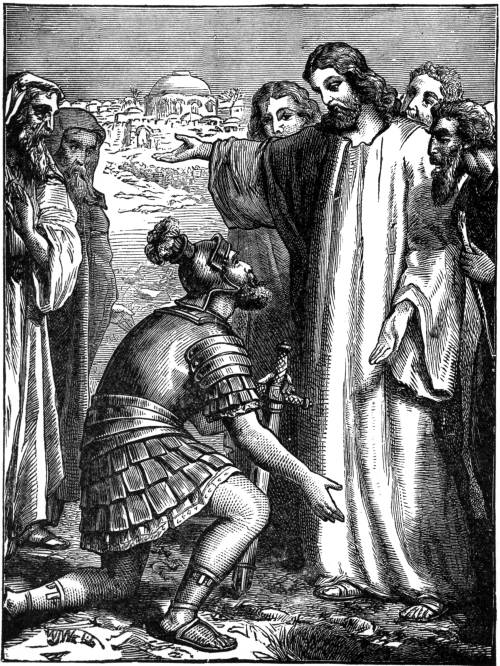
On Tuesday, Dr James White responded to an argument that's becoming quite popular in which people try to suggest that Jesus condoned homosexuality because he healed the young gay lover of a Roman Centurion. They base this farce on Matthew 8 and Luke 7. They want to argue that the one Jesus healed was not the Centurion servant but the centurion's gay lover. They go as far as saying that the Greek word  "pais" does not mean "servant" but "lover". Such an argument can't hold together, and  Dr White truly shows how this "reasoning" is really a fail.


Here is a link to the original article by Jay Michaelson: Link


Today on the Dividing Line: A Bunch of Really Bad Arguments on Very Different Topics
Enhanced by Zemanta

Tuesday, July 31, 2012

FacePalms and FacePlants

I've been thinking about the series of blog posts I have been using on my blog. Some might wonder why I post them. Sometimes there are arguments you come across that just make you shake your head in dismay due to their utter lack of logic and sense.

"FacePalm" means "(sometimes also face-palm or face palm) is the physical gesture of placing one's hand flat across one's face or lowering one's face into one's hand or hands. The gesture is found in many cultures as a display of frustration, embarrassment,[1] shock, or surprise.[2]" Source


"FacePlant" is a similar idea. It is used to described a failed attempt at something, I tend to use it as a strong description for a failed argument than a facepalm. It's not just a failure it's an epic failure.
Enhanced by Zemanta

Thursday, June 7, 2012

FacePlant of the Day - Debunking Christianity: The Contradictory And Chaotic Gospel Lies Used to Prove the Resurrection

Harry McCall is back to making outlandish assertions on the Debunking Christianity blog. In this article he attempts to shred that Resurrection accounts by trying to point out contradictions that here seems to think equate to lies.

The Gospels can’t even get their post-resurrection stories straight! In fact, they have used lies to cover earlier lies in selling Christianity. (I view both telemarketers and the Gospel writers driven by the same ideology: Sell the product at any cost. Lies are totally OK if it creates a sell / belief!)

In order to prove someone is lying you have to show that what they are saying is false and demonstrate that they knew what they were saying was false. If you are looking for this logic from McCall, you won't find it. FacePlant number one. As for exposing contradictions, you will not find them here either.

Here are a few of the many lies the post-resurrection Gospel stories use:

A. Jesus tells Mary not to touch him: “Jesus saith unto her, Touch me not; for I am not yet ascended to my Father.” (John 20:17)

B. Then Jesus contradicts what he had just told Mary by what he now tells Thomas: “Then he said to Thomas, ‘Put your finger here; see my hands. Reach out your hand and put it into my side. Stop doubting and believe.’" (John 20:27) Not only is all this contradiction in the same Gospel of John, but it’s in the very same chapter of that Gospel as well!

Why assume that Jesus was not with the father ever  between the times that Mary and Thomas saw Jesus? No reason to make the silly assumption McCall is making here. The text does not tell us that Jesus had not been with Father at all in the 50 days between the crucifixion and Pentecost. We don't know. Poor reasoning. Faceplant number 2.

C. But then we are told the bodily resurrected Jesus really has no mass after all as he can now past [pass] straight through walls and doors “Eight days later, his disciples were in the house again, and Thomas was with them. Though the doors were locked, Jesus came and stood among them and said, "Peace be with you!" (John 20:26)

No where does the text tells us that Jesus' resurrected body was massless.  Quantum Mechanics shows that massive objects can tunnel through other objects. Even massive objects have wavelengths. Additionally, why could Jesus vibrated through the walls and door - slipping his atoms through the spaces in the atoms of the door? There are other possibilities rather than assuming that Jesus' new body is massless. Get real. Faceplant number 3.

D. Now the lies get even wilder as the reader is told that Jesus can even transform his appearance from unknowable to the knowable at will: “When he was at the table with them, he took bread, gave thanks, broke it and began to give it to them. Then their eyes were opened and they recognized him…” (Luke 24:30a) and again in John: “Early in the morning, Jesus stood on the shore, but the disciples did not realize that it was Jesus.” (John 21: 4) So just how do we know who or what was really resurrected???!

Then Jesus just disappears into thin air again: “…and he disappeared from their sight.” Luke 24:30b (Beam me up Scotty!)

If you are going to try to disprove the Bible by what it says, you have to take into account that it says that Jesus made everything there is and that Jesus has all power and authority. If that's true than why could he not appear, disappear, or make himself recognizable whenever he feels like it? Of course he can. Fail. Faceplant number 4.

E. Then according to the Gospel of John, faith in the resurrected Jesus can ONLY be based on the Gospels claims alone which are themselves based on and steeped in Circular Reasoning: “Jesus did many other miraculous signs in the presence of his disciples, who are not recorded in this book. But these are written that you may believe that Jesus is the Christ, the Son of God, and that by believing you may have life in his name.” (John 20: 30 -31) Thus, we MUST now believe the Gospel of John . . . why? Because the Gospel of John says so! Now simple faith is TOTAL TRUST in a confused Gospel of John!

McCall has not managed to prove that the Gospel of John is confused. Faceplant number 5.

F. Finally, modern microbiology would logically tell us that Jesus would have to have active E-coli resurrected in his gut also so he could digest a fish: “He (Jesus) asked them, “Do you have anything here to eat?” They gave him a piece of broiled fish, and he took it and ate it in their presence.” (Luke 24: 42) Thus, we not only have a resurrected Jesus, but now we must have millions of E-coli resurrected by God in Jesus’ gut!!! Thus, faith in the resurrected E-coli is also “Saving Faith” since - without the living E-coli - eating the fish in order to end Jesus’ hunger (in the process of digestion) would be impossible. So (theologically) if there were no resurrected E-coli in Jesus’ gut, then Jesus assented to Heaven (Acts 1:9) with a fish undigested in his gut would mean this chewed up undigested fish now has an eternal life too; thus ironically finding itself part of the God Head and so the Trinity now becomes Father, Son, Holy Spirit and Holy Fish!

This one just isn't a faceplant, it is a facepalm as well. First, McCall assumes that if Resurrected Jesus ate food his body would also need to digest it. No proof of that. Second McCall contradicted himself because he said that Jesus' body was now massless, unless of course he wants to punt to massless E-coli too!  No? I wouldn't either. Faceplant number six.

In conclusion, spiritual Christians love to tell worldly Christians: “If you were put on trial for being a Christian, would there be enough evidence to convict you?” To which I would counter: “If all the Gospel’s conflicting statements about the resurrected Jesus were used at trial in a modern court of law, how many of the Gospel writers would serve jail time for perjury? . . . ALL of them!

Harry McCall 

That's funny. First McCall claims the Bible says Jesus' Resurrected  body was massless and then he had E-Coli. By the same logic McCall is using we should throw out this article because of the contradictions in it. There have been several legal experts who agree that the Gospels would hold up in a modern law court. As for McCall's article, I've seen better arguments from Scientologist (and we know that they are cult duping people of millions of dollars). Utter failure.

Debunking Christianity: The Contradictory And Chaotic Gospel Lies Used to Prove the Resurrection

Friday, June 1, 2012

Debunking Christianity: Are the Differences Between the Christianities Insignificant?

Ever seen a silly argument that no matter how many times it has been refuted or who did it, the argument is never abandoned? The argument is that the differences in beliefs regarding God, gods, Heaven, Hell, Salvation, Bible, prayer, miracles, and many other subjects is so varied among those who call themselves Christians that there is no consistent message so it should be totally rejected. There are people who have actually bought in to this lie. John Loftus and Russ are too examples of  people who teach people to believe this is true. In this article, Russ attempts to prove it true. Fails, yes, but tries anyway.

Here at John Loftus' blog Debunking Christianity it's been emphasized many times by blog post authors and commenters alike that there exists no such thing as a Christianity, there being instead many Christianities. In fact there are so many Christianities with so many differences between them that the word "Christian" is useless, even for the purposes of rough outline, as a guide to what someone self-identifying as Christian thinks or believes about their own religion. This includes what they believe about gods, heaven, hell, the Bible, prayer, and miracles. In response Christians have maintained that of course there is variation in belief among the various Christian groups, but the differences are insignificant, subtle alternative interpretations. In this post I'm going to share with you an essay from Harry T. Cook which demonstrates that the differences between those calling themselves Christian are anything but insignificant.

The counter argument is not that there are not significant differences among those who call themselves Christians. AGREE!!! The disagreement comes from the question: Why is merely claiming to be a "Christian" enough to be counted as a Christian without looking at what the person believes? At the very least, the Bible should be the standard by which to judge if a person is a Christian or not.  Some might argue that the Bible is not a consistent standard but I reject that and one who would make such a charge would have to show how  mainstream Christian doctrine that is contradicted by a group who is not mainstream are both supported by the Bible. For example how does the Bible simultaneously teach that Jesus is the Archangel Michael (the Jehovah Witnesses) and that He is higher than all the Angels? Like that will ever happen.

The blurb from his website says:
Harry T. Cook is an Episcopal priest, journalist, author and peace-and-justice activist. His area of research is biblical studies, especially 1st Century Greek texts.

He is a noted preacher and public lecturer, and his writings are published in books, newspapers and other journals. Each week, he publishes a topical essay. To receive these by e-mail, add your name to the mailing list below.

Nothing in that to distinguish Harry from any run-of-the-mill Christian cleric, but use the essay to judge for yourself whether Harry effectively distances himself from the Christian clerical herd. As you take in Harry's words ask yourself how any Christian can be honest and still claim that the differences between Christian groups are insignificant.

I want to know how anyone can honestly reject the authority of Scripture and still claim to be a Christian? You shouldn't, at least with a straight face.  It's only been in the past few years but the Episcopalian Church has in several ways distanced itself from being Christian in the historical sense. This is a real bad example and it gets worse.

Atheism in America
By Harry T. Cook 5/4/12

Recently a United Methodist minister in Florida named Teresa MacBain "came out," as it was said, confessing she had discovered over time that she is, after all, an atheist. The audience before which she bared the soul she probably doesn't believe in was on its feet in a hot second, roaring in lusty cheers at her evident emancipation.

How can someone consistently self-identify as a Christian minister and simultaneously as an Atheist? Isn't the like being a married single person or a little pregnant? Yup, a logical contradiction.


I can think of nothing more effective than working in a congregation to turn a clergy person into an atheist -- or simply to drink. You're lucky if the atheism does it first.

You can't be born-again and have a real relationship with a living being and then through the problems of dealing with others come to the conclusion that the living being isn't really living. It's like having a crppy and thankless job and then concluding that your wife does not exist because your life wouldn't be so hard if she existed. I don't think that works especially according to scriptures in the New Testament I wouldn't expect anything less...er....more. Oh yeah, but they reject the authority of the Bible so no help there.

It depends on whether one is consulting a dictionary or a lexicon in determining what exactly being an "atheist" means. The dictionary, tracking usage, will tell you that an "atheist" is one who denies the existence of any deity. The lexicon says merely that an "atheist" is an "a-theist," i.e. "not a theist." There's a big difference.

Good point. There is a major difference. 

I should very much like to know whether MacBain is a dictionary atheist or a lexicon a-theist, or if she even has that worked out yet.

 Few people bother to make such careful distinctions especially when you don't really know what you believe.

I publish not only these essays on Fridays but also a weekly exegetical (look it up) analysis of biblical passages that will be heard in many churches on the following Sunday. The series is intended for working clergy who may not have the time, resources or inclination to conduct the research necessary to make adequately intelligent comment upon the bible readings. Mirabile dictu, non-clergy readers outnumber the clergy on the subscription list.

My point in telling you this is that I hear from many of the clergy who read my weekly publication. They express thanks for my non-ideological analyses and for allowing the passage in question speak for itself without trying to torture it into conformity with a catechetical precept. These clergy are a-theists in that they have found it impossible finally to credit the church's official theistic formularies.

If one  comes to the conclusion that the Bible is not foundational to thought and practice, how do you even think to call yourself a Christian? Why would anyone still consider you a Christian. 

A number of clergy readers who have done the research and the thinking for many years have come to see that the church's insistence on a seriously outmoded theism is a sure path to intellectual bankruptcy.

"Theism" is that philosophy of religion that posits the existence of a living deity, however unavailable to sensory apprehension, which is supposed to be responsible for the creation of the universe and of all that is proper to it. This deity is said by theists not only to be open to communication with human beings but desiring, even demanding, of it. Prayer is the medium through which such communication is to be effected.

You mean because that's what the Bible reveals to us?  Because He Loves us. Yup! 

Through prayer, the theist believes that he can bargain with the imagined deity to alter natural outcomes, providing such prayer is sufficiently intense and sincere. He believes that "God answers prayer." That is the point at which some intellectually honest clergy, in whose company I am presuming MacBain to be, just have to stop and think.

Yes, let us stop and think. Where does the Bible tells us that the outcome  and purpose of prayer is to get God do what we want. Now this is truly an imagined deity and not the God of the Bible.

Such clergy wrestle with biblical texts and the ideas that flow from them and sooner or often later awaken to the absurdity of it all. They realize that they are not theists. Some of them evidently decide the only alternative is to embrace dictionary atheism that they seem to take as utter and purposeful denial of the existence of the god on which their particular religion or denomination has based its creed.

No one should be a dictionary "theist" but a Biblical believer. 

I do not know if MacBain is at that point. My guess is that, rather than a dictionary atheist, she is a lexicon a-theist -- more properly an agnostic. She clearly came at one point to see that theism is dead. It does not compute in and therefore cannot compete with a world now understood in light of the observations of Copernicus, Galileo, Newton, Darwin, Freud and Einstein.

Oops.  How do Copernicus, Galileo, Newton, Darwin, Freud and Einstein have anything to do with showing how the Bible is false? It does not.

I wish MacBain had not joined forces with the professional atheists who are as blockheaded as those who persist in the advocacy and practice of theism. Like her, I preached to Methodists for a brief time many years ago, and whether or not they knew it, they were not on the receiving end of theistic doctrine. They were listening to an agnostic speaking, one who did not insist on the revealed truth of the impossible-to-know.

I don't think that Harry Cook understands what Biblical theism is and is not. An agnostic denies the revealed knowledge of scripture every bit as much as the atheist because he/she denies that the Bible does reveal truth.

Much later, after the appearance of my first book, Christianity Beyond Creeds, I was confronted by a member of my congregation thus: "So, you don't believe God exists?" My answer was, "No. I don't know enough to believe such a thing." His rejoinder: "Then you believe there is a god?" My comeback: "I don't know enough to say that there is or that there isn't. So I concentrate on what I know and continue to push out the boundaries of my ignorance into knowledge and from there, when possible, to belief."

Translation: No, he is not a Christian. 

That, of course, makes me a dictionary agnostic: "One who is not committed to the existence or the non-existence of God or a god." (Merriam-Webster's Collegiate Dictionary, 10th ed., p. 23, column 2). The word "agnostic" in its non-religious, lexicon state means merely "one who acknowledges not knowing."

 Translation: Agnostics are not Christians.

Agnosticism should only enter the bloodstream of every institutional religion, beginning with Roman Catholicism whose corporate leaders falsely and egregiously claim to possess the revelation of all relevant truth -- especially about human sexuality and reproduction freedom. Agnosticism should only cool the fevered minds of Islamic jihadists and ultra-Orthodox Jews and of homophobic Anglicans and other Protestants bent on either conversion or damnation of gay and lesbian persons.

Without Jesus, everyone is damned to Hell. Therefore the point of being a Christian is not conversion or damnation. That is out of our hands and in God's instead. We are just supposed to obey him. And the Bible tells us what that looks like.

Teresa MacBain has taken a good first step. Now one hopes she will not substitute doctrinaire dictionary atheism for doctrinaire Methodism, whatever that might be. There's stuff we just don't know -- or at least not yet.

Agnostically yours,

Harry Cook

© Copyright 2012, Harry T. Cook. All rights reserved. This article may not be used or reproduced without proper credit.
Can a Christian be honest while saying the differences between the Christianities are insignificant?

Russ Rogers

Can an Atheist be honest and admit that people who deny the Bible as the authority in defining "Christianity"? Judging from Debunking Christianity it doesn't seem like it. The Bible doesn't say that we know everything.  There is a lot we do not know. But there are things that have been revealed. For example, the Bible tells us how God reconciled us to Himself! That is the point: How do you put aside the enmity your sin put between you and God? You don't.  God does that through Jesus Christ.

Debunking Christianity: Are the Differences Between the Christianities Insignificant?

Monday, May 28, 2012

Faceplant of the Day - Debunking Christianity: Yahweh is Proven to be a Pernicious, Lofty, and Fickle God

Just when I thought no one was worse at understanding what the Bible says than John Loftus, posts like this one start getting posted here too.

This is an excerpt from a book that we have written which is near completion, and was inspired by a heated online conversation we had with a well known Christian. In this excerpt, it will be proven that Yahweh, touted as the “ultimate and only true god,” is nothing short of a fickle, and pernicious god, with an added air of loftiness about him when it concerns the subjects of knowledge and wisdom. To prove this, I can show where in the Bible Yahweh views wisdom as being good, and also views it as being bad.

This post doesn't name the "well-known Christian" but I think I will try to track down the whole conversation because I get the feeling that he was almost misunderstood as badly as the Bible itself. For example,  she seems to think that when wisdom is described as good and when wisdom is described as good that it's talking about the same kinds of wisdom in the same contexts.

Wisdom is good:

“Wisdom is supreme; therefore get wisdom. Though it cost all you have, get understanding.” Prov 4:7

“ Blessed is the man who finds wisdom, the man who gains understanding, for she is more profitable than silver and yields better returns than gold.” Proverbs 3:13-15

"if any of you lack wisdom, let him ask of God who gives it liberally and without reproach, and it will be given to him." James 1:5

Wisdom is bad:

“ For with much wisdom comes much sorrow; the more knowledge, the more grief.” Ecclesiastes 1:18

“For the message of the cross is foolishness to those who are perishing, but to us who are being saved it is the power of God. For it is written: "I will destroy the wisdom of the wise; the intelligence of the intelligent I will frustrate." Cor 1:18-19

To add further proof to my claim that the Christian god Yahweh is pernicious fickle and lofty, I will cite additional passages from Corinthians:

"For the foolishness of God is wiser than man's wisdom, and the weakness of God is stronger than man's strength. Brothers, think of what you were when you were called. Not many of you were wise by human standards; not many were influential; not many were of noble birth. But God chose the foolish things of the world to shame the wise; God chose the weak things of the world to shame the strong. He chose the lowly things of this world and the despised things--and the things that are not--to nullify the things that are, so that no one may boast before him.” Cor 1:25-29

To understand the point I am making, keep in mind the definitions of wisdom :

1. “The quality or state of being wise; knowledge of what is true or right coupled with just judgment as to action; sagacity, discernment, or insight.

2. scholarly knowledge or learning: the wisdom of the schools.

3. wise sayings or teachings; precepts”

I thought that when one is defining a word, one should not use that word in the definition. 

These passages show that Christians worship a god who chooses the foolish things just to shame the wise. He did not choose the foolish things because they are good; he chose them because they are NOT good--and he did this to nullify things that are good, just so he could be number one—top dog.

No. You have to answer this question: For what does God  choose the foolish things of this world for? And what those things are? She quote the whole passage of 1 Cor 1:25-29 but what does the passage discuss? Knowledge? Is that what is being discussed? No. Paul is making a distinction between the world and people God chose out of the world. No one is good. The point is that God chose them and us even though the world would reject the chosen as unworthy.

Therefore, I can conclude from this that the Christian god Yahweh is fickle, pernicious, and lofty. This is just so bizarre, treacherous, deceitful, and monstrous, perhaps there is no worthy adjective I can use to describe it.

No, there are more appropriate adjectives: wesome and merciful. God takes people who are small, weak, stupid, poor, unworthy, ignored, disenfranchised, shunned - and chooses them to lavish His Love and mercy.  God did this to nullify those who arrogantly assume that they are center of everything - not the good. God makes us good.

Just look at the passage again from the Christian Bible, which is the authority of Christianity:

“But God chose the foolish things of the world to shame the wise and the things that are not to nullify the things that are, so that no one may boast before him.”

The bible proves once again not only how contradictory it is, but more importantly, it shows just how fickle and pernicious the Christian god Yahweh is.

So where is the perniciousness? The Contradiction? None Existent. Paul is very clear on what he's talking about. He's referring to conventional "wisdom" of the world - you know: the rejection of God.  

I once asked a well known Christian who also happens to be a Mormon,...

Hold up!!!! Mormons are not Christians!

...if the Christian god Yahweh could be considered pernicious, fickle and lofty in regards to wisdom, and this is his part of his reply to me:

“In some Bible verses, God can come off in the manner you suggest. In others He comes off differently. It all depends on which verses you are referring to and what your interpretation is. If you use certain verses of the Bible to prove that God is evil but choose to ignore the verses in the same bible that prove that God is great, you my friend are now cherry picking. “  

This well known Christian admitted to me not only that Yahweh is capable of evil, but Yahweh is also pernicious, lofty and fickle.

Mormons don't accept that God created the universe - merely arranging what is already there.  They also don't believe the Bible is inerrant so of course they would agree that God comes off differently depending on particular Bible passages.

These are not the qualities of a wise human being, let alone qualities of a supposed “ultimate creator of the universe.”

Of course those are the qualities of a unregenerate human being - we are all sinners remember? It does not describe the God of the Bible.

 It is Yahweh himself who admits to being responsible for the evil in the world; therefore it would be logical that he would also be capable of evil, as an omnipotent, omniscient, omnipresent god could be capable of no less.

“I form the light, and create darkness: I make peace, and create evil: I the LORD do all these things.” Isaiah 45:7

Controlling and managing evil does not equal being capable of evil.  Asserting it does not make it so.  

There are Christians who state that the Bible should not be taken literally, and claim it is nothing but a collection of wise sayings and teachings. These same Christians also say that since the Bible has stood the test of time for over 2000 years, it must also contain some wisdom in it.

What Christians are she talking to? Oh yeah, Mormons. 

But as it was stated in the first chapter, Christianity only became popular through brute force, not because it is right in its teachings, or that it is the one true religion.

It took on a brute nature when Emperor Constantine made it a crime in the Roman Empire not to be a Christian in the 4th Century. It had been a crime before that to be Christian. When you have people coming into the church who have not been born-again of course you are going to see conversion through brute force in many cases but not necessary. It also does not show that Christianity is not true even thought it does not show that Christianity is true either. There is plenty of other evidence we can call upon.
 
 Something does not become wisdom just because it has been held as a popular belief for thousands of years; just as we now know that even thought the world was thought of as flat for thousands of years, we now accept that it is not.

The flat earth argument is not real good example. 

To say that something must be worthy just because of its popularity, would be fallacious. In truth, the Bible contains very little wisdom,...

Guess she hasn't read Job, Proverbs, or Ecclesiastes. 

....as even the 10 commandments which are the supposed moral guidelines that the “perfect” god Yahweh dictated to Moses are inherently flawed. (The real 10 commandments said to be contained in the Ark of the Covenant are in Exodus 34, and contain a verse about no cooking a goat in its mother's milk.  Nothing about not raping or molesting children--but cooking goats.)

So because the Law specifically does no mention that it's wrong to rape or molest children, it is flawed? Isn't that silly. On top of that there are about 613 laws in the Torah and not all 613 laws were in the Ark. The Ten we talk about aren't even the greatest commandment and it would include prohibition against raping anyone. Recall that rape was a capital offense.

Even when it comes to Yahweh being all-loving"  the Bible is wrong, which the following passages illustrate:

 "Love is patient, love is kind, and is not jealous; love does not brag and is not arrogant, does not act unbecomingly; it does not seek its own, is not provoked, does not take into account a wrong suffered, does not rejoice in unrighteousness, but rejoices with the truth; bears all things, believes all things, hopes all things, endures all things. 1 Corinthians 13:4-7

If, as these passages state, that love is patient and kind, then Yahweh is neither of those things; as he is portrayed as a jealous, angry vengeful god in the Holy Bible:

Love is not  jealous of other people. God is not easily provoked to anger but abounding in love in patient. Don't forget that the God gave the people of Noah's time 120 years to repent. He gave the people of Canaan over 400 years to repent before they were wiped out by Joshua and his forces. Lastly he hasn't destroyed us and giving us the time to repent. 

“(For the LORD thy God is a jealous God among you) lest the anger of the LORD thy God be kindled against thee, and destroy thee from off the face of the earth.” Deuteronomy 6:15 KJV

The claim that the Christian god Yahweh is an “all-loving” god can be easily refuted using the classic logic formula of “modus tollens”, which is: “If P, then Q. Not Q, therefore, not P.” Using this formula it could be stated that:

P1. If Yahweh is all loving, then he cannot be jealous. 
P2. Yahweh is not, not jealous. 
C. Therefore, Yahweh is not all-loving. 

There is a difference in being Jealous of someone. That means you want what someone else has that does not belong to you. This the kind of "jealous" that is being referred to in 1 Corinthians 13. There is another kind of "jealousy". This kind is wanting what belongs to you that someone else is trying to take - being jealous for something is not equivalent to being jealous of someone. Many atheists erroneously conflate the two.

This is just one example of the many contradictory attributes Christians have bestowed upon their god. The evidence of Yahweh's pernicious nature makes it clear that there is little wisdom to be gained by embracing his teachings or emulating his actions.
_____________________

Cathy Cooper

Contradictions that critics introduce so that they pretend  the Bible is not true and that they can just ignore god and pretend they have logical reasons to do so. Of all the scriptures that talk about wisdom I'm surprised that the following was omitted:


13 Who is wise and understanding among you? Let them show it by their good life, by deeds done in the humility that comes from wisdom. 14 But if you harbor bitter envy and selfish ambition in your hearts, do not boast about it or deny the truth. 15 Such “wisdom” does not come down from heaven but is earthly, unspiritual, demonic. 16 For where you have envy and selfish ambition, there you find disorder and every evil practice.
17 But the wisdom that comes from heaven is first of all pure; then peace-loving, considerate, submissive, full of mercy and good fruit, impartial and sincere. 18 Peacemakers who sow in peace reap a harvest of righteousness. - James 3:13-18

Gee I wonder why?
Maybe Loftus should appoint an editor for the the site to vet the articles.

Debunking Christianity: Yahweh is Proven to be a Pernicious, Lofty, and Fickle God

Sunday, May 27, 2012

FacePlant of the Day - Debunking Christianity: Bible Believing Fundamentalist Peter Ruckman, PhD Lectures on the Bible

Harry McCall has posted a link to a video that mocks Dr Peter S. Ruckman and seems to think that he is representative of what Christian Fundamentalists believe.

If Dr. Ruckman makes more sense than his enemies (as noted at the video’s end), it’s only because his enemies are Christians!
Listen and Learn!! .


From his web page: Dr. Peter S. Ruckman received his Bachelor of Arts degree from the University of Alabama and completed his Master of Arts and Doctor of Philosophy in Bible at Bob Jones University. Reading at the rate of seven hundred words per minute, Dr. Ruckman had managed to read about 6,500 books before receiving his doctorate and still he manages to average one book a day. Dr. Ruckman stands for the absolute authority of the Authorized King James Version and will debate any scholar who tries to find any textual problems with it. In 1965 Dr. Ruckman founded Pensacola Bible Institute and runs Bible Baptist Book Store in Pensacola, Fla. HERE.

Pointing to a proponent of King James Only-ism and criticizing it as proof that Christianity is rather stupid and short-sighted. Christians who have bothered to study anything in reality recognize that a translation can't be held as a standard. It's just simply wrong. The translators of the KJV recognized themselves that their translations was not inerrant. We need to go with the Greek and Hebrew texts whenever there is a question as to what the meaning is. Ruckman indeed has lost many debates on this subject. Trotting Ruckman out as an example of what Christians believe is akin to arguing that all atheists think like Jefferey Dahmer. A really pathetic argument. It is also like the animated gif above - trying to arrest a drunk girl and ending up on suspension.

If you want to see how Christians really think about the garbage things that Ruckman believes, read this following response by Dr James White: A Response to Dr. Ruckman

Debunking Christianity: Bible Believing Fundamentalist Peter Ruckman, PhD Lectures on the Bible

Saturday, May 26, 2012

FacePlant of the Day - Debunking Christianity: Welcome to the World of Christianity

Harry McCall has posted a summarizing of what he thinks is what are the absolute truths of Christianity. Has he succeeded? Not at all. Take a look at what he thinks you believe if you are a Christian. 

As a Christian, you are now following THE supreme God who created the universe. Here are the absolute truths that make your God special:


A. Your God is omnipotent (Having unlimited power and authority). B. Your God is omnipresent (He is present everywhere). C. Your God is omniscient (Having total knowledge). D. Your God commands billions of angels of which just one could destroy the world. As a Christian, you are now part of a large and diverse group totaling over 2.2 billion members that has a yearly worldwide budget totaling approximately one half of a trillion dollars. However! On the other side is God’s arch enemy and now your enemy too: Satan. Satan leads a small army of fallen angels (called demons). A. Satan has limited power (Only what little control God gives him). B. Satan has no earthly members (Just a few "Dabblers"). C. And most of all, Satan has no budget because he has no income from tithes and offerings. BUT YET: According to God's own word the Bible - especially the Book of Revelation; God with all the above supreme attributes is now actually losing a battle He created by putting the Tree of Knowledge in the Garden of Eden and by casting Satan and his demons out of Heaven to earth. Moreover, God has even sacrificed His only begotten Son – Jesus - to defeat Satan and sin. At the end of the age, all of humanity will one day stand before your God at the Great White Throne Judgment to give an account of their lives. If they are non-Christians, then they must tell this all knowing God exactly why they as simple mortal sinful creatures with limited understandings screwed up; after which they will be cast into a Lake of Fire whose smoke rises forever all eternity to fry in torment forever. HOW ARE WE TO MAKE SENSE OF ALL OF THE ABOVE? It's a Divine Mystery (A theological term coined by the Catholic Church).

One good thing that we can say in McCall's favor is that at least he does attempt to read the comments of those who disagree with him. Of course reading them and understanding them are not the same thing. He next quoted one of them

Below is the response to this 2006 post here and the supposedly refutation by the TRIABLOGGERS Christian apologetic blog: "It's amazing how many unbiblical assumptions these apostates are able to cram into the Biblical narrative. You see, these apostates love to fluctuate in and out of internal critiques. They'll do a post like this one where they appear to be taking Biblical data into account (consider the "statistics" that were cited), but then they'll push aside everything the Bible says about the subject only to insert their own atheistic presuppositions. But of course the Bible disagrees with atheistic assumptions!"
Harry McCall

McCall does not seem to understand what unbiblical assumptions he uses in critiquing Christianity. Let's look list a few of them he committed in the paragraph above.

1, No where does the Bible tells us how many angels there are. 
2. No where does the Bible tells us how many demons there are other than 1/3 of the angels rebelled against God and followed Lucifer.
3. No where does the Bible describe Satan as God's archenemy. To be an archenemy you'd have to be a threat. The Devil has already lost this. 

Therefore rejoice, you heavens and you who dwell in them! But woe to the earth and the sea, because the devil has gone down to you! He is filled with fury, because he knows that his time is short.” - Revelations 12:12

And the Bible also tells us that Jesus' victory blindsided Satan. He didn't know that Jesus' death sealed his defeat. 

7 No, we declare God’s wisdom, a mystery that has been hidden and that God destined for our glory before time began. 8 None of the rulers of this age understood it, for if they had, they would not have crucified the Lord of glory. - 1 Corinthians 2:7,8

4.  Judgement Day isn't about you explaining to God why you messed up the life and time He gave you. It's when you will be held accountable for the things you have said and done. You will be judged. And if you are clothed in the rags of your own righteousness instead of Jesus' you will be going to perdition.
5. You won't need to explain or give an excuse for your own corruption and imperfection

for he knows how we are formed, he remembers that we are dust. - Psalm 103:14

6. We are not supposed to make sense of it apart from God allowing us to understand it. If you can't understand any of it, it's because you are too carnally minded and God has not put His spirit into you. McCall illustrates this with every post he writes. 


5 Those who live according to the flesh have their minds set on what the flesh desires; but those who live in accordance with the Spirit have their minds set on what the Spirit desires. 6 The mind governed by the flesh is death, but the mind governed by the Spirit is life and peace. 7 The mind governed by the flesh is hostile to God; it does not submit to God’s law, nor can it do so. 8 Those who are in the realm of the flesh cannot please God. - Romans 8: 5-8

If you are going to talk about what the Bible teaches you should get it right. Here is a comment from this post:

NenoDecember 
Why did god feel the need to prove anything about his character to himself or to anyone? Why could he not have been satisfied to know this about himself and leave it at that? Why the need to create a world and conscious beings to whom you can show your glory? Was he not satisfied to just know it about himself? Is he not all-sufficient? Why does he feel the need to create these very real people to show his glory to and expose these very real people, who he loves, to sin and evil and then send these very real people to hell? Isn’t he really just doing all of this for himself while real created beings burn in hell and suffer unending misery for all eternity because of it? This is not a divine mystery--it is divine psychopathic, ego-maniacal selfishness with a touch of stupidity.

Paul answered you

19 One of you will say to me: “Then why does God still blame us? For who is able to resist his will?” 20 But who are you, a human being, to talk back to God? “Shall what is formed say to the one who formed it, ‘Why did you make me like this?’”[h] 21 Does not the potter have the right to make out of the same lump of clay some pottery for special purposes and some for common use?
22 What if God, although choosing to show his wrath and make his power known, bore with great patience the objects of his wrath—prepared for destruction? 23 What if he did this to make the riches of his glory known to the objects of his mercy, whom he prepared in advance for glory — 24 even us, whom he also called, not only from the Jews but also from the Gentiles? - Romans 9:19-24

Debunking Christianity: Welcome to the World of Christianity

Friday, May 25, 2012

FacePalm of the Day - Debunking Christianity: Why I HATE Christianity

Here is a post hows a major issue. The article discusses why its author hates Christianity...not dislike...but hate. People who take this viewpoint think that they are being rational.  Let's look at the reasons given and really explore the logic and rationality behind those arguments.

I recently wrote a post on my blog explaining why I HATE Christianity which received over 3500 hits in one day, so I thought I would also submit it to DC to gauge the reaction here. I have put some of the Christian responses, and my counters at the bottom of the post. Enjoy!

There are many reasons why I hate Christianity--and yes, I do literally hate Christianity. Why?--because of the negative doctrines it promotes, and the resulting "moral laxity"--which the Christian philosopher Pelagius pointed out long ago. Let me explain by offering the following analogy.

Pelagius was not a Christian. He was a heretic. He denied that faith in Jesus is necessary for salvation. That isn't Christian. There have been two past posts discussing how bad the
"moral laxity" charge really doesn't hold any logic -  just blind emotion.


The following would be a life situation for many, and is analyzed from a Christian perspective:

Christians believe they are born bad, and cannot help but to do bad things because they are "born sinners." (Original sin) Now, a Christian man who says he loves his wife still beats her because she doesn't do as she is told. She forgives him for hurting her every time, because that is what her religion tells her to do. The man beats her because the same religion tells him he has authority over her, and he cannot help but to do bad things, so he does them thinking he can't help himself--but it's ok, because his god will forgive him. Until one fateful day when a beating ends in death, and he kills his wife with his bare hands.

What scriptures would a Christian stand on to believe that one the husband should abuse and beat his wife and that the wife should take it? Book, Chapter, and Verse? None. If a husband abuses his wife she should leave to protect himself. My prayer would be that he would seek to change and stop. When people make such a silly argument I wonder if it is out of ignorance or dishonesty.  How can someone read the following and come away thinking that the Bible says the husband can treat his wife any kind of way and please God.

In this same way, husbands ought to love their wives as their own bodies. He who loves his wife loves himself. - Ephesians 5:28

or

 Husbands, in the same way be considerate as you live with your wives, and treat them with respect as the weaker partner and as heirs with you of the gracious gift of life, so that nothing will hinder your prayers. - 1 Peter 3: 7

THIS IS WHY I HATE CHRISTIANITY. I hate the fact that this religion tells people they are EXPECTED to behave badly.

God does not expect us to behave badly. He expects Holiness.

 I hate the fact that there are NO CONSEQUENCES for their bad behavior in this life or the next for believers as long as they sincerely say "sorry" to Jesus. What about the victims?? What compensation do they get under the Christian system? None.   There is no justice for victims of Christian crime--unless it is through secular laws. Therefore, Christianity in and of itself is IMMORAL and UNJUST. This is the biggest reason why I HATE Christianity.

So let's get this straight: You will choose to go to hell, give up a personal and close relationship with God, because another sinner that you judge to be worse than yourself (and you are no better than they) finds the same forgiveness and love you reject. Yup, that's logical.

If people believed they could do the right thing the first time, and took responsibility for their own actions instead of having "Jesus" do that for them, the world would be a much better place to live in.

People who turn their lives to Christ don't get to avoid consequences. They are forgiven because of Jesus not for anything we have done. No one is good enough on your own. How many of the commandments have you broken? I'm not talking about adultery or stealing or murder...what about lying? Honoring your parents? Putting God first in your life? You know you have failed....no matter how much you have tried on your own. If you have broken any one of them you have broken them all. What about the victims of your sins and mistakes? How do you deal with the consequences? How are you going to pay for that? You and I are just as guilty of sin as anyone. The difference is that Jesus is the propitiation for those who put their trust in Him. What is your propitiation?
______________________________________

Christian response: You won't accomplish anything by hating anyone. Also, no studied Christians believes these things. You should read through the Gospel again and get to the core of Christian faith. No one likes an ignorant preacher- Christian or Atheist.

My counter: You are quite mistaken, as you can accomplish a great deal through hate--if you are hating the right things. Think of what could have happened if the world had not "hated" Hitler for instance. If more women "hated" their abusive husbands, maybe so many of them would not have had to die at their hands.

What is more powerful and accomplishes more: Love or Hatred?
And I have studied the religion EXTENSIVELY--I have taught it for 14 yrs at university level. The core of your philosophy is a convoluted version of "love" as illustrated above, and "forgiveness" for any heinous deed--which, as Pelagius noted long ago--leads to moral laxity. The proof is in the pudding so to speak, where we have a disproportionate amount of Christians in the penal system. You know, men who beat their wives to death--that actually get punished instead of being let off the hook.

So  most of the people in the penal system are both Christians and are in prisons for abusing their wives? Really? Got any numbers to substantiate that? This isn't the kind "love" commanded in the Bible. I mean just because there have been people who failed to live up to this love doesn't mean Christianity is wrong.

Another Christian response: Yeah, but if people don't sin, then Jesus died for nothing. The woman is going to get beaten whether she does the dishes or not. There will always be a reason for the violence. The only realistic solution is to leave the source of the violence and abuse, be it a spouse who promised to love and cherish until death do they part or an all-loving God who promised even more.

Huh???!!! I hope no one would actually try to pass that as a response.

My counter: So, you are saying that beating a woman for not doing the dishes is justified because she is going to get beaten whether she does the dishes or not.

 No, I wouldn't.

 Thank you for pointing out another "beef" I have with Christianity--that being, women are treated as second class citizens, and even worse, they are treated as chattel--because that is how the Bible depicts women--as possessions. To people that follow the Bible, women are chattel--they were not even worth counting as "citizens" in the census taken by Moses in Numbers.

Sure. That's why Jesus had female disciples and women were the first witnesses to the Resurrection...oops....those points go against that the Bible tells men to mistreat women...sorry. When a man mistreats and abuse a woman it is because he is a sinner who needs Jesus not because he is a born-again Christian following The Bible.  If Cathy Cooper has been studying religion for such a long time it apparently wasn't Christianity she studied.

And without Augustine's "original sin" there would be NO NEED for Jesus either. And without the "sin" there would be NO NEED for women to be beaten by men who believe they are "sinners." Therefore, we are better off without the original sin, as we have no need to be redeemed from it--leaving no excuse for "being bad" other than our own choices. If you choose to beat someone to death it will then all be on you--and you must take the consequences.

That is why unrepentant wife beaters go to hell. Don't go to hell with them. Misogyny is really evil, but it is also a symptom of a larger problem: Sin. We are all sinners even if you are not a misogynist. God holds us accountable for following his law. If you sin - like abusing your spouse - you  will be held accountable. If you can't change and fully repent God will clean you up and fix your brokenness if you surrender to God and quit your hatred.
____________________
These are just a few reasons why I hate Christianity--there are many more.  I would love to hear how others feel about it as well.

Cathy Cooper

One must have better reasons than this to hate and reject God. It really boils down to the problem of evil.  A final word:

14 What then shall we say? Is God unjust? Not at all! 15 For he says to Moses,
“I will have mercy on whom I have mercy,
    and I will have compassion on whom I have compassion.”[f]
16 It does not, therefore, depend on human desire or effort, but on God’s mercy. 17 For Scripture says to Pharaoh: “I raised you up for this very purpose, that I might display my power in you and that my name might be proclaimed in all the earth.”[g] 18 Therefore God has mercy on whom he wants to have mercy, and he hardens whom he wants to harden.
19 One of you will say to me: “Then why does God still blame us? For who is able to resist his will?” 20 But who are you, a human being, to talk back to God? “Shall what is formed say to the one who formed it, ‘Why did you make me like this?’”[h] 21 Does not the potter have the right to make out of the same lump of clay some pottery for special purposes and some for common use?
22 What if God, although choosing to show his wrath and make his power known, bore with great patience the objects of his wrath—prepared for destruction? 23 What if he did this to make the riches of his glory known to the objects of his mercy, whom he prepared in advance for glory — 24 even us, whom he also called, not only from the Jews but also from the Gentiles? - Romans 9:14-24
Debunking Christianity: Why I HATE Christianity

Thursday, May 24, 2012

FacePlant of the Day - Debunking Christianity: Why John 3:16 is a Lie in Its Biblical Context


I have noticed several people who constantly comment on Debunking Christianity. Since John Loftus has decided to....uh...step back...a few of them have contributed some articles. This one by Harry McCall is quite bad. I think it's one of the worst articles I've ever seen on that site. I think the first four comments made on the article is very important to look at because it shows the mentality of people who have bought into such truly illogical thinking.

Lets compare this famous evangelical Gospel tract verse cited in the late Gospel of John with both the older Bible traditions themselves as well as the New Testament itself.

First the verse from John 3: 16:
For God so loved the world, that He gave His only begotten Son, that whoever believes in Him shall not perish, but have eternal life.

Lofty goal. Let's see if McCall can make this  charge stick. Huge hint: he doesn't.

Deception 1: “For God so loved the world,…” but 1 John 2:15 believers are told that God wants them NOT to love the world: “Love not the world, neither the things that are in the world. If any man love the world, the love of the Father is not in him.”

Thus, on the one hand we are told God loves the world in John’s Gospel only to be again told in John’s Epistle for Christians NOT to love the world. Since - in both cases the Greek for word here is κόσμον, one is totally fed a flat out contradiction in these two New Testament books.

Secondly, if God really loves the world, he would not have destroyed it in the Flood of Noah. (Love and destruction are totally antonyms!)

Let us look at the first comment from Harold815.

Harry,
This is some really bad exegesis.  I think that your problem here is that your bias towards Christianity is getting in the way of an accurate analysis of this text.  John you’re the biblical scholar your can explain to him what is wrong with his exegesis.  I mean this is really bad.  A hint, you have to allow your context to explain the passage.  This is the flaw in your first “deception”. The context shows that there is no deception here at all.  You seem to be taking everything literally in the Bible.  This is a bad thing to do and will not help you understand or get to the deeper parts of a Biblical passage.  You need to do some studying of hermeneutics.
-Harold

I think Harold815 is exactly right except that I doubt that John Loftus' exegesis would be any better than McCalls' exegesis. One of the first rules of good hermeneutics is to look at the context. It should be obvious that in John 3:16 and 1 John 2:15, "Kosmos" or "world" are not referring to the same things. John 3:16 is referring to humanity  (or believers if you are a Calvinist) and in 1 John 2:15 "world" is referring to the sin of the world and the evil that people do. Also "love" and "destruction" are not antonyms. You can't have love without justice. And don't forget that it took Noah 120 years to build the Ark and during the time Noah tried to get the other people to repent and they wouldn't.

Deception 2: “…that He gave His only begotten Son,…” Yet in Genesis 6:2 we are clearly told: “that the sons of God saw that the daughters of men were beautiful; and they took wives for themselves, whomever they chose.” Just as the Hebrew plainly states: בְנֵי־הָאֱלֹהִים וַיִּרְאוּ God already had “sons” plural! So one must wondered: Even if the Hellenistic Greek writer of the Gospel of John did not understand the Hebrew text, he surely had the LXX which clearly again states “οἱ υἱοὶ τοῦ θεοῦ”.

This same Hebrew syntax is also found again in Job 1:6 האלהים בני which also supports Genesis 6:2 in that God already had male children. However, in the LXX this verse is changed to: …“ἰδοὺ ἦλθον οἱ ἄγγελοι τοῦ θεοῦ παραστῆναι ἐνώπιον τοῦ κυρίου καὶ ὁ διάβολος ἦλθεν μετ' αὐτῶν”. Thus, by the mid-third century BCE, בני (sons) has become οἱ ἄγγελοι (angles) and השטן (the accuser) has become ὁ διάβολος (the devil).

While Christians get all choked up about God giving his only son, Jesus; they need to read and believe their Bibles more! With all the effort by Christian apologists to make Jesus’ birth special and totally different from God’s other sons found in Genesis 6:2 and Job 1:6 by pointing out that Jesus was God’s “only begotten son” (μονογενῆ / monogenē), this “mono” (one / only) + “gene” (generation) is also used as the suffix that gives the book of Gene-sis it name. But this enforces the lie by not taking the fact that God already had fathered sons much earlier making them just as divine / semi-divine as Jesus was himself. While Greek authors love New Testament to quote the LXX for proof texts to prove Jesus was divine, sometimes the Old Testament can be a source of embarrassment as in the case of God’s own sexual philandering!

One must remember that Jesus' position as "Son" is not a sexual one! The same is true as in Genesis 6:2 and Job 1:6. This particular argument is heard most often from Muslim Apologist. It doesn't help them either. Newer translations are more clearer rendering μονογενῆ in English as "one and only". The Bible very clearly explains why Jesus is higher than Angels in Hebrews. Strike two.

Deception 3: “…that whoever believes in Him shall not perish,…” The problem posed here is the fact that orthodox Christian dogma states, as based on both Jesus and the New Testament, that the soul of the non-believer will suffer for eternity in the fires of torment (see: Mark 9: 44 - 48). However, the Greek word used here is “ἀπόληται” which clearly means “to destroy fully (reflexively, to perish, or lose), literally or figuratively -- destroy, die, lose, perish”. So just which part of the New Testament contains the lie? According to atheists and John 3: 16, all the non-believing humans who die are simply destroyed; meaning they have at death no eternal soul (Also the Belief of Jehovah Witnesses). Fact is, we could say that John 3:16 supports the atheist view of life!


Um..no way. The Bible does not use  ἀπόληται to equate to annihilation. No where does the Bible lead us to think that anyone ceases to exist once God brings us into existence. Strike 3


Deception 4: “…but have eternal life…” The propaganda sold in this verse is to an ancient world which has its Sitz im Leben (Life Situation) in an ancient society where the average person making it to the age of 30 was considered old and a time when a simple abscessed tooth could mean certain death! The promise sold in John 3: 16 is that the average person to be just like the Egyptian Pharaohs or a Roman Caesars (working miracles and never dying spiritually or having an eternal after life). Thus, Christianity now offered the poor masses that they to though belief in Jesus could achieve godhood themselves! To argue that “ζωὴν αἰώνιον” (life eternal) simply means that the dead believer lives forever with a theos / god in some heaven is reading much later Christian dogma into verse.

Now Mormon theology creeps in to McCall's eisogesis. No where does the Bible promise anyone godhood. In Christian theology no one is promised to a god in the slightest. There is a lot more to being God than just eternal life and there can only be one God.  Strike 4

Secondly, when one considers the older Hebrew eternal life in the stories of Enoch, Moses and Elijah (along with the Greek story of the miracle worker Apollinus of Tyana who also is claimed also to have worked miracles and to have never died); the claim of eternal life in John 3:16 was given even far more credence than it was accorded as it was preached to the superstitious and mostly literate masses of the Greco-Roman empire in order to gain fast converts in a ancient world that swam in a sea of competing religions which also offered promises of hope. In the end, it was Christianity which out sold its fellow rival religions with a godhood / miracles and eternal life for all who believed.

No where does the Bible tell us Moses had eternal life on Earth. He died. As for Enoch and Elijah they didn't die but none of them were ever a god. Enoch and Elijah simply experienced the same kind of rapture described in the New Testament when Jesus returns.  Apollinus of Tyana is a real bad example. Read this post - http://mmcelhaney.blogspot.com/2009/09/bible-defended-is-there-connection.html - to being to understand why. Here the whole argument continues to dissolve.

With verses like John 3:16, which promised one could live eternally like any god, coupled with wonders ) working miracles (τέρατα Acts 2:19), signs (σημεῖον Matt. 12:38), and mighty works (δυνάμεσιν Acts 2:22), the Christian sale pitch was on for converts. After all, this god status of working miracles was even promised to fateful believers by Jesus himself in the same Gospel: Verily, verily, I say unto you, He that believeth on me, the works that I do shall he do also; and greater works than these shall he do; because I go unto my Father. John 14: 12.

Jesus never taught that we can be like god. All He promised was eternal life with Him not that we can gods. The job is taken. The works we do is not on our own volition but according to obeying Him. Again context, context, and again context.

Conclusion: With regards to John 3:16, we must understand that hope need not be true (as this verse certainly is not when place in both its Biblical and historical doctrinal context). It only needs to be a sales pitch of hope! Thus, as with the old circus con-game: Everybody who plays (Who believes); is Everybody is a winner! (Has Eternal life (meaning godhood itself)).

 It's more than just hope. We can expect Jesus' words to be true because he authenticated it with his own Resurrection.


2nd revision by Harry McCall

I can only hope for a third revision correcting the exegetical mistakes everywhere in this piece. If you are going to criticize the Bible, then at least have the decency to correctly state what it actually says. Now turning attention to the rest of the comments which just add fail on top of more fail.
  • GearHedEd
    Q: What would the Bible be without contradictions?
    A: A more consistent fairy tale.

    First you have to show that there are contradictions which McCall failed to do. 

  • articulett
    Why does there need to be exegesis at all-- this is supposedly inspired by the creator of the universe, right? Why would the creator of the universe need humans to tell other humans what he was really trying to communicate?
    You'd think an omnipotent being could communicate clearly and would take care to mitigate against differing interpretations, no?

Debunking Christianity: Why John 3:16 is a Lie in Its Biblical Context