Showing posts with label Luke Nix. Show all posts

Tuesday, March 5, 2013

Faithful Thinkers: Morality, Knowledge, and X-Men

Luke Nix posted a great article about how Morality is portrayed in the movie X-Men: First Class.  I agree with his observations and conclusion. One the things he wrote that I especially liked was this paragraph.

The atheist is claiming that anything that ends in survival of a sentient creature or its species is "good". While the theist is claiming that "good" is independent of survival of sentient creatures (though the two often run parallel). The atheist is making a claim that is teleological (purpose-based) while the theist is making a claim that is metaphysical (morally-based). When the two make the claim that their worldviews can support "objective" morality, understand that they do mean two totally different things. A consequence of this is that when a theist shows that atheism does not allow for a metaphysically moral good, the atheist is not really disagreeing with them, because atheism, by definition does not have a standard to base a metaphysically moral "good" on. However the atheist will still maintain that they can accommodate "objective good" because they maintain that certain actions are objectively good and bad for reaching a certain goal (survival, in this case), but again, they are talking about a different kind of "good".

I hope everyone read Luke's article!


Faithful Thinkers: Morality, Knowledge, and X-Men

Monday, January 23, 2012

Faithful Thinkers: Zombies of Christianity - Updated

It has come to my attention that I have made a mistake in this post originally.  I want to preserve and correct the mistake so I will make my new comments in red and leave the original text in black font.  

Luke Nix has posted a great article about how silly people claim that zombies are in the Bible. Real silly. You can read it at the following link. It's obvious that when people bring up the term as a perjorative - mocking the Bible.

I made a huge blunder. The post is about how Christians in churches are like Zombies

Zombies remind me of people who simply like to just offer opinions, but without backing them up or defending their positions.

While what  I said is true, but the original post's subject is different and I was confused. No one's fault but my own.. I apologize to Luke Nix and anyone else who I have confused. Everyone should really read this post. by Luke at the following link.


Faithful Thinkers: Zombies of Christianity
Enhanced by Zemanta

Saturday, November 19, 2011

Faithful Thinkers: Thanksgiving, Evolution, and Design

Luke Nix has posted a very interesting and thoughtful blog post about Thanksgiving and how one sees Evolution and Design affects how one sees the Thanksgiving Holidays. He begins his post:

Thanksgiving is a holiday that I see has lost a lot of its meaning in American society. I remember being taught that Thanksgiving was a time to stop and thank God for everything that he has bestowed upon us (be it material goods, health, understanding or anything- even suffering).

It seems quite difficult to do such a thing when America has abandoned belief in a personal God who affects our lives or has abandoned belief in God completely. I would hope that I would be able to see people at least showing gratitude to each other for something, but I don't even see that anymore. Instead, I see people calling it "Turkey Day", almost in an effort to remove the idea of being thankful to anyone for anything- which is a direct logical conclusion of America's narcissistic materialism ("its all about me").


I totally agree with him on the whole article. You can read the whole thing at the following link. However, I thought that the graphic he used (above) is most telling. Notice how at no time, does the turkey stop being a turkey!!!

Faithful Thinkers: Thanksgiving, Evolution, and Design
Enhanced by Zemanta

Monday, November 14, 2011

Faithful Thinkers: Stephen Law's "Evil God" Argument

Luke Nix has posted his insights on the Stephen Law debate against William Lane Craig. He outline the problems with Dr Law's arguments very well. Read the article at the following link.


Faithful Thinkers: Stephen Law's "Evil God" Argument
Enhanced by Zemanta

Saturday, September 24, 2011

Fistbump of the Day - Faithful Thinkers: Evolution, Morality, and Transformers

Luke has written a great post inspired by Transformer: Dark of the Moon. I liked everything about the post just like I liked the movie. I think anyone interested in morality and it's underpinnings should read it. I would like to point out that although the movie is fictional it includes many important things about "about worldviews, philosophy, or apologetics." Luke Nix wrote the following:

Near the end of the movie a specific line caught my ear. Sentinal Prime and Optimus Prime were in a battle over Sential's betrayal of the Autobots to the Decepticons, that put the survival of the human species in jeopardy. Sential informed Optimus that "All I wanted was the survival of our species- that's why I had to betray you." If the survival of a specific species is the determining factor of objective morality, then we have the survival of two species in direct odds with one another, which means that we have two "objective" moralities in direct conflict with on another. On a naturalistic worldview, there is no factor to break such a tie. Which means ultimately, morality is relative to the species. Any morality that is based on a species' survival, is ultimately relative; it is not objective.

On what grounds is Optimus Prime mad at Sential Prime? There are two possibilities: Survival of a species makes right or betrayal is always wrong.

I agree that the questions brought up are important and as Luke points out a Naturalistic worldview cannot answer them. However I think that there is third possibility. Optimus Prime has an objective moral standard. I can't remember if it was in this movie or one of the previous movies, but Optimus Prime quotes his famous saying to explain why he protect humans even it means his life: "Freedom is the right of all sentient beings". I've been a Transformers fan since I was eight years-old - 28 years and one consistent thing about Optimus Prime's character - no matter the media or series - is that Optimus Prime values all life. He doesn't fight and kill Decepticons because he likes it. He fights because he has taken it upon himself to protect everyone - humans, Autobots, and other lifeforms. At times I have to admit that he almost portrayed in messianic terms.

Luke further writes:

Many wish to say that objective morality can exist in a naturalistic universe. But, on which of the three grounds presented here is objective morality established? Is it even possible to establish objective morality in a world without God?

Optimus Prime is a fictional character that embodies all the heroic attributes that we know we instinctively admire but fall short: power, self-sacrifice, wisdom, and kindness. Optimus Prime and Transformers are just as popular in Japan, China, and Europe as it is in the Americas. I see no way we can explain these objective values without God.

Faithful Thinkers: Evolution, Morality, and Transformers
Enhanced by Zemanta

Sunday, August 28, 2011

Faithful Thinkers: Video: Loved Ones in Hell

Norman Geisler answers a question that many atheist/skeptics brings up: How will a believer feel about a loved one who goes to hell.


I liked Dr. Geisler's answer. However I think that he could have spent more time on the point he raised about God's absolute justice. I don't want anyone to go hell, especially someone I've known, loved, and/or interacted with. IT really comes down to the following question for a believer: "How much do you really trust God?" Do you trust him to go as far as believe that He is doing everything for the best -  that he never makes a mistake or misstep? If you believe that then you don't have to worry about your loved ones. All we have to do is obey God and witness to everyone who we come into contact with - and if necessary use words! I would feel far worse realizing that I could have told someone about Jesus and they ended up going to hell without hearing about Jesus from me.

Faithful Thinkers: Video: Loved Ones in Hell
Enhanced by Zemanta

Saturday, August 27, 2011

Faithful Thinkers: Is Heaven Eternal?

Luke Nix has posted an interesting article summarizing answers to two of the most common questions regarding Hell:

Is Hell Eternal?
a. Is Annihilation a possibility?
b. Is Salvation after punishment an option?

He lays these out very well and compare what people are choosing to believe with what Scripture says.

Faithful Thinkers: Is Heaven Eternal?
Enhanced by Zemanta

Thursday, August 25, 2011

Faithful Thinkers: Video: More People in Heaven or Hell?

Last week, Luke Nix posted the following video of Dr Norman Geisler asking a question about the number of people who will end up in heaven verses the number in hell.


Faithful Thinkers: Video: More People in Heaven or Hell?
Enhanced by Zemanta

Saturday, July 23, 2011

High Five of the Day: Faithful Thinkers: Multiverse and Rationality

Here is a quote from an article recently published by Luke Nix. I think he summarizes quite well the problem with the concept of multiple universes...besides the part of there being no conclusive proof nor consenus.

The less and less probable something is to happen, the fact that it did happen points more and more towards its happening being the product of a mind, not chance. Since we do not have evidence that necessarily demands the existence of these multiverses, the only consistent and rational explanation is still a Designer. If that conclusion is actually false, then that is a continued reason why we should still not trust our own minds to ever discover the truth of naturalism, and the multiverse provides exponentially less hope that we ever will. Ironically, if naturalism is true, God is still the best explanation for all the facts we have.


Faithful Thinkers: Multiverse and Rationality
Enhanced by Zemanta

Saturday, July 9, 2011

Faithful Thinkers: Understanding and Belief

Luke Nix has posted a great article about how understanding and belief correlate. Luke was inspired by the following

Not too long ago I was discussing naturalistic evolution with an atheist. After a while of being unable to convince me of its truth, he told me that if I understood it, I would believe it. And further that since I didn't believe it or understand it, that any arguments I offered would be strawmen, and he didn't have to respond to them. I let the discussion rest at that point. Not because I saw the problem with what he was saying, but more because I was caught "off guard" and saw that he had actually come to that conclusion before we even began the conversation.

I wasn't too worried about it at the time, but I've come across similar claims from those who don't agree with me on other things as well. So I'm going to take a few minutes to put together a response for such claims.

I have ran across similar arguments and I think his response is well-worth considering. Feel free to read his post at the following link.


Faithful Thinkers: Understanding and Belief
Enhanced by Zemanta

Sunday, July 3, 2011

Faithful Thinkers: Book Review: Chosen But Free

Luke Nix has written a really good review of Norman Geisler's Chosen But Free. I read the book and I think it has problems. I think one of the problems is that Jesus' sacrifice does not make us saveable. Jesus truly saved us - turning away the wrath of God and taking it upon himself.

I'd suggest that anyone who reads Chosen But Free should read Potter's Freedom by James White. And take a listen to James White's webcast from June 30, 2011
to hear Dr White talk about his personal experience in this on-going debate with Norman Geisler. See also James Swan's Reflections on Geisler's Chosen But Free.
.

Here is Luke Nix's review
Faithful Thinkers: Book Review: Chosen But Free
Enhanced by Zemanta

Saturday, April 16, 2011

FistBump of the Day - Faithful Thinkers: What is Faith?

Luke Nix offers some great and insightful comments and observation about what faith is and what impedes having faith in God in our lives. Here is one of my favorite things he said:
If people were willing to understand the Christian God as He is (not as we want Him to be or think that He is so we can reject Him), man would find that trust in the Christian God is a very reasonable faith. - Luke Nix
Amen and Amen.


Faithful Thinkers: What is Faith?
Enhanced by Zemanta

Saturday, March 12, 2011

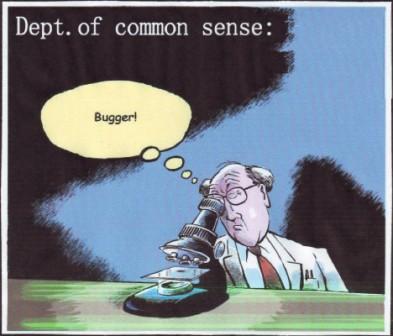
My Common Sense is Tingling - Debunking Christianity: Why Evolution is True, by Jerry Coyne

Chalk it up to coincidence if you like, but this morning I was greeted with two posts on Evolution in my news feeds. It was like seeing poison and then getting the antidote. First the poison from John Loftus' blog.

Every day, hundreds of observations and experiments pour into the hopper of the scientific literature. Many of them don't have much to do with evolution - they're observations about he details of physiology, biochemistry, development, and so on - but many of them do. And every fact that has something to do with evolution confirms its truth. Every fossil that we find, every DNA molecule that we sequence, every organ system that we dissect, supports the idea that species evolved from common ancestors. Despite innumerable possible observations that could prove evolution untrue, we don't have a single one. We don't find mammals in Precambrian rocks, humans in the same layers as dinosaurs, or any other fossils out of evolutionary order. DNA sequencing supports the evolutionary relationships of species originally deduced from the fossil record. And, as natural selection predicts, we find no species with adaptations that only benefit a different species. We do find dead genes and vestigial organs, incomprehensible under the idea of special creation. Despite a million chances to be wrong, evolution always comes up right. That is as close as we can get to a scientific truth. - Jerry Coyne, Why Evolution Is True
For more see the DC Evolution Smackdown.

I was just thinking "I wonder why people don't also consider the other ways of viewing the same data that does not support their conclusions and the data that goes against their conclusions - especially concerning evolution." I find that that Christian scientists are often belittled and ridiculed and accused of making data stretch to support the conclusions they hold but then we have scientists who support "common ancestry" doing the same thing. Here a portion of the antidote written by Luke Nix:


Now, the whole idea that I am demonstrating is not possible here, is common ancestry. There is much evidence that suggests a common ancestor (including similar genetic code). However, we are looking for an explanation that can make sense of the evidence for common ancestry AND all the evidence against common ancestry (surface scratched above).What is suggested by the similar genetic code is a "commonality". But what else could be "common" among the organisms that would explain all the evidence? A common designer. A common designer would explain everything. Many human designers use many things from previous designs in new designs (no sense in re-inventing the wheel). That would explain the common genetic code. A common designer is not limited by mutational and environmental pathways that are limited by the age of the universe and further limited by the age of whatever celestial body they formed on. The idea of a common designer explains more of the data, without inconsistency, than does common ancestry (macroevolution).


Nix's article is very good and offers some evidence that Loftus did not include in his quotation of Jerry Coyne's book. He even provides links to even more resource. I highly suggest looking at both sides and see that there is plenty enough evidence that you can just blindly accept the notion of the Universe coming into being uncaused and without direction or purpose (now that sounds like a delusion because there is verifiable evidence to the contrary).

So Remember:

Poison:
Debunking Christianity: Why Evolution is True, by Jerry Coyne

Antidote:
Can Evolution Repeat?
Enhanced by Zemanta

Saturday, February 5, 2011

Faithful Thinkers: Can We Be Good Without God?

Luke Nix has posted a great article defining what "Good" is and what does it mean to be "without God". It is a very insightful and well thoughtout article. IO like his approach very much. I think he puts his finger on the problem: just like when "faith" is brought up, people - believers and unbelievers - fail to make a distinction as to what the Bible says "Faith" and "goodness" are and what we - our culture and society - say they are. This is a great article. Are they Objective or Subjective? These are issues that this article deals with very well!


Faithful Thinkers: Can We Be Good Without God?
Enhanced by Zemanta