Showing posts with label Gospel of Matthew. Show all posts
Showing posts with label Gospel of Matthew. Show all posts
Sunday, May 10, 2020


Sunday, April 28, 2013
FacePalm of the Day - Debunking Christianity: Sinner, Do You Know Jesus?

"And there is salvation in no one else; for there is no other name under heaven that has been given among men by which we must be saved." - Acts 4:12
There is no one else through whom we must be saved other than Jesus of Nazareth - the Christ - son of the Living God. This is definitely what Peter was saying. However McCall attempts to make the following argument:
To keep our souls out of an eternal fiery Hell, we need to be “washed in the blood of the Lamb”, that is the blood of Jesus. But since the Gospels can’t agree (see below) on just who and what this Divine Man is, we are forced to look outside of the New Testament of a savior named Jesus.
McCall is wrong.The Gospels are not confused. McCall is confused. He offers the following "evidence" that the Gospel of Matthew is confused as to which Jesus we need to put our faith in.
A major problem in the Gospel of Matthew 27: 17 is that we have more than one Jesus crucified by Ponitus Pilate! As pointed out by Bruce Metzger in his A Textural Commentary on the Greek New Testament, 2nd ed., 1994 p. 56 states:
In a tenth century uncial manuscript (S) and in about twenty minuscule manuscripts a marginal comment states: “In many ancient copies which I have met with I found Barabbas himself likewise called ‘Jesus’; that is, the question of Pilate . . . “ συνηγμένων οὖν αὐτῶν εἶπεν αὐτοῖς ὁ Πειλᾶτος• τίνα θέλετε ἀπολύσω ὑμῖν, Βαραββᾶν ἢ Ἰησοῦν τὸν λεγόμενον Χριστόν; (So when the crowd had gathered, Pilate asked them, "Which one do you want me to release to you: Jesus Barabbas, or Jesus who is called the Messiah?")
Dr Bruce Metzger was only talking about one manuscript and it's not saying that Pilate did not know which man was the Messiah.
In a closing statement on this verse Metzger notes that “A majority of the Committee was of the opinion that the original text of Matthew had the double name in both verses and that Ἰησοῦν was deliberately suppressed in most witnesses for reverential consideration” or we might more accurately note for apologetic / theological purposes!
Metzger was not making an apologetic or a theological point but McCall want to make a point but only manages to fail miserably. Before I explain the main thing he misses, I want to point out that he tries to give multiple examples of other men named "Jesus".
What is really sad is that McCall mistake is so obvious! He is making the assumption that the name "Jesus" would have to been unique for scripture to be true. "Jesus" wasn't even the name in the Aramaic. His name is "Yeshua". "Jesus" is the Greek transliteration of "Yeshua" and in English "Yeshua comes to us as "Joshua". It doesn't matter what language you use - Aramaic, Hebrew, Greek, or English - the name was a common name in 1st century Palestine. There are more than 14 men referenced as Jesus from that time period. Extremely popular. This is why they did a lot of disambiguation. And in each of McCall's examples there is disambiguation in the examples. Thanks, McCall, for making my point for me. In no way is anyone in the Bible confused as to which Jesus they were referring too - any more than I can confuse John Loftus with my grandfather just because they have the same first name.
To add insult to common sense and scholarship, John Loftus offered the following *ahem <cough> insight.
Harry, you're good at unearthing this interesting stuff. Keep it up.
If Loftus is the learned scholar he pretends to be - the one whom Dr William Lane Craig - is too scared to debate, then why could he not identify such an obvious flaw in logic?
Perhaps Loftus and McCall should learn something from a real scholar.
Debunking Christianity: Sinner, Do You Know Jesus?

Saturday, February 16, 2013
Debunking Christianity: What Will Christians Do In Heaven For All Eternity?

Christians concoct many different scenarios about what they'll do in heaven for all eternity. None of them make good sense. Will they eternally play golf? Baseball? How about hockey, football, or even rugby? Boxing anyone? What about bear hunting? Hey, guys, how about having everlasting sex with a harem of 70 virgins? Oh, sorry, wrong religion. Regardless, what if YOU were part of a harem of 70 guys for some nymphomaniac in heaven who is just as ugly as YOU are? More seriously, what about being in a prostate position eternally worshiping God? This just seems boring to most Christians, that's all. I can hear some of the saints in heaven now:
Hey, God, can I get up and do something productive? Do you sincerely not want me to do anything now that I'm here? Doing productive activities is self-fulfilling and makes me happy. Let me do something, please, anything. Can I at least get up and stretch, or go catch up with the "few" family and friends I have that made it here? If nothing else, your wonderfulness, can I go to the bathroom? ;-)So most Christians envision they'll be given other worlds to rule over by God when they die depending on how well they behaved here on earth, even though I can hear murmurs of dissatisfaction: "Hey God, you said you forgave all of our sins so why does that guy get a bigger world to rule over than me?" However, if believers are given their own worlds to rule over, just who do they think they'll rule over? Will these creatures have free will and will they also rebel? Will the ruler of each of these worlds have to be crucified as Jesus was in order to save them from the wrath of God? I can't imagine believers signing up for a future excruciating crucifixion when they signed up to be in heaven. But if the creatures to be ruled over don't rebel then Jesus was a failure as a ruler over his world. I know I know, "ours is not to question why, ours is but to do and die."
If Loftus wasn't leading so many people astray by letting them think their doubts and skepticism actually have weight his lack of biblical knowledge would be laughable. He paid lip service to the fact that various people would answer the question differences, and then pretended that Christians don't really know anything although the Bible give us firm facts about things we can know for sure about heaven. Also I'd like to know how bear hunting is "productive".
1. We will be like the angels - so no marriage according to Jesus (Matthew ). Sorry, Muslims and Mormons.
29 Jesus replied, “You are in error because you do not know the Scriptures or the power of God. 30 At the resurrection people will neither marry nor be given in marriage; they will be like the angels in heaven. 31 But about the resurrection of the dead—have you not read what God said to you, - Matthew 22:29-31
2. No suffering. No pain. No sin.
3. No way is it going to be boring, exploring the new created order. For example, will there be entropy? What will be the limitations to our new bodies be?
4. We won't be gods of our own planets. Sorry, Mormons.
5, Even if we spend all of our time prostrate before the throne of God, in worship and adoration - it won't be boring because everytime we look at the throne we will see something different.
6. If we spend an eternity in worship of God, it won't be enough, God is worthy of more.
7. Whatever we do in heaven it will be be better to what apostates and people who reject Jesus is going to be doing.
Debunking Christianity: What Will Christians Do In Heaven For All Eternity?

Friday, January 18, 2013
FacePlant of the Day - Debunking Christianity: On Justifying the Use of Ridicule and Mockery

Hey, I KNOW Christians don't like being mocked. I get that. So it's no surprise they would object to it by saying it doesn't cause them to change their minds, that it makes them dig their heels in deeper, and that it just makes them think less of the one doing the mocking. You would expect them to say this. The facts however are different. Ridicule and mockery have been very effective in any cultural war and they will forever be effective and necessary.
Just who does like to be mocked? I don't think anyone enjoys it. Loftus surely doesn't like being mocked. For example he doesn't like the site Debunking Loftus: Setting John Straight and apparently does not like the blog's tag line which is the title of the blog's corresponding book The Cowboy that Wasn't There.
Loftus is correct that ridicule and mockery are indeed effective and relevant tools for communication. However it is important that it just can't be biting or offensive or provocative. It must be true and the motives behind it must be true.
There have been some very famous satires in history. Here are four important ones:
1) Aristophanes's Greek comedy The Clouds, portrays Socrates as a buffoon and a deceiver of the young. It was the first comedy "of ideas" and was a contributing factor in the trial and death of Socrates.
2) In 1729 Jonathan Swift wrote A Modest Proposal for Preventing the Children of Poor People From Being a Burden to Their Parents or Country, and for Making Them Beneficial to the Publick, where he mocks the English mistreatment of the Irish poor (a subject dear to my heart being of Irish descent). Swift suggests the solution for the impoverished Irish was to sell their children as food to the rich.
3) In 1759 Voltaire's Candide effectively mocked Leibniz's theodicy that "all is for the best in the best of all possible worlds."
4) Thomas Taylor wrote a satire of Mary Wollstonecraft's book A Vindication of the Rights of Woman (1792). Her book was the first defense of women's rights in Western English literature. She attacked gender oppression and argued for equal educational opportunities, justice, and equality for all humanity. Taylor mocked her ideas with A Vindication of the Rights of Brutes, arguing that if women have rights, then animals also have rights, but that was preposterous to him and to his readers at the time. The irony of Taylor's satire is that he provided some of the first arguments for animal rights that are used today (by those who also condemn his sexism).
I''d like to add a fifth example. Jesus uses mockery to drive home his message also. In fact the Bible has many examples.
23 “Woe to you, teachers of the law and Pharisees, you hypocrites! You give a tenth of your spices—mint, dill and cumin. But you have neglected the more important matters of the law—justice, mercy and faithfulness. You should have practiced the latter, without neglecting the former. 24 You blind guides! You strain out a gnat but swallow a camel.
25 “Woe to you, teachers of the law and Pharisees, you hypocrites! You clean the outside of the cup and dish, but inside they are full of greed and self-indulgence. - Matthew 23:23-25
Now, does anyone think these satires convinced the people who disagreed, the ones who made the case that was being mocked by these satires? I highly doubt it. I doubt they changed any minds among the ones who thought differently, who knew Socrates personally, who considered the Irish to be garbage, who agreed with Leibniz, or thought women were second rate human beings. These people cannot be convinced by satire, so satire is not written to change their minds. It's written to marginalize them by laughing at them. It persuades people who don't yet have a settled opinion on the issue, in part by using social pressure. No one wants to be a laughingstock. No one wants to be the butt of a joke. If people are laughing at a particular view it pressures the undecided to distance themselves from it. It draws a line in the sand, so to speak. It can also silence people who think otherwise, for they won't want to speak up in a class on behalf of something most others will laugh at.
I think this underscores the motivations between non-believers using satire and ridicule and the motivations between believers using them. When a believer uses them satire it is to literally change others' minds not to shame intractable people into silence or scare those on the fence to side with you. If you have to do that, you don't have good arguments. You are just a a mean bully.
Isn't using laughter an informal fallacy known as Appealing to Ridicule? It sure is. Shouldn't all intelligent people denounce using an informal fallacy then? Shouldn't they instead take the moral and intellectual high ground? No, not at all. In some ways we just cannot help ourselves since some ideas seem that preposterous. When something cannot be taken seriously it deserves our laughter. We all do it, all of us. Should we hide our laughter so as not to offend? I think not. It's a way to "come out of the closet," so to speak, to let others know they will be laughed at if they espouse certain ideas with a straight face. There is power in social pressure. There is power in numbers.
I totally agree that preposterous ideas deserve laughter. However you should be able to demonstrate why an idea or concept deserves derision. Remember at one point s heliocentric solar system was laughed at and ridicule and some people changed their minds to deny it due to peer pressure. Truth and reality should always trump what you think about the ideas you consider. Preposterous ideas does no equate to false.
Ridicule also shows people just how bad we think the case is for something. The worse we think the case is then the more our ridicule shows people what we really think of it. Laughter is an entirely appropriate response to a person who suggests women are inferior to men. That's how bad the case is for sexism. And the more studied a person is on a particular issue then more force that person's ridicule has on others. I'm ridiculed almost daily by believers who are usually ignorant of their own ignorance, so their ridicule shouldn't matter at all. By contrast, I have spent 40 years studying Christianity and my conclusion is that believers who seek to defend it are worth being laughed at. I laugh almost daily when reading something written by one of the top Christian apologists. They remind me of the story of the emperor who has no clothes on, really. I'm not kidding. Been there done that myself. Now I'm wearing clothes. I'm never going back to that nutty nudist camp for the mentally challenged who are all infected with the same virus of the mind.
Truth is Loftus does not realize how naked he is. I keep finding his understand of theology, and what the Bible says lacking of knowledge. Either Loftus mocks what he does not know or he often lies about what Christians believe and what the the Bible says.
The use of ridicule can be justified pragmatically. It works well under the right circumstances, depending on the issue and the potential effectiveness of using it. It is best used when the arguments are there to back it up, and when more people agree against the ideas that are being ridiculed. This is what Stephen Law, Richard Carrier and I are saying about the use of ridicule, and we have earned the right to use it because we have produced the arguments. That is, because we know Christianity is a delusion, and since deluded people cannot usually be argued out of their faith because they were never argued into it in the first place, the use of persuasion techniques like ridicule are rationally justifiable. So satire, ridicule and mockery are weapons that should be in our arsenal in this important cultural war of ideas.
I've seen Law's and Carrier's arguments and they are no better that Loftus' own. At the end of the day all ll they have is satire and mockery
Human beings may be so bad at reasoning that persuasion is all that matters. We are not like Spock of Star Trek. Not one is. Far, far, from it. If this even has some modicum degree of truth to it, and I think it does, then that alone justifies the use of mockery. Christians, for instance, are not usually reasoned into their faith. They were persuaded into it. They were persuaded to believe by the circumstances of their upbringing and/or the likability of a significant person in their lives. Based on this human propensity of ours, mockery might actually be more effective than thought, for if they were persuaded into their faith then maybe they can also be persuaded out of it.
I think Loftus is speaking from experience. If you don't know God for yourself, then you were never really in Christianity and of course you can be persuaded out of it. Your realization just lines up with reality
Science is the only antidote to this propensity of ours, and science has spoken on matters of faith. Faith is an unreliable process for gaining knowledge. Therefore the Christian faith, qua faith, is a delusion for childish people. Doubt is the adult attitude. Ridicule is both helpful and necessary. Someday in the future people will treat Christianity just like all of the other dead gods and religions are treated today. We mock them. In the future, anyone who learns about Christianity in a history book will mock it like all the other dead religions.
Here is an example Loftus attempting to use ridicule to shock Christians to give up on God. He says that having faith is unreliable and childish. But having to read some of his blog posts, I know that he thinks faith is believing something that is not true despite the evidence. He is front loading a lot of presuppositions and assumptions about Biblical reliability and what evidence is. This is what I mean by Loftus not making a good argument. The way he defines "faith" is not the way the Bible defines "faith".
Nothing I've said should lead anyone to think all we need is mockery. Far from it. I will continue reasoning with believers as always. It's just that mockery is effective, necessary, and justifiable in this cultural war. It's one of the weapons we need to change the religious landscape, which is my goal.
I'm amazed that Loftus thinks what he does is "reasoning".
If you meet people who think otherwise then send them here to discuss it.
So do mockery , ridicule, and satire figure into Christianity? Some say that it doesn't. But that can't be true because God uses it in the Bible. It's not immoral or wrong if you are going to do it right. How do you know?
13 Who is going to harm you if you are eager to do good? 14 But even if you should suffer for what is right, you are blessed. “Do not fear their threats[b]; do not be frightened.”[c] 15 But in your hearts revere Christ as Lord. Always be prepared to give an answer to everyone who asks you to give the reason for the hope that you have. But do this with gentleness and respect, 16 keeping a clear conscience, so that those who speak maliciously against your good behavior in Christ may be ashamed of their slander. 17 For it is better, if it is God’s will, to suffer for doing good than for doing evil. - 1 Peter 3:13-17
You can use ridicule and mockery and still use gentleness and respect - with God's help. Which explains why Loftus cannot do so.
Debunking Christianity: On Justifying the Use of Ridicule and Mockery

Thursday, August 16, 2012
FacePlant of the Day - A Really Bad Pro-Homosexual Argument! that Twists the Bible.

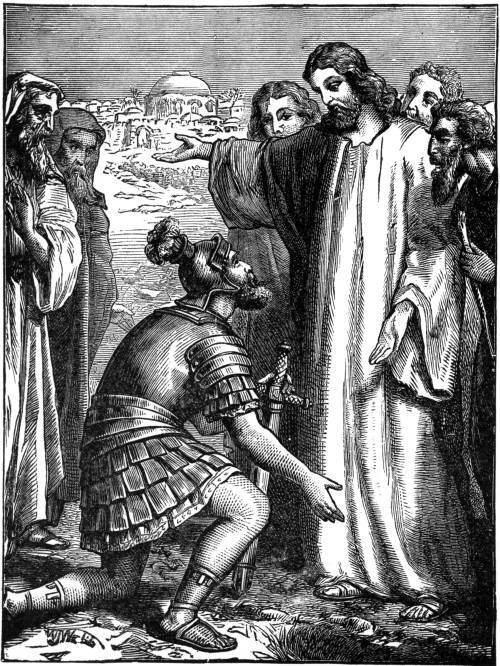 On Tuesday, Dr James White responded to an argument that's becoming quite popular in which people try to suggest that Jesus condoned homosexuality because he healed the young gay lover of a Roman Centurion. They base this farce on Matthew 8 and Luke 7. They want to argue that the one Jesus healed was not the Centurion servant but the centurion's gay lover. They go as far as saying that the Greek word "pais" does not mean "servant" but "lover". Such an argument can't hold together, and Dr White truly shows how this "reasoning" is really a fail.
Here is a link to the original article by Jay Michaelson: Link
Today on the Dividing Line: A Bunch of Really Bad Arguments on Very Different Topics


Sunday, January 29, 2012
Why Loving Jesus Is More Than A Religion

As for A Roman Catholic version, watch this one:
I see a fundamental difference between this video and Betheke's. This particular YouTuber is arguing that the only way you can have a relationship with Jesus is through guidance from the Roman Catholic Church. This was one of the main points of contention that started the Protestance reformation and after almost 500 years it is still relevant. Did Jesus really give us all we need to get to God or do we need more? The Reformer's answer to that is question was "Yes", so is Betheke's and so is mine. And like Bethke, the Reformers were not saying Church is not necessary or important, but that we don't need the traditions of men or to be self-righteous. We don't need a chorelist of do's and don'ts because God can and will help us to obey his commands but obeying his commands is not what saves us because none of can be sinless and perfect. Jesus is the only way - not Jesus plus your keeping church sacrements and following the Pope. Betheke is simply learned that what Jesus said is true and unfortunately many church-going people, let-alone non-Christians, miss this point.
23 Yet a time is coming and has now come when the true worshipers will worship the Father in the Spirit and in truth, for they are the kind of worshipers the Father seeks. 24 God is spirit, and his worshipers must worship in the Spirit and in truth.” - John 4:23-24
As for an Atheistic comment, you can watch the following video. Be forewarned it contains profane language and is most definitely not safe for work (NSFW).
Like every atheist that I've ever encountered, this man is unable to see a difference between having a relationship with Christ and with Religion. I think Jefferson Bethke gets the difference. Bethke is advocating not ritually attending church or working for others as a to-do-list to please other people or to earn your way into God. He's talking about surrendering your life to Jesus and putting yourself at His disposal because you love Him. I totally agree with Bethke. The closer you get to Jesus, the more you see what you are - and it's not pretty. When TheAmazingAtheist hears Christians talk of a relationship with Christ he reveals that he thinks that means Jesus is like some Pal, or Buddy, you can sit down with and "play XBox" or have brewskies with. I think a lot of people make that mistake. What the Bible teaches is that "relationship" means "Lord" and "servant". We obey and worship Him. I don't know the last time you worshiped the dude you play XBox with, but I doubt you would. What does the Bible says that relationship should look like and on which it is based? I'd argue that all 66 books of the canonical Bible answers this question but I will offer two of those passages.
.18 “Come now, let us settle the matter,”
says the LORD.
“Though your sins are like scarlet,
they shall be as white as snow;
though they are red as crimson,
they shall be like wool. Isaiah 1:18
1 As for you, you were dead in your transgressions and sins, 2 in which you used to live when you followed the ways of this world and of the ruler of the kingdom of the air, the spirit who is now at work in those who are disobedient. 3 All of us also lived among them at one time, gratifying the cravings of our flesh and following its desires and thoughts. Like the rest, we were by nature deserving of wrath. 4 But because of his great love for us, God, who is rich in mercy, 5 made us alive with Christ even when we were dead in transgressions—it is by grace you have been saved. 6 And God raised us up with Christ and seated us with him in the heavenly realms in Christ Jesus, 7 in order that in the coming ages he might show the incomparable riches of his grace, expressed in his kindness to us in Christ Jesus. 8 For it is by grace you have been saved, through faith—and this is not from yourselves, it is the gift of God— 9 not by works, so that no one can boast. 10 For we are God’s handiwork, created in Christ Jesus to do good works, which God prepared in advance for us to do. - Ephesians 2:1-10
The Bible very clearly tells us that Jesus is our only way to turn away the wrath of a holy God. Who deserves eternal damnation and punishment for their sins? ALL OF US.
21 But now apart from the law the righteousness of God has been made known, to which the Law and the Prophets testify. 22 This righteousness is given through faith in Jesus Christ to all who believe. There is no difference between Jew and Gentile, 23 for all have sinned and fall short of the glory of God, 24 and all are justified freely by his grace through the redemption that came by Christ Jesus. 25 God presented Christ as a sacrifice of atonement, through the shedding of his blood—to be received by faith. He did this to demonstrate his righteousness, because in his forbearance he had left the sins committed beforehand unpunished— 26 he did it to demonstrate his righteousness at the present time, so as to be just and the one who justifies those who have faith in Jesus. - Romans 3:212-25
That is why we need a savior. Someone to take the punishment we deserve,. No one in your Church can do that. It's either going to be you atoning for your sins or it's gonna be Jesus. You wouldn't survive paying such a debt. It takes the grace and mercy of God to see this, understand this, let alone accept it. It goes against every fiber of human ego and self-centeredness. Was there something special about you or good in you that caused Jesus to die for you in your place? Nope (Back to Ephesians 2). God chose to do it for us even when we didn't know we need it and didn't ask Him to do it. Should you love Jesus more than anyone or anything else? Yup. But what else did Jesus say? He tells us to love our parents and families and treat them well. I wonder if TheAmazingAtheist has read all of the Gospels? I ask because if he had, wouldn't he know that he misunderstood Matthew 10:32-29. Jesus was not saying that you should ignore or mistreat your family because you love him. How do I know?
3 Jesus replied, “And why do you break the command of God for the sake of your tradition? 4 For God said, ‘Honor your father and mother’ and ‘Anyone who curses their father or mother is to be put to death.’ 5 But you say that if anyone declares that what might have been used to help their father or mother is ‘devoted to God,’ 6 they are not to ‘honor their father or mother’ with it. Thus you nullify the word of God for the sake of your tradition. 7 You hypocrites! Isaiah was right when he prophesied about you:
8 “‘These people honor me with their lips,
but their hearts are far from me.
9 They worship me in vain;
their teachings are merely human rules.’” - Matthew 15:3-9
How could Jesus, a scant 5 Chapters later chastise the religious leaders of his day for teaching people ditching their obligations to their families to perform religious ritual if that is what he had taught in Matthew 10? Let me help you: He didn't. Even the most skeptical person wouldn't really be crazy enough to try to argue that Matthew 10 and Matthew15 are contradictory and mutually exclusive and no one noticed for 2000 years - given that it was is written by the same author - regardless if you reject that it was the Apostle Matthew. Please, let's try to stay consistent.

Friday, January 13, 2012
Fistbump of the Day - He Lives: I am Richard Carrier. I have demonstrated this. I have refuted that.

It boggles the mind when people claim, definitively, that they have refuted the bible. If they were to say: Here is a serious problem for those who affirm biblical inerrancy--well that would be one thing. But to claim to have demonstrated error--not just to have made a decent case for error--well that takes an especially small mind.
Such a mind is that of Richard Carrier.
Read the post at this link:
He Lives: I am Richard Carrier. I have demonstrated this. I have refuted that.

Tuesday, December 20, 2011
Geisler's Christmas Carol - YouTube

I want to clearly say that, I disagree with the way the video predicts the future of Christianity should people listen to Norman Geisler's saber rattling against Michael Licona. I too disagree with his saying that Matthew did not intend the raised-from-the-dead saints in Matthew chapter 27 to be understood historically. I think it is meant to be historical. But arguing that it's not does not equate to saying the Bible is errant. I think one thing missing from the discussion that the people who were raised, were known around Jerusalem. That means that they had not long been dead and I would take their raising to be like the ones who had been raised to life and then later died - like Lazarus. Dr James White takes this position and I think he makes a good point. I also don't think that Geisler's behavior (as bad as it is) will lead to apostasy and cause people to loose their faith and be swayed by Bart Ehrman and people like him. God is in control. It is God who saves us and keeps us saved. Don't people credit. The credit is God's imputed to us through faith because of God's mercy.
Paul Wrote:
7 Now we pray to God that you will not do anything wrong—not so that people will see that we have stood the test but so that you will do what is right even though we may seem to have failed. 8 For we cannot do anything against the truth, but only for the truth. 9 We are glad whenever we are weak but you are strong; and our prayer is that you may be fully restored.- 2 Corinthians 13:7-9
And even better, Jesus said.
17 Jesus replied, “Blessed are you, Simon son of Jonah, for this was not revealed to you by flesh and blood, but by my Father in heaven. 18 And I tell you that you are Peter, and on this rock I will build my church, and the gates of Hades will not overcome it. 19 I will give you the keys of the kingdom of heaven; whatever you bind on earth will be bound in heaven, and whatever you loose on earth will be loosed in heaven.” - Matthew 16:17-19
Given that the gates of Hades don't stand a chance, I doubt we have to worry about Bart Ehrman, or Norman Geisler for that matter.
Geisler's Christmas Carol - YouTube

Thursday, November 24, 2011
Interviews From San Francisco


Recently Dr Michael Licona interviewed a few scholars on camera in San Francisco. The videos are now on YouTube.
Dr Dan Wallace and Dr Paul Copan on the controversy regarding Dr Norman Giesler, Licona, and Matthew 27.
Dr Dan Wallace talked about his recent debate against Dr Bart Ehrman.

Wednesday, July 13, 2011
My Common Sense is Tingling: Debunking Christianity: Why the Q Hypothesis Works

Tommy G. Baker has posted another article attempting to discredit the Bible. He fails. But let's see how he fails. I find that his methods better than John Loftus;, however so I guess that's worth a little something. My comments are in red.
Mark 1: 21-39 presents Jesus going to Simon Peter's house and curing Peter's mother-in-law. She has a fever which Jesus "cures'. She then gets up and serves them. That evening people brought the demon possessed and sick to the house. The whole city gathers about the door.
Notice how Baker just summarizes the text instead of quoting it. It's not that he doesn't get it right but it is interesting.
Jesus heals many of the cases and told them to keep quite. And the following morning before daylight he went out to a private place and prayed. he is interrupted by Peter and the rest telling him that the crowds were looking for him. He gets the new followers to go the the next towns in Galilee preaching and exorcizing demons.
Until we get to here
32 That evening after sunset, the people brought to Jesus all who were sick. They also brought all who were controlled by demons. 33 All the people in town gathered at the door. 34 Jesus healed many of them. They had all kinds of sicknesses. He also drove out many demons. But he would not let the demons speak, because they knew who he was. - Mark 1:32-34
When we look at Matthew and Luke the story changes. Matthew 8:14 -27 has been rewritten by its author:
Let's see if he can prove that.
1) Matthew as throughout the Gospel intensifies the situation to make it ore outstanding. Here instead of Jesus curing many of those brought. Matthew now says he cures all of who was brought to him.
Guess not
16 When evening came, many people controlled by demons were brought to Jesus. He drove out the spirits with a word. He healed all who were sick. Matthew 8:16
2) Matthew adds an Old Testament quote to claim that the event was a fulfilment of prophecy, " He took away our infirmities and bore our diseases (Isaiah 53:4)." The Jewish interpretation is that this applies to the whole of Israel. Here we see it taken to create the Suffering Servant as a prophecy of the messiah (Origen, Contra Celsus).
And how is adding the detail that Jesus fulfilled the Old Testament a problem? I agree with Baker that Matthew was written to Jews. It's written in such a way that Jewish sensibilities are brought out. Explaining that Jesus fulfilled the New Testament would be very important to Jewish leaders. It would not have been as important to Romans (Mark) or Greeks (Luke).
3) Here the events will change dramatically. Instead of Jesus going to bed and getting up early in the morning to pray he commands his new followers to get a boat to cross the lake. This is a fabrication by Matthew. It acts as a "seam" to stitch a passage from Q into his reworking of the text of Mark.
Why does it have to be a fabrication? Baker admits that he doesn't know who wrote Matthew. For all we know it could be the man whom tradition says it was who wrote it. And in that case there is no reason to think that Matthew just gives more information than Mark does in this instance. There is no need to complicate matters introducing a third source that no one can prove ever existed.
Matthew 8:
9 Then a teacher of the law came to him and said, “Teacher, I will follow you wherever you go.”This is followed by the next seam in which Jesus gets into the boat and Jesus calms the storm. With this addition we see that Jesus no longer sleeps or prays early the next day. This addition of the "Would-be Follower" changes the original story of Mark. This is at the beginning of the ministry of Jesus according to Matthew.
20 Jesus replied, “Foxes have dens and birds have nests, but the Son of Man has no place to lay his head.”
21 Another disciple said to him, “Lord, first let me go and bury my father.”
22 But Jesus told him, “Follow me, and let the dead bury their own dead.
Again Baker assumes that Matthew changes a story and can't prove any such thing happened. He merely asserts it.
When we compare the section in Luke 4:38-41 we see Luke also intensifies the event:
1) all of the people are cured by laying on of hands. The demons coming out testify that Jesus "is the Son of God." He rebukes the demons to be silent rather than the people as in Mark.
No, in Mark the demons are rebuked not the people,. What translation is Baker reading?
2) As in Mark Jesus come the next morning goes out to a private place to pray.
Still doesn't contradict Matthew. One Gospel has a detail the other two do not have. That's not a conflict. That is what one would expect if they were based on eyewitness testimony.
3) But Luke 9:57-62 still has the Would-be Followers passage. He uses it from Q at the end of the ministry of Jesus. The event is made to occur while going through Samaria on the way to Jerusalem where he will die.
Wow! This time Baker asserts much without any proof whatsoever. If Luke copied from Mark and didn't have access to "Q" then how could he have taken material from Q if it's not part of Mark? I find it humorous. The "Q" hypothesis is not really one hypothesis but comes in multiple flavors. And there are versions where Matthew and Luke did not have access to "Q" and Mark and where Matthew and Luke only had Mark. They all can't be true. And again a hypothesis is only a guess not fact. And here I don't even think "hypothesis" is a good description. "Pipe Dream" seems more fitting.
As an atheistic Bible study we can show to Christians that their scripture is not inerrant since the events are changed by the editing of Mark by Matthew and Luke. We can show that a sayings source that had no contextual setting was given context by inserting its collection of Jesus sayings into Mark. Mark thus becomes a convenient context.
If Baker means atheistic Bible study is a good example of eisogesis and how one should not read anything, then I agree that the approach is useful.
This also demonstrates that there is nothing historical in these presentations. This approach throughout the Synoptic Gospels shows an early Mark that has an all too human Jesus who does not know who touches his robe, who gets angry with people and insults several who seek his help. He has a human temper.
Baker is pontificating. He proved no such thing. I find nothing but fantasy in his presentation and no fact. Who said Jesus was not fully human? The orthodox Christian viewpoint is that Jesus is fully human and fully God. Why wouldn't he get angry? God got angry in the Old Testament a lot. When the woman with the issue of Blood touched Him, Jesus did not know who it was for the same reason He didn't know the day or the hour of his second coming: He voluntarily limited Himself in His humanity, but that doesn't mean He ceased being God at any time. And no I would not classify Jesus' temper as human as like us. If He were He would have wiped out everyone who had a hand in his crucifixion and kangaroo trial
Matthew removes all of this. Jesus becomes a heavenly emissary with perfect knowledge and super human powers. Luke shows him to be a divine agent similar to Matthew's restructuring. We can see the progress in a temporal manner from Q an early sayings source of a human Jewish teacher to Mark as a man adopted by God in a Gentile view. Jesus is seen as an Enochican heavenly messenger in Matthew. And finally he becomes a Gentile demi-god in Luke. John will make him a pre-existent property of God, Logos, His Wisdom and Reason.
No, Matthew gives other details that shows how Jesus was/is the king Israel has been waiting for. How can you see any progression from "Q" given that we don't know what was all in "Q"? Mark's goal in writing His Gospel was very different from Matthew, Luke, and John. The audience is different. Of course the details included would be different. This does not mean that there is conflict. If I tell you Sue went to the store and then I told someone else that Sue and Jane went to the store, is this a conflict? Did I lie? No, I did not. This is the nature of the differences between the Gospels.
Q becomes the only source of primary attention for a historical Jesus. It shows a human being who is not a sacrifice for salvation as in the later Gospels. It is his teachings that are the source of salvation for the original hearers who were Jewish Palestinans.
Correction "Q" could be a source of primary attention for a historical Jesus if we knew what was in "Q" and we don't even know if such a document really existed outside of the minds of the men who dreamed it up.
Written by Tommy G. Baker
So was Baker able to show why the Q hypothesis works and why we should accept it in understanding who Jesus is from a historical standpoint? Nope, not even close. At least Baker is trying to support his atheism by attacking the Bible instead of hiding behind a stupid charge of circular reasoning.- claiming that you can't use the Bible to prove the Bible. He seems convinced that the Bible discredits itself. Hopefully as he keeps studying the scriptures, God will open his mind and he will truly see them.
Debunking Christianity: Why the Q Hypothesis Works

Tuesday, June 28, 2011
FacePalm of the Day #97 - Debunking Christianity: What Jesus Christ Had to Say About the Outsider Test for Faith!

This is my chosen title for a guest sermon I'll be preaching for the "One True Church of Jesus Christ That Has Ever Existed in History." The preacher is away on vacation. This church meets in a little building on "Faith" Street in a town called Saint Paul, Missouri, the "Show Me" state (never-mind the oxymoron). They have a membership of 10 people, all related to each other in some way. Here are my chosen texts. How should I develop my sermon?
I find it interesting that Loftus never identifies the exact name of the church or the pastor of that church. Loftus doesn't show the people or their Pastor any respect whatsoever. I hope he'll be kinder in person. And on top of that I think that considering how Jesus would apply the OTF a great idea.
Matthew 7:1-12
“Do not judge, or you too will be judged. For in the same way you judge others, you will be judged, and with the measure you use, it will be measured to you. “Why do you look at the speck of sawdust in your brother’s eye and pay no attention to the plank in your own eye? How can you say to your brother, ‘Let me take the speck out of your eye,’ when all the time there is a plank in your own eye? You hypocrite, first take the plank out of your own eye, and then you will see clearly to remove the speck from your brother’s eye...So in everything, do to others what you would have them do to you, for this sums up the Law and the Prophets.Loftus says he was once a preacher. I wonder how much time will he have. He says he is going to use 12 verses from Matthew 7 but on the post he only quotes verses 1-5, and 12. This is one of my favorite passages of scripture because I think it does explain how we are to interact with one another. So many people think Jesus meant that "judging" means calling others to a standard. The OTF itself requires making judgments. So I don't think that Loftus is taking the view so many mistakenly take. Let's instead ask if this passage can be used to validate or invalidate Christians? If anything it validates Christianity and makes it plain how far we have fallen short in keeping it. It shows us what standard we should be living up to and we know that we haven't. Which is what Christianity teaches.
And then this one from Matthew 23:
“Woe to you, teachers of the law and Pharisees, you hypocrites!...“Woe to you, blind guides!...You blind fools!...You blind men!"...“Woe to you, teachers of the law and Pharisees, you hypocrites!...You blind guides! You strain out a gnat but swallow a camel"...“Woe to you, teachers of the law and Pharisees, you hypocrites! You are like whitewashed tombs, which look beautiful on the outside but on the inside are full of the bones of the dead and everything unclean. In the same way, on the outside you appear to people as righteous but on the inside you are full of hypocrisy and wickedness. “Woe to you, teachers of the law and Pharisees, you hypocrites! You build tombs for the prophets and decorate the graves of the righteous. And you say, ‘If we had lived in the days of our ancestors, we would not have taken part with them in shedding the blood of the prophets.’...“You snakes! You brood of vipers!;-)
It seems to me that John Loftus thinks that these passages are some sort of slap in the face of Christians. It cuts Atheism to the quick. Any one who teaches that Jesus isn't who He said He is and that they are without sin and that we don't need God or His gift of salvation is that "brood of vipers". They are hypocrites and "white-washed tombs",. In other words it describes atheists who try to turn people away from Jesus. The passages prove that Christianity passes Loftus' Outsider Test for Faith.
Gee, I wonder why Lofus didn't point out that Jesus also said the following:
“If anyone causes one of these little ones—those who believe in me—to stumble, it would be better for them to have a large millstone hung around their neck and to be drowned in the depths of the sea." - Matthew 18:6
Debunking Christianity: What Jesus Christ Had to Say About the Outsider Test for Faith!

Saturday, June 25, 2011
Dr Michael Brown Discusses How Matthew Uses the Old Testament
Dr Michael Brown tweeted the following!

Dr Michael Brown Discusses How Matthew Uses the Old Testament


Dr Michael Brown Discusses How Matthew Uses the Old Testament
Tuesday, June 7, 2011
FacePalm of the Day #86 - Debunking Christianity: Jesus Was Baptized for His Sins

I would like to present an atheistic bible study, an observation or interpretation, I believe explains the re-working of the original story of Jesus and John the Baptist by the authors of Matthew and Luke. This is with the understanding that Matthew and Luke use Mark in their compositions. In Mark Jesus is baptized into ( eis) the remission of sins. The preposition “eis” means from out of a state to into a different state or place. This preposition in Mark is redacted (re-worked or edited) by Matthew.
"Observation" and "interpretation" are not synonymous. The thought that Matthew and Luke use Mark in their compositions is still only a theory, but let's leave that aside for the time being. Only a point that is in the text can be observed and any interpretation can be shoehorned into any text. First the observation that "eis" is used in the narrative in Mark describing Jesus' baptism. Let's look at Mark. No text reference is given but it seems that he is referring to the following:
9 At that time Jesus came from Nazareth in Galilee and was baptized by John in the Jordan. - Mark 1:9 (NIV)
However the author seems to want to translate this verse to say that Jesus was baptized to get rid of his sin. But I can't find a single English translation that agree with this author. What about Matthew?
13 Then Jesus came from Galilee to the Jordan to be baptized by John. - Matthew 3:13 (NIV)
Hmmm...reads the same in English. Let's see if he's right about the Greek texts?

Τότε παραγίνεται ὁ Ἰησοῦς ἀπὸ τῆς Γαλιλαίας ἐπὶ τὸν Ἰορδάνην πρὸς τὸν Ἰωάννην τοῦ βαπτισθῆναι ὑπ' αὐτοῦ. - Matthew 3:13

Καὶ ἐγένετο ἐν ἐκείναις ταῖς ἡμέραις ἦλθεν Ἰησοῦς ἀπὸ Ναζαρὲτ τῆς Γαλιλαίας καὶ ἐβαπτίσθη εἰς τὸν Ἰορδάνην ὑπὸ Ἰωάννου. Mark 1:9
The statement of what the baptism is for in Matthew is dropped. We see the term "into the remission of sins' added instead by Matthew to the pericope of the Last Supper. 26:28. There communion becomes for the remission of sin. Matthew creates a conversation where John the Baptist tries to prevent Jesus from being baptized and Jesus tells him to go on with it to fulfill all righteousness.
I would like to know which manuscripts TGBaker is getting this from. The Phrase "into the remission of sins" is not in Mark 1:9.. And none of the canonical Gospels show Jesus getting baptized more than once. In addition I see fundamental mistake here in that neither Communion nor Baptism save you or takes away your sins. These are only symbolic of the work God does in the hearts and minds of His people. There is not a single passage in the Bible that make salvation contingent on Communion or Baptism. Also I see a lot of "poisoning the well" here. Why would TGBaker insinuate that Matthew manufactures the conversation between Jesus and John the Baptist? Why couldn't Matthew just have a detail that Mark does not? TGBaker has presumptions that the texts cannot be reliable and he spins his interpretation in what ever way he has to validate those assumptions.
This answers the problem of why a sinless person would need baptism as in Mark and also makes John subservient to Jesus. This makes obvious the church is dealing with the fact that Jesus was a follower of John the Baptist and does not begin his ministry until John is arrested. The author of the Gospel of John will have Jesus baptizing and ministering at the same time as the Baptist and does not have Jesus baptized by John.
Another presumptions offered with no proof of any kind. There is the theory going around that Jesus was one of John the Baptist's followers, but no proof is ever seeming given beyond raising the speculation. John and Mark are not in conflict because John does not say that Jesus was not baptized by John the Baptist.all. Mark said that Jesus went into Galilee after John was arrested not that he did no ministry before John the Baptist was arrested. Sure wish people would not read things into the Bible that is not there.
In Mark Jesus comes up out of the water and the Holy Spirit comes into ( again eis) him. Matthew changes this to the spirit descends upon ( epi) him. The idea of the spirit after baptism coming into a person is consistent with the idea in Acts 2:38: Peter replied, “Repent and be baptized, every one of you, in the name of Jesus Christ for the forgiveness of your sins. And you will receive the gift of the Holy Spirit.
Again the message was not that Baptism was the prerequisite for forgiveness of sin. Baptism is a sign of repentance. I sure would like to know what translation this guy is using because I can't find an English translation that agrees with him.
In Mark Jesus alone hears god saying that he is well pleased. In Matthew god addresses his pleasure to the crowds. Luke maintains Mark's terminology about baptism, changes the adoptionistic reception of the Spirit into Jesus to a confirmation like Matthew to the spirit as dove comes down upon (epi) him. The change of the preposition by Matthew and Luke are intentional because of the theological implications and the addition of the infancy narratives wherein Jesus has the spirit from birth! Luke quotes mark and maintains gods announcement of pleasure to Jesus.
Um, Luke did not say that Jesus has the spirit from Birth. It says that John the Baptist did. Just because Mark does not have the detail that other people heard the voice and understood the sign at Jesus' baptism does not mean the Luke made it up. Notice that Mark does not say that only Jesus saw the dove and heard the voice. The voice was for the crowd's benefit not Jesus' benefit.
When one looks at the quoted OT verses in Mark 1:2f they are combined and perhaps reflect a pre-exiting proof text designed from Isaiah and Malachi not just Isaiah as stated. The pronouns are changed so that the verses can apply to the idea of the Baptist as precursor. Instead of "Behold I send my messenger before your face the original in Malachi 3:1 reads "I will send my messenger before me ( i.e.; God)." The change is from god talking to his prophet about his own coming to god talking to Christ about sending the Baptist before him. The messenger in Malachi was originally the Messiah and not the Baptist. The change is from god to messiah or Jesus in doing so and an example of a forged prophecy. Thus the preparing of the way of the Lord (Yahweh) shifts to a Messianic interpretation and the make straight his paths is substituted for the paths of our God.
I think that TGBaker oversteps yet again. If you look at many Old Testament quotations in the New Testament you will find that they differ when you look up the corresponding passages. Why? The answer is because the writers of the New Testament used the Septuagint - the Greek Translations at the time of the 1st Century AD. Few Jews at the time read Hebrew but Greek was the common language. Most of our new translations of the Old Testament are based on the Hebrew texts - therefore they are going to read a little different,. I disagree that means that the New Testament is based on false prophecies because I think you have to agree that the Jews who made the Septuagint knew how to translate Hebrew into Greek better than most people alive today. If anything it improves the reliability of our texts. Having the Septuagint gives us even more data to understand the New Testament manuscripts and how idioms and words were used in the First Cenutry! Praise God for such a gift!
Debunking Christianity: Jesus Was Baptized for His Sins

Subscribe to:
Posts (Atom)