Thursday, November 22, 2012

FacePalm of the Day - Debunking Christianity: Two Scenarios From Dr. Matt McCormick and His Conclusions


John Loftus posted an article from Dr Matt McCormick's blog where Dr McCormick discusses the implications on atheism and agnosticism  from the Divine Arguments argument. Loftus quotes the following.

Scenario A: God isn’t real and we fail to find good evidence for supernatural beings.

Belief in situation A: irrational.
Agnosticism in situation A: irrational.
Disbelief in situation A: reasonable/rational.

Scenario B: God is Real, but Hiding.

Belief in situation B: irrational.
Agnosticism in situation B: not an epistemically responsible position.
Disbelief in situation B: reasonable/rational. Enjoy.

McCormick's whole argument is assuming that the Hiddeness of God is something that given weight falls and leads to atheism. There are many formulations for the idea but let's stick to McCormicks and examine if this philosophical idea holds any weight.

I’ve been thinking about the arguments for atheism from divine hiddenness.  Here’s a way to argue for atheism in that vein with some similarities to Drange and Schellenberg and with several improvements on the argument of my own. 
I've often thought about "divine hiddenness" and I don't think it squares with the Bible or observation. 

18 The wrath of God is being revealed from heaven against all the godlessness and wickedness of people, who suppress the truth by their wickedness, 19 since what may be known about God is plain to them, because God has made it plain to them. 20 For since the creation of the world God’s invisible qualities—his eternal power and divine nature—have been clearly seen, being understood from what has been made, so that people are without excuse. - Romans 1:18-20

The Bible does not tell us that God is hidden in the slightest. In fact it tells us the opposite. The idea of hiddenness comes from people who like to think they have an excuse for why they don't experience God the way they think they should if God exists. This thinking is backward. God reveals Himself to us on His terms not ours

24 “The God who made the world and everything in it is the Lord of heaven and earth and does not live in temples built by human hands. 25 And he is not served by human hands, as if he needed anything. Rather, he himself gives everyone life and breath and everything else. 26 From one man he made all the nations, that they should inhabit the whole earth; and he marked out their appointed times in history and the boundaries of their lands. 27 God did this so that they would seek him and perhaps reach out for him and find him, though he is not far from any one of us. - Acts 17:24-27

Add this one.

By faith Enoch was taken from this life, so that he did not experience death: “He could not be found, because God had taken him away.”[a] For before he was taken, he was commended as one who pleased God. And without faith it is impossible to please God, because anyone who comes to him must believe that he exists and that he rewards those who earnestly seek him. - Hebrews 11:5,6
 
We need to be like Enoch and remember that God is not hiding from us. We hide from Him.
Imagine two scenarios, both where it would appear that God is hiding. 
Scenario A:  God isn’t real and we fail to find good evidence for supernatural beings.
Suppose that beings humans find themselves in this situation: 
There is no supernatural being of any sort.
Furthermore,  
 a.  there are no empirical indications of a supernatural beings
No proof of that. We have creation,
b.    none of the conceptual arguments for supernatural beings are compelling
 Says him
c.    we have made substantial efforts to uncover supernatural beings. 
Like what? How about seeking God with a whole heart?
d.    none of our attempts to discover supernatural beings have succeeded
What are they?
e.    the available evidence concerning supernatural beings are inadequate.
So he admits that there is some available evidence but how does he know it is inadequate?
f.     there is a presumption that supernatural beings are the sort of entity that, if one were to exist, then it would manifest in some fashion that is detectable by beings with our cognitive faculties. 
This is a presupposition that God has not revealed Himself that is detectable to us. Not true.
g.    the presumption that supernatural beings would manifest in some way has not been defeated.
Yes it has because that is what God has done. 
h.    naturalized models of supernatural belief formation are well justified by the evidence and they provide a better alternative account of the origins of supernatural beliefs.   
I wouldn't agree to that all. Asserting it does not make it true. 
Question:  What is the reasonable conclusion to draw about supernatural beings in this situation? 
Would non-belief be epistemically inculpable in this situation?  That is, if humans  conclude that there are no supernatural beings, would that conclusion be unwarranted?  
What about believing in a supernatural being?  And would being an agnostic be epistemically culpable or inculpable in this situation? 
It seems to me for a number of reasons that disbelief in supernatural beings would be justified.  Disbelief would not be epistemically culpable.  Furthermore, believing in a supernatural being in this situation would be epistemically culpable and irrational.  I even think that being agnostic in this situation, particularly given the point in h., would be unreasonable/culpable.  
That is:
Belief in situation A:  irrational. 
Agnosticism in situation A:  irrational. 
Disbelief in situation A:  reasonable/rational.  
If McCormick's assumptions were true then I would agree with his conclusions. Unfortunately they are not and we have no reason to accept them. 
Scenario B:  God is Real, but Hiding
Suppose that humans find themselves in this situation: 
God exists and possesses the power and the knowledge to make himself known to humans. 
Yet for reasons unknown to humans, God insures that: 
a.    there are no empirical indications of God
False
b.    none of the conceptual arguments for God is compelling
That is true about all the concepts outside the Bible.
 
c.    we have made substantial efforts to uncover God,  
“And you, my son Solomon, acknowledge the God of your father, and serve him with wholehearted devotion and with a willing mind, for the LORD searches every heart and understands every desire and every thought. If you seek him, he will be found by you; but if you forsake him, he will reject you forever. - 1 Chronicles 28:9
Just follow the command Solomon got. 
d.    none of our attempts to discover God have succeeded
Maybe none of his, but there are a lot of people would beg to differ. 
e.    the available evidence concerning God is inadequate
The more we learn in science and technology the more we find  evidence concerning God.  
f.     there is a presumption that God is the sort of entity that, if God were to exist, then God would manifest in some fashion that is detectable by beings with our cognitive faculties.  
And God does exactly that. 
g.    the presumption that supernatural beings/God would manifest in some way has not been defeated.
The fact that there is a universe rather than nothing defeats the idea that there is no God. 
h.    naturalized models of supernatural belief formation are well justified by the evidence and they provide a better alternative account of the origins of supernatural beliefs.    
Naturalized models are not justified or explain all of our observations better than God's revelation of Himself. 
Question:  What is the reasonable conclusion to draw about supernatural beings in this situation? 
Would disbelief be epistemically inculpable in this situation?  That is, if humans  conclude that there are no supernatural beings, would that conclusion be unwarranted? [yes] Notice that the evidential situation for humans is exactly the same in both scenarios. [No it isn't, because God has revealed Himself]  So the answers to our questions about what is the reasonable conclusion to draw must be the same, with some interesting side notes. [Only if make the same mistaken analysis]  Ironically, despite the fact that God is real in this situation, it seems to me that disbelief, given the evidential situation would be justified.  That is, the atheist in the world where God is real but hiding, would have a well-justified but false belief. [God is not hiding.] We couldn’t find epistemic fault with the conclusion that this atheist has drawn.  The apocryphal story about Bertrand Russell is relevant.  After a lecture about atheism, a member of the audience asked him, “Prof. Russell, what are you going to do after you die and then in the afterlife you show up at the Pearly Gates and God and Saint Peter are all there and it’s obvious how wrong you are?”  Allegedly without missing a step, Russell said he’d say to God, “Not enough evidence, God!  Not enough evidence!” 
Only thing is Russell would never be able to say that because standing before God he would have to admit that claiming a lack of evidence would be a lie.  And don't forget that Russell has indeed gone on and I can't imagine that this excuse worked.  It won't work for anyone.
Furthermore, if someone were to believe in God in this situation, it would be irrational and unjustified.  Ironically, she would happen to get it right.  That is, she’d have  a true belief.  But her evidence did not justify her conclusion.  Her belief would have all the virtue of thievery over honest toil, to quote Russell again.  She’d be like a psychic who accidentally predicted the winning lottery numbers.  Her getting the numbers right by accident doesn’t vindicate her method or improve the reliability of her method of derivation.  
One one hand this is something one would want to be right about and wouldn't care if they were right for the wrong reason.  God has not really left this option open for us because God has plainly revealed himself to us. We are not left without evidence or witnesses. Therefore if you are wrong about God's existence you have no excuse.
Furthermore, if agnosticism was unreasonable and unjustified in scenario A, it would be here too.  That is, the agnostic who suspends judgment in scenario B, where a-h are also true, would be unjustified.  
Agreed. 
The interesting question here concerns the reasonable limits to agnosticism.  Under what circumstances should one be an agnostic.  It seems to me that a-h, if they are true, are enough to warrant moving from agnostic to atheism.  Some other examples are suggestive:  Suppose we insert Bigfoot or Leprechauns into scenario A. 
Suppose there are no Leprechauns.  And suppose further that we have searched diligently, no compelling evidence in their favor has been found, Leprechauns are the sorts of things that would be revealed in some way to our cognitive faculties if we were to search and encounter them, and furthermore, we have other natural explanations of why people have believed in Leprechauns.  In that situation, you should not be agnostic.  Being agnostic would be irrational.  
If you search for God with your whole heart you will find God and God will not cast you out or ignore you. So being an atheist or agnostic is irrational. 
Many agnostics have the view that God is not like Leprechauns, so there is a disanalogy here.  God is unlike Leprechauns in ways that require us to be agnostic about him, but atheist about the Leprechauns.  I think there could be a plausible argument here, but I’m not sure.  The central issue for these agnostics, I think, would be to deny that condition g. has been met in the case of God.  There are good reasons to think that the presumption about God’s manifesting to our cognitive faculties in h. is defeated in the case of God but not in the case of Leprechauns.  
 God does condescend to us to have a relationship with God so the presumption is flawed.
The really interesting question to me right now is, what are those reasons that defeat the presumption?  Why should we think that God is not the sort of thing that would be manifest to our cognitive faculties in any of the relevant ways? 
 Because God does come to us. We can't go to him on our own. In short that is what the incarnation is all about and why all of history hinges on Jesus.
 Pretty clearly, on lots of theistic hypotheses, God is the sort of thing whose existence or non-existence makes some manifest difference in the world.  The world or the arguments, would look different if there were no God in some way that we could discern.  The existence of gods of that sort is undermined by this argument.  But if there were a supernatural being whose presence or absence would not be manifest to our cognitive faculties, then our not finding any manifestations would not be adequate grounds to conclude that no such being exists. 
I'd like to see some proof that God has not interacted with us in a way our cognitive faculties can recognize Him,  
This agnostic might argue for this thesis:  There may yet be some sort of supernatural being that we can have no cognitive access to and that we can form no positive thesis about.  We should be agnostic about that being because the absence of evidence for it isn’t indicative either way about its existence.  
Does not fly. God has not left that open to us. 
My question here is this:  What exactly are we being agnostic about in this case?  Which hypothesis am I suspending judgment about?  Is it this:  there may yet be some truths about which I can form no idea, I can have no comprehension, and that elude my cognitive faculties altogether.  
Agreed. But that does not describe the God of the Bible. 
It doesn’t seem to me that suspending judgment is the right way to describe the attitude we should take about those proposals.  We should suspend judgment, it seems to me, about whether there are extra terrestrial forms of life in our universe.  That is a clear proposal about which our evidence is split or about which we do not have enough evidence yet to draw a conclusion.  The mercurial transcendental entity that the agnostic proposes is utterly unlike alien life.  We have no access, and we can have no access, perhaps in principle, to such an entity.  It would seem that we cannot hope to form any sort of propositional attitude at all about it, not even enough to suspend judgment about it. Furthermore, it is relevant to point out that this agnostic is taking a conservative attitude about the possibility of something that is utterly unlike any of the divine beings that are typically proposed or believed in.  This agnostic seems to have tacitly agreed that in situation A or B, the only reasonable conclusion is to be atheist, not agnostic, about the overwhelming majority of the gods that humans have believed in.  This agnostic is a very wide atheist, but not quite as wide as the widest atheist.  It just not clear to me that suspending judgment in this case even makes sense or is the epistemically responsible position. 

Options A and B are flawed. But McCormick is correct that suspending judgement is not open to us either - not if you want to be both truthful and rational. So if hiddenness is off the table, how do we understand why some people seem to have no access to God? They don't hear Him and they experience Him? Why? Simple. The Bible gives us the answer.

19 This is the verdict: Light has come into the world, but people loved darkness instead of light because their deeds were evil. 20 Everyone who does evil hates the light, and will not come into the light for fear that their deeds will be exposed. 21 But whoever lives by the truth comes into the light, so that it may be seen plainly that what they have done has been done in the sight of God. - John 3:19-21

Debunking Christianity: Two Scenarios From Dr. Matt McCormick and His Conclusions
Enhanced by Zemanta

Wednesday, November 21, 2012

Debunking Christianity: You Can’t Judge an Argument By Its Conclusion

John Loftus posted an article today that I think it is worth paying attention to. I'm not going to reproduce the whole article. I just want to consider the beginning of it here.  Feel free to read all of his ramblings at the link given at the end of my post. In this article Loftus calls attention to Dr Barbara A. Drescher research into cognitive psychology.

Barbara A. Drescher taught courses in quantitative/experimental research methods and topics in cognitive psychology at California State University, Northridge. She wrote a provocative post where she argues as follows:


The tendency to judge conclusions based on current beliefs is a product of how our brains evolved and developed – a side-effect of what makes us successful organisms. It is human nature, it is wrong and must be overcome if one is to be consistently rational. This problem pops up in a host of cognitive tasks and is a manifestation of the most influential of human frailties: the confirmation bias. This makes it extremely resistant to correction, especially in real-world contexts.


Reason is about the validity of arguments, so judging a conclusion as valid or invalid without examining the argument is itself an irrational act. Without the argument, your only yardstick is your own belief about the truth of that conclusion. Link.
I am convinced that confirmation bias runs amuck in the minds of most all believers. They judge the merits of any argument based on whether they agree with the conclusion. I am also convinced that apologists who defend Christianity start with their conclusions and then construct arguments to support them. So I am convinced that to embrace and defend the Christian faith is irrational. I cannot even hope to convince most Christians of this, since they aren't usually reasoned into their faith in the first place. But let me beat my head against the wall one more time:

I agree that all humans are subject to confirmation bias and irrationality. It's a bi-product of sin. What I disagree with is that only religious people are enslaved to such things and I disagree that godless people are free of it. Think about it. When you look at what Loftus is arguing against is it any different for those who reject Christianity. Let's rephrase Loftus' last paragraph:

I am convinced that confirmation bias runs amuck in the minds of most all [unbelievers]. They judge the merits of any argument based on whether they agree with the conclusion. I am also convinced that apologists who [attack] Christianity start with their conclusions and then construct arguments to support them. So I am convinced that to [reject] and [attack] the Christian faith is irrational. I cannot even hope to convince mos[unbelievers]  of this, since they aren't usually reasoned [out of] their faith in the first place. But let me beat my head against the wall one more time:

Switching the terms to their opposite does not destroy the logic of the paragraph. I think this show that atheists are subject to the same failures and inconsistencies they accuse Christians of having.  When I hear most atheists describe Christianity they describe a system that I don't recognize and also reject as well as all other Christians that I know. How do people like John Loftus know that they haven't just traded one delusion for another? If you read the rest of Loftus' article he attempts to answer that. He says he is in pursuit of the the truth but given that people defend what they want to believe how does he know he's found the truth? He cannot. An atheist may be thinking he/she is free, but he/she is not.

Debunking Christianity: You Can’t Judge an Argument By Its Conclusion

Monday, November 19, 2012

FacePlant of the Day - Debunking Christianity: Quote of the Day, by articulett


Today, John Loftus posted a quote from one of his readers known as articulett.  I found it interesting because not only does it seem to embody a real strong hatred for God but it is based on some faulty presuppositions.
No matter the horror, all religious folks seem fine with the fact that their supposedly omnipotent deity acts like he doesn't exist at all. On occasion though, he appears to step in and help them find car keys or help their sports teams to win games.
articulett's presuppositions rest on the thought that if God exists there would be know suffering and that Christians erroneously think that such a God would care about mundane things in our lives and allow the horrors of war, famine, pestilence, and death that we see all around us.  So what is wrong with the thought process? I want to know how does she or anyone knows that God does not intervene to stop horrors and disasters and mitigate the terrible things that God does allow to happen? It is not enough to assert that if God is good nothing bad would ever happen. Why not? Obviously, her beef is with the God of Christianity. There is nothing in the Bible where God promises that His people would never suffer. If you are not a believer then why would you think that God would exempt you from suffering if His people are not? The Bible tells us that God always intervenes and the God is always in control.  God protects people, even people who reject him, from seen and unseen dangers. Not one of us know just what is around the corner or how close to the edge of oblivion you are or have been. The fact that any of is around to wonder why there is so much suffering is amazing. When we do experience suffering what keeps it from being worse? God.

I don't think you can think of this subject without wondering why there is suffering.  The whole Bible speaks to this but let's look at a single passage for a  general answer:

18 I consider that our present sufferings are not worth comparing with the glory that will be revealed in us. 19 For the creation waits in eager expectation for the children of God to be revealed. 20 For the creation was subjected to frustration, not by its own choice, but by the will of the one who subjected it, in hope 21 that[h] the creation itself will be liberated from its bondage to decay and brought into the freedom and glory of the children of God.
22 We know that the whole creation has been groaning as in the pains of childbirth right up to the present time. 23 Not only so, but we ourselves, who have the firstfruits of the Spirit, groan inwardly as we wait eagerly for our adoption to sonship, the redemption of our bodies. 24 For in this hope we were saved. But hope that is seen is no hope at all. Who hopes for what they already have? 25 But if we hope for what we do not yet have, we wait for it patiently. - Romans 8:18-25

I think people tend who disbelieve God get angry that believers can see how terrible the world is and still have hope and trust in God. 


Do not be anxious about anything, but in every situation, by prayer and petition, with thanksgiving, present your requests to God. And the peace of God, which transcends all understanding, will guard your hearts and your minds in Christ Jesus.
Finally, brothers and sisters, whatever is true, whatever is noble, whatever is right, whatever is pure, whatever is lovely, whatever is admirable—if anything is excellent or praiseworthy—think about such things. - Philippians 4:6-8

I have done this and I have found this to be true. God did exactly what he inspired Paul to write.

Debunking Christianity: Quote of the Day, by articulett
Enhanced by Zemanta

Saturday, November 17, 2012

Infographics / These 6 Corporations Control 90% of the Media In America.

6 Companies control 90% of American Media - everything we read, watch, or listen to!


Infographics / These 6 Corporations Control 90% of the Media In America.

Calvinistic Cartoons: Provoking Thought

Eddie Eddings has posted a provoking short essay by John W. Robbins called "The Virtue of Name-Calling". A real interesting posts!


Calvinistic Cartoons: Provoking Thought
Enhanced by Zemanta

Birth of a Meme: McKayla Maroney And President Obama Aren't Impressed By

Today I came across the image above. Given that  McKayla Maroney's being caught on camera making this face after she narrowly lost gold at the Olympics, I'm amazed that there has been very little backlash for  her. She has become more famous for it than vilified for unsporting  behavior. I mean shouldn't she be grateful? But maybe given her age and the circumstances people are willing to let her slide. I know I'm not really upset by that, and the memes it has generated have been priceless. It was a good idea for the Obama administration to capitalize on her fame.


10 Things That McKayla Maroney And President Obama Aren't Impressed By

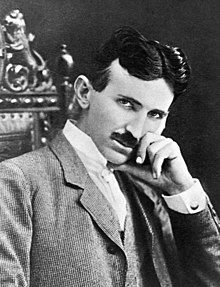
10 Things You Didn’t Know About Nikola Tesla


Nikola Tesla was one of the most brilliant scientists and engineers ever! Check this out!


10 Things You Didn’t Know About Nikola Tesla
Enhanced by Zemanta

Friday, November 16, 2012

Sola Scriptura Resources

Alpha and Omega Ministries have really been posting a lot of great things on Sola Scriptura! This week they posted a transcript of James White's debate with Jerry Matatics.

Transcript: Does The Bible Teach Sola Scriptura? - James White vs. Jerry Matatics - Vintage

And on Thursday's  webcast, Dr White reviewed an interview with former Presbyterian minister Jason Stellman on why he became a Roman Catholic. A discussion of Sola Scriptura was mandatory. 

The Treacherous Waters of the Tiber: TurretinFan and I Review Jason Stellman's Slide into Romanism

Enhanced by Zemanta

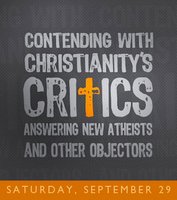
Contending with Christianity's Critics:
Conference Audio and Video - Apologetics 315

Brian Auten posted links to the Contending with Christianity's Critics conference  that we held September 29, 2012.

This apologetics event had special guests including Ravi Zacharias, William Lane Craig, Frank Turek , John Stonestreet, Daniel Wallace, and Greg Koukl.

Follow the link to learn more.

Contending with Christianity's Critics: Conference Audio and Video - Apologetics 315
Enhanced by Zemanta

Where Was Loki...?

So here is a question of the plot from Avengers: Where was Loki, while the Avengers had their shwarma? Here is one possible scenario.

tumblr_m5lk5a6Rt81rwplcoo1_500.png (PNG Image, 500 × 544 pixels)
Enhanced by Zemanta

Thursday, November 15, 2012

FacePlant of the Day - Debunking Christianity: The Force of the Problem of Suffering vs the Evidence for Christianity

One of the arguments that John Loftus keeps bringing up against Christianity is the Problem of Evil/Suffering.  I don't believer it is a powerful defeater at all and Christians need not cower from it in the least. Here is Loftus' latest attempt to use the Problem of Evil and ending up in a FacePlant.

There are plenty of defeaters to the Christian faith that come especially from evolutionary science, archaeology, psychology, neurology, anthropology, biblical criticism, and so forth.
 
So he keeps saying, yet he inevitably defaults to this one because it's emotionally charged - easier to get people to turn their minds off. 

Earlier I wrote what I consider a refutation of Christianity when it comes to the problem of suffering, using one specific example, the Black Death Plague.

It didn't help then either. 

I'm guessing Christians just don't have an answer to this problem except to say that God knows best, depending completely on what I call the Omniscience Escape Clause, which pretty much makes their faith unfalsifiable. We have other reasons to trust in God even when we cannot explain his inaction in the world, they say. Okay then, how do these other reasons compare with this particular defeater? That's the question I want to explore.

I find it crazy how someone like Loftus can harp on God's inaction when bad things happen that cause human suffering but unwilling to give God credit when  disaster and suffering is averted. We don't know how much suffering is averted or mitigated. If this makes God unfalsifiable then why do people like him feel emboldened to declare that there is no God.  The best they could say is that they don't know and have failed to debunk God. But I guess that is too much honesty to expect.


Christians have philosophical arguments for God's existence. But if you actually read the literature on both sides they are at best a wash, that is, given the counter-arguments they do not establish the case at all. Furthermore, these arguments do not lead to any one particular god. Much more work needs to be done in order to establish that the Christian God exists. In order to do this the evidence for miracles in the distant ancient superstitious past must lead to that particular God. As I've argued before, theists disagree over this supposed evidence even though they all believe in a creator God. Theists are just as skeptical of each others distinctive religious miracles as I am of them all.

Either way, that would make atheism wrong. 

Take for example the Jews of Jesus’ day. They believed in Yahweh, that he performs miracles, and they knew their Old Testament prophecies. Yet the overwhelming majority of them did not believe Jesus was raised from the dead by Yahweh. Since these Jews were there and didn't believe, why should we? No really. Why should we? Why should anyone? The usual answer is that these Jews didn't want to believe because Jesus was not their kind of Messiah, a king who would throw off Roman rule. But then, where did they get that idea in the first place? They got it from their own Scriptures. And who supposedly penned them? Yahweh. Christians will also claim God needed for them to crucify Jesus to atone for our sins, just as he needed Judas to betray him. So God needed to mislead them about the nature of the Messiah too. But look at the result. Because he used people for whom we're told he loves, Christians have also been given a reason to persecute, torture and kill Jews throughout the centuries for their alleged crime (the Romans are actually the guilty ones). Not only this, but the overwhelming majority of Jews will go to hell, where Judas is right now. Does this sound fair for a righteous omniscient judge? It smells exactly like entrapment pure and simple.

Christians are never told by God to persecute, torture and kill Jew. If Jesus can forgive them while He was hanging on the cross, what right do we have for hating Jews? Loftus is employing faulty logic and ignoring the Bible - by which Christians should follow. It is not like all the Jews of Jesus' day rejected him  ALL of the first Christians were Jews! Need more proof?  Read Romans 9, 10, 11.

Beyond this we know that the supposed resurrection of a virgin-born Son of God took place in an ancient pre-scientific superstitious age where virgin-born sons of God were believed to walk the earth, as biblical scholar Robert Miller shows in his book Born Divine. In addition, Richard Carrier looked at the superstitious nature of the people in the Roman Empire in Kooks and Quacks of the Roman Empire: A Look into the World of the Gospels, and concluded
...the age of Jesus was not an age of critical reflection and remarkable religious acumen. It was an era filled with con artists, gullible believers, martyrs without a cause, and reputed miracles of every variety. In light of this picture, the tales of the Gospels do not seem very remarkable. Even if they were false in every detail, there is no evidence that they would have been disbelieved or rejected as absurd by many people, who at the time had little in the way of education or critical thinking skills. They had no newspapers, telephones, photographs, or public documents to consult to check a story. If they were not a witness, all they had was a man's word. And even if they were a witness, the tales above tell us that even then their skills of critical reflection were lacking. Certainly, this age did not lack keen and educated skeptics--it is not that there were no skilled and skeptical observers. There were. Rather, the shouts of the credulous rabble overpowered their voice and seized the world from them, boldly leading them all into the darkness of a thousand years of chaos. Perhaps we should not repeat the same mistake. After all, the wise learn from history. The fool ignores it.
Again, why should we believe? Why should we believe what some people in a lone place on the planet said took place in the pre-scientific superstitious past? The past is notoriously difficult to mine for its nuggets of truth.

So where do you draw the line? Think about it. If Loftus, Carrier, and many liberal scholars are correct then we cannot know what really happened at any time in the past before Newspapers, and modern technology. History becomes suspect. Why study it? What happens to the idiom "Those who don't know the past are doomed to repeat it.". I disagree that it's that dire and we can't reliably know anything about the ancient past. 

 This problem is exponentially compounded by the fact that we're supposed to believe that miracles took place in this era. Gotthold Lessing puts a fine point on this problem when he said:
“Miracles, which I see with my own eyes, and which I have opportunity to verify for myself, are one thing; miracles, of which I know only from history that others say they have seen them and verified them, are another.” “But…I live in the 18th century, in which miracles no longer happen. The problem is that reports of miracles are not miracles…[they] have to work through a medium which takes away all their force.” “Or is it invariably the case, that what I read in reputable historians is just as certain for me as what I myself experience?" Link.
I disagree. God is still working today in the 21st Century and I see no reason to understand that he worked in the 18th century also.

All that Christian apologists have is 2nd -3rd, -4th handed written testimony found only in manuscripts dated to the 4th century AD when we know that Christians doctored up texts like the Testimonium Flavianum (Ant. XVIII. 63 - 4) in a time when they also forged the Donation of Constantine, as but the most recognized examples.

Really? Even the most liberal atheist scholar would agree that the autographs date back to the 1st century even if our copies are from later.

The evidence of the Gospels would be thrown out as unreliable testimony in any reasonable court proceedings. Even if not, we couldn't trust this testimony until we could interrogate those so-called witnesses ourselves. Almost all of our important questions are left unanswered. We cannot interrogate these ancient texts, their authors, nor the people who they claim testify of such things. Furthermore, there is the utter lack of a great deal of independent collaborative evidence..

Has anyone ever interviewed Julius Caesar? According to what Loftus just wrote we should throw out everything we know about him because we can't talk to him or any of the people who first wrote anything about him. Is he willing to do that? I'm not. As for his claim that the Gospels are not reliable evidence better people then him have tried to demonstrate that and failed. 

Christians will argue their faith has unique elements to it so it must therefore be more credible. Although this is almost certainly debatable, what does it prove if so? Most religions have unique elements to them, as does Mormonism, Islam, Hinduism, Jehovah's Witnesses, Seventh Day Adventism, Jim Jones, David Koresh, and the late Marshall Applewhite's Heaven's Gate group. In fact, uniqueness is what can propel a new religion forward. But it says nothing about whether it's true at all.

The only sane thing he wrote in this entire post.....

If God wanted to shoot himself in the foot, he did a great job of it.

...followed by the lamest. 

Undeterred, Christians claim they have religious experiences from their God that confirms their faith. But important questions abound. Why is it that only people in their particular faith have these so-called veridical experiences? Why is it that most all Christians claim to have had these experiences when some of them condemn the others to hell?

 Read Romans 9 and Acts 1. And non-Christians do have dreams and visions supporting Christianity.

 If God is granting these experiences to others then he is offering non-Christian believers evidence that their own faith is true and will subsequently send them to hell for not accepting the one true Christian faith.

No. Hell is the default destination. Because of our sins it was already on lock.  We are saved from hell because of what Jesus did for us. Rejecting it means that you just keep going on your merry way.

Why is it that so many people on the planet with different conceptions of God all claim to have these same type of experiences? What value is it to have an experience when the content of that experience only confirms what you already believe? We know that every believer thinks God agrees with them about everything!

Not true. The goal is to align yourself with God. It will never be the other way around. The reason why becoming a Christian means a necessary transformation (read Romans 12) is because by default we are not like God and need to be changed and only God can do it. He replaces your heart of stone with a heart of flesh.  

So I put it to you. Does the the force of the empirical evidence for the problem of suffering outweigh the force of the evidence for the Christian faith?

No because like R.C. Sproul said when asked why do bad things happen to good people, "It has only happened once, and he volunteered."

I think it does, most emphatically. All Christians can do is skirt the issue, depend on the "you too" fallacy, appeal to ignorance, special pleading and begging the question. In other words, they got nothing, nothing much at all. And like I said, this is just one of many defeaters.

 John Loftus should invest in the other "defeaters" because this one does not fly very far.

No wonder I call Christianity a delusion.

Yeah a deluded person thinks that people who disagree with him thinks they are deluded. 

And no wonder I cannot argue Christians out of their faith, since as deluded people within their Christian culture, they were never argued into their faith in the first place.

Exactly. Christian faith is a gift from God.

Debunking Christianity: The Force of the Problem of Suffering vs the Evidence for Christianity

Wednesday, November 14, 2012

Debunking Christianity: Dr. Peter Boghossian on "How to Talk Others Out of Their Faith"

John Loftus posted a link to an interview with Dr Peter Boghossan. Dr Boghossan emphatically claims that his goal is to make people "loose their faith".  He says he translates "faith" to mean "pretending to believe something that you don't know". He considers religion to be a pathological disorder.  He believes that believers are smug and not humble. He thinks that "theology" is just making stuff up. I found it amazing that he was using the same tactics to try to break people's Faith that many Christians use in trying to help others find it. I think it's important to hear such things so we know how people think....or in this case refuse to think. Dr Boghossan's answer to Christian challenges to his definition of "faith" is that we are redefining what faith is. I disagree. How can he accuse that there has been a redefinition of faith if we are using the same definition of faith that the Bible uses? He can't. He is the one re-defining "Faith". I also find it amazing that he will not debate David Marshall. I think one of the problem is that the truth is that no one can argue you into or out of  faith. True faith, as defined in the Bible, is a gift of God. You can't buy it. We all reject it as a default, and it takes the power of God to not just accept it but to maintain it.
Follow the link to listen to the interview. It's NSFW due to the profanity being used during the conversation.

Debunking Christianity: Dr. Peter Boghossian on "How to Talk Others Out of Their Faith"
Enhanced by Zemanta

Debating the Authority of Scripture | Reflections

Here is a golden oldie from Dr Kenneth Samples!

In 1997, I participated in a debate on the topic of the Scripture’s authority with Jesuit priest Mitchell Pacwa at Southern Methodist University. I explained and defended the Protestant view and Father Pacwa represented the Catholic position.

Follow the link to his blog to listen to the debate

Debating the Authority of Scripture | Reflections
Enhanced by Zemanta

Really Bad Argument of the Day - Debunking Christianity: God May Own the Cattle on a Thousand Hills, But What He Really Wants is that Dollar In Your Wallet

I'm simply amazed that Harry McCall can simply post such irrational argument on Debunking Christianity. I mean is he just dishonest or ignorant? He needs to think more carefully. I don't know. But what I do know is that his thesis to totally wrong and he does a poor job in defending it. He is arguing that the Bible supports people who call themselves "Christians" in abusing others in the pursuit of money. There is no denying that there are people who do that, but it is against the Christian and Jewish scriptures to do so.

("For every beast of the forest is Mine, The cattle on a thousand hills.” Psalms 50: 10)


Ironically, there are far more verses in the Bible about giving God your money than giving God your soul!


Now that is just dumb. And there is is no way to substantiate that. He tried, but let's look at what complete failure looks like.

Here a just a few:

Let's really looks at each passage and see if McCall even remotely makes a point.

"Bring the whole tithe into the storehouse, so that there may be food in My house, and test Me now in this," says the LORD of hosts, "if I will not open for you the windows of heaven and pour out for you a blessing until it overflows.” Malachi 3: 10 (The Original Seed Faith Commercial)

So does this passage tells you  that  God needs all your money and you should give to it hurts? Nope. I wonder if McCall even knows what a "whole tithe" is. It means only 10% of your income that serves as a vehicle to teach people how to give. We don't give a tithe because God needs it...we do.

“Jesus sat down opposite the place where the offerings were put and watched the crowd putting their money into the temple treasury.” Mark 12: 41

I wonder if McCall even bothered to read the rest of the account. You know about the Widow giving all she had and Jesus commending her for her faith and not  for the amount she gave. Jesus was concerned about her attitude and intentions not the monetary amount.

““For to everyone who has, more shall be given, and he will have an abundance; but from the one who does not have, even what he does have shall be taken away. “Throw out the worthless slave into the outer darkness; in that place there will be weeping and gnashing of teeth.” (Jesus on the Parable of the Talents; Matthew 25: 29 -30) Televangelists love this verse especially when taking welfare checks!

And like such televangelist McCall misses the whole point of the parable: using the gifts (including but not exclusively money) God gives us responsibly because we are accountable to our master.

“But Peter said, “Ananias, why has Satan filled your heart to lie to the Holy Spirit and to keep back some of the price of the land? // And as he heard these words, Ananias fell down and breathed his last; //And great fear came over the whole church, and over all who heard of these things.” (The Fate of Ananias and Sapphira; Acts 5: 1 – 16)

So was Ananias and Sapphira's sin that they didn't give all their money? No. They lied and said that they gave all of it when they hadn't because they wanted to be given the same status as Barnabas.  McCall really messed up on this one.  I can prove it. 

Then Peter said, “Ananias, how is it that Satan has so filled your heart that you have lied to the Holy Spirit and have kept for yourself some of the money you received for the land? Didn’t it belong to you before it was sold? And after it was sold, wasn’t the money at your disposal? What made you think of doing such a thing? You have not lied just to human beings but to God.” - Acts 5:3-4

“The material of the wall was jasper; and the city was pure gold.” (The New Jerusalem; Revelation 21: 18)

And who supplies the gold? Not us. The gold is God's just like the cattle from Psalms 50:10. So I wonder if McCall has more examples because these 5 are no good examples.

Whether it’s the infomercials, The Door-to-Door Salesperson or the Christian Evangelist, the final goal is to sell you either a product / belief system that will remove dollars from your wallet. Thus, Christian Evangelism works just like any other sales pitch used to generate income by convincing the customer their life would be so much better if he or she accepted the truth claims made by the product peddler.

McCall is incorrect that the point of Christianity is to get money. There are some people who claim to be Christians who have that goal but that does not mean that God condones them. He does not. I wonder why McCall did not point out any of those examples, We should charge for what was given to us - the Gospel. 

Believer - you want your car to move - put fuel in it. If you want your God to function, open up your wallet!

Nope. You want God to do something for you - Obey Him.  And God is not begging for your money - that He gave you.

Without money (which is a prime reason for conversion of souls) the concept of God is nothing more than a non-functioning idea. (Sure, God needs your soul, but this theology goes without saying: No saved soul; no believer’s money!)

Really?  Sad assertion because that is all it is. 

It’s little wonder today that the richest organizations in the world are religious and here in the United States, some of the wealthiest freeloading people are religious leaders, especially televangelists.

More assertion and no back up.

Finally, if God was a piñata hanging from Heaven on a cord; after a solid strike with a stick, he would burst open and money would pour out.

Money: The power of God: The real God!

Huh? Is that really how McCall wants to sum up his "article"? Let's look at what Jesus told us about material possessions.

15 Then he said to them, “Watch out! Be on your guard against all kinds of greed; life does not consist in an abundance of possessions.” - Luke 12:15

Debunking Christianity: God May Own the Cattle on a Thousand Hills, But What He Really Wants is that Dollar In Your Wallet
Enhanced by Zemanta

Tuesday, November 13, 2012

Star Trek Universal Translators On Their Way

Just when I think that Microsoft has lagged behind other giants like Google, Apple, and Sony, they come up with something truly impressive that blows my socks off. Microsoft has announced voice recognition technology employing “novel neural networking”. The interesting thing is that not only will it improve a computer's accuracy in recognizing human speech but also allow language translation in the speakers own voice!!!


I'm speechless!

Star Trek Universal Translators On Their Way
Enhanced by Zemanta

Secret Service Investigates Woman’s Racist anti-Obama Facebook Post

Is Denise Helms is not a racist!


I'd say that she doesn't speak for every single white American, but I do think she only posted what some of them are really thinking.

Secret Service Investigates Woman’s Racist anti-Obama Facebook Post

Saturday, November 10, 2012

Rachel Held Evans - Year of Biblical Womanhood

Rachel Held Evans
Rachel Held Evans (Photo credit: Wikipedia)
Last week I was listening to Dr James White's Dividing Line web cast and for the first time I heard of Rachel Held Evans  and her experiment for living out all the Biblical verses that deal with prescriptions for women for a year.  She has written a book based on her experience. That book has recently been publish and she has been making the round promoting the book.  She was a guest on ABC's shows The View and Good Morning America. She appeared with her husband and both shows had video clips of her while she was living out the most wooden literal interpretations of the Bible imaginable. I was intrigued to learn more. Both of her network television appearances are available online and I think that they do a disservice. There is no attempt to apply a sound hermeneutic to Scripture. To secular television, the Bible is a joke and they do not think that there is anything of value in it. Evans does not seem to want to go that far but instead wants to cherry pick the parts of it that make her feel like she is closer to God. She has no problem with that because in her view that is what everyone does any way. She does not think that there is a consistent detailed message in the Bible about what it means to be a man or a woman or what does God desire for us. I totally disagree with that. She also seems to think that the Bible's prescriptions doesn't leave room for a woman to be herself. She's wrong about that. Here are some videos that I was able to dig up. Easy to find. The first one is her announcement for the project.


The second is from her appearance on the Techology webcast. She has thirty minutes to talk about herself and the project without the limitations she had on secular network television. I really recommend this one.


The third is another  summary of the project by Evans herself.


Here is the Good Morning America clip
Visit NBCNews.com for breaking news, world news, and news about the economy

 
And on the View


One of the biggest problem is that  in her appearances she really seems to get a lot in the Bible wrong for example, there is video of her sitting on the roof of her home because she understands a passage in Proverbs 21 meaning that contentious wives should be punished by being forced to be in "time-out" on the roof of the home. But look at what the passage says:


 Better to live on a corner of the roof
    than share a house with a quarrelsome wife. - Proverbs 21:9

It's not saying that putting your wife on time-out on the roof when she is contentious is the thing to do! Instead it is talking about how horrible it is to live with a quarrelsome wife. It's so bad that the man feels like he would rather live on the corner of  his roof than live in the same house! This is but one example and not having read the book, I sure hope there are better hermeneutics and exegesis employed than what I have seen so far but I'm not real optimistic.

Also notice that she said that treated Proverbs 31 as a to-do list but she told the Techology webcast that in researching how Jews read Proverbs 31 and saw that they do not read it that way. I wonder why. Think she answers that question in her book?

There have been a few response materials released to answer some of these challenges.Some Response Articles

A Response to Rachel Held Evans on the Today Show
Mutuality 2012: Responding to Rachel Held Evans
What Biblical Womanhood is not

The Bottom line is that man and woman are ontologically equal - neither inferior nor superior to the other. But God has given men and women different roles. Both are needed and important.

Here is a link to Rachel Held Evans' book
Enhanced by Zemanta

Friday, November 9, 2012

'Terminator' arm is world's most advanced prosthetic limb - YouTube

Here is a demonstration of the most advanced prosthetic arm/hand I have ever seen.

'Terminator' arm is world's most advanced prosthetic limb - YouTube
Enhanced by Zemanta

Is the Internet rewiring our brains?


Facebook Psychology

Is the Internet rewiring our brains?

Four African Teenage Girls Create a Pee-Powered Generator | Living on GOOD

 Necessity is truly the Mother of invention!

 During the Maker Faire Africa, in Lagos, Nigeria on November 5 and 6, 14-year-olds Duro-Aina Adebola, Akindele Abiola, Faleke Oluwatoyin, and 15-year-old Bello Eniola presented their unique proposal. According to The Next Web, here's how it works:
  • Urine is put into an electrolytic cell, which cracks the urea into nitrogen, water, and hydrogen.
  • The hydrogen goes into a water filter for purification, which then gets pushed into the gas cylinder.
  • The gas cylinder pushes hydrogen into a cylinder of liquid borax, which is used to remove the moisture from the hydrogen gas.
  • This purified hydrogen gas is pushed into the generator.
  • 1 Liter of urine gives you 6 hours of electricity.
Six hours of electricity for a couple quick trips to the bathroom sounds like innovation to me.
 This is such a good idea, I think they deserve scholarships and more recognition!

Four African Teenage Girls Create a Pee-Powered Generator | Living on GOOD
Enhanced by Zemanta