Tuesday, June 24, 2025

Exegete This: How to Forgive


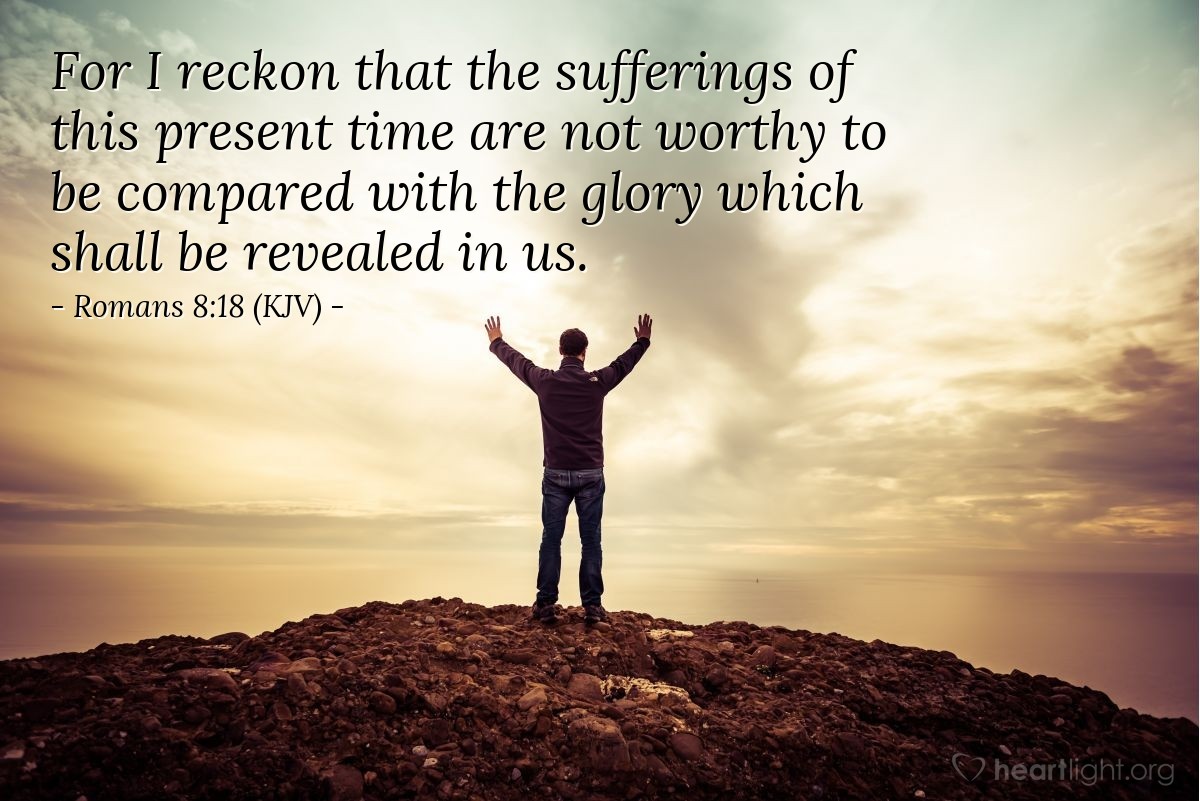
Without going into a lot of detail, I have been going through a lot of personal setbacks and pain that have forced re-examination and perspective pivots. It appears that this is why God allowed my life to blow up in my face as it has. Fortunately, it is an opportunity to learn about forgiveness. It is a chance to see the love of God from a new vantage point. What I have found out that the deeper the suffering resulting from other people's decisions and actions, the harder it is to forgive the offense and continue loving the way God commands us to love others. I thought that I was way better at forgiveness than I truly am. Turns out that it just take the right offense from the wrong person to make it difficult for me to overlook. Of course God demands deeper and greater love from us. This has forced me to consider how what we call "boundaries" come into the discussion. Does God even have boundaries? Does God demand that we forgive any and every offense and harm done to us without limit? Is this a "Suck it up, buttercup" scenario in our lives? Is there true forgivness if there is no reconcilliation or restoration? What does God say? The above graphic lists scriptures that address a lot of great things about how to forgive others, but invites a larger discussion of what forgiveness even is and how it applies to our lives. So before I exegete the scriptures in the graphic, we need to define "forgiveness" and then describe what characterizes Biblical forgiveness. 

"Forgiveness" is both removing blame and condemenation. Forgiving somone does not mean ignoring the harm or pretending that the offense did not hurt or did not happen. It certainly is not stuffing it down and not dealing with it. Forgiveness is best illustrated by God. It was foreshadowed by the sacrificial system in ancient Israel, and culminates in the propiatory sacrifice Jesus made on the cross. Any discussion of what Forgiveness is and what it is not can only best understood in what Jesus did. You cannot love someone and refuse to forgive them simultaneously. It will not work. I used Microsoft Copilot to summarize the Hebrew and Greek words that communicate the concept of "forgiveness".

In the Bible, *forgiveness* is a rich and multifaceted concept, deeply rooted in both Hebrew and Greek thought. Let’s break it down using the original languages:

Hebrew (Old Testament)

There are three primary Hebrew verbs used to express forgiveness:

1. סָלַח (sālaḥ) – This is the most direct term for divine forgiveness. It’s used exclusively of God forgiving sins (e.g., Leviticus 4:20). It implies a gracious act of releasing someone from guilt.

2. כָּפַר (kāpar) – Often translated as “to atone” or “to cover,” this word is tied to the sacrificial system. It reflects the idea of covering sin so that it no longer incurs divine wrath (Leviticus 16:30).

3. נָשָׂא (nāśā’) – Literally “to lift” or “to carry away.” It conveys the image of sin being lifted off or removed from the sinner (Psalm 32:1).

Together, these words paint a picture of God not only pardoning sin but actively removing its burden and restoring relationship.
These three Hebrew words definitely adds something to the discussion. What is missing from the idea is the idea of erasure. The sin, the harm, the offense, did not disappear. It is not ignored. There is no pretention of innocence. Instead, the sin is expatiated. The cost incurred by the act or thought is paid and reparation and restoration is made. No more guilt. No more condemnation.
Greek (New Testament)

The Greek language offers equally profound insights:

1. ἀφίημι (aphiēmi) – This verb means “to send away” or “to let go.” It’s the most common term for forgiveness in the New Testament, used when Jesus forgives sins (Matthew 6:12). It implies a release from obligation or debt.

2. ἄφεσις (aphesis) – The noun form of *aphiēmi*, meaning “release” or “remission.” It’s used in verses like Luke 4:18, where Jesus proclaims “release to the captives,” linking forgiveness with liberation.

3. χαρίζομαι (charizomai) – This verb emphasizes graciousness and is often used in the context of interpersonal forgiveness (Ephesians 4:32). It reflects the idea of freely granting pardon as an act of kindness.
Forgiveness in both the old and new covenants is not about just our relationship between God but also interpersonal relationship with one another. And using Jesus as our example of what relationship restoration looks like, we have to ask does forgiveness mean a restoration of a broken relationship? It depends on what "restoration" means. Does one mean that the relationship is restored to the same closeness and quality as it was before the breach or break? Does this mean trust is restored? Given the nature of Jesus' forgiveness of our sins, the forced conclusion is not that forgiveness restores a relationship without change. Our relationship with God is not just established by his forgiveness of us but it is deepened and closer. Therefore when we forgive one another, it does not mean that every relationship must neccessarily go back to the way things were before the situation. The point is that the relationship is back in balance and in accordance with God's will. Both sides are changed by Biblical forgiveness. The transgressor and the transgressed become more Christ-like. God heals both. There can be no healing without forgiveness.
 
As far as God is concerned, we are expected to forgive others but we do not get to decide on our own what it will look like. When Joseph forgave his brothers for selling him into slavery, the harm done to him did not disappear.  The twenty plus years of suffering he endured did not magically erase from reality, but God restored Joseph's relationship with his family and he let go of resentment and revenge, The reason I wanted to go into the scriptures above is because they do give legit help in forgiving others. It is painfully obvious to see we must forgive each other. It is literally a command.


14 For if you forgive other people when they sin against you, your heavenly Father will also forgive you. 15 But if you do not forgive others their sins, your Father will not forgive your sins.

This is important. And God is serious. So one may ask: How do I do it? How do I forgive the unforgivable?  The Bible has answers. These answers work for serious harms and for trivial ones alike.

We must pray. Sometimes we need God's power to forgive others especially when we are really hurt and cannot do it on our own. Instead of commanding that we forgive others, God will help us to do that. 


44 But I tell you, love your enemies and pray for those who persecute you,

When this feels too much to ask, I am reminded that Jesus forgave the men who crucified him on the cross, while they were nailing him to it (Luke 24:34). 

Of course, God really doubles down on this being about Him and not about ourselves. The next thing is to love people even if they do not care about you. Do good to them even if they would not do it to you. Romans 12:9 calls us to do good not just don't do bad. 

You cannot forgive a person and always bad mouthing them too. Talking against them in judgment and condemnation only feeds your own anger and makes forgiveness more difficult. Look at Romans 12:14, 


14 Bless those who persecute you; bless and do not curse.

 Honestly? Really? That is why we need God's help and God will help us do that. And back to prayer.

Sometimes when we are hurting and angry we do not want relief. We want revenge. We want the ones who hurt us to feel our pain that we blame them for causing. Sometimes we don't want them to get what they gave us. We want them to suffer. Romans 12:17-19 takes this attitude off the table if we want to be Christ-like. We have to let go of the desire to hurt them. 

I know I struggle with the next one. It is so tempting to enjoy the suffering of those who hurt you. It honestly, in the short term make the pain of what they did less. The problem is that if you do not forgive, you will never heal. You will never move forward. You will never be able to grow past that pain, even if they move on and grow past it themselves. The wisdom in Proverbs 24:17 tells us that we can forgive others by not gloating over their pain.

Luke 6:31 is one of those often quoted scriptures about treating others as you want to be treated. It is the Golden Rule for good reason. But look at how if facilitates forgiveness. We all screw up and make mistakes. Do you want your mistakes and errors to define you? To be condemned and judged? I do not. So God tells us not to do that to others. 

And the last point is a hard one. I have been dealing with frustration, depression, and anxiety. The TRUTH is that I get stuck in shoulda and woulda and not letting forgiveness eventually free me. This step is very helpful: Let go of the past. Isaiah 43:18-19 is a promise. Not just that we must let the pass go but that God will replace it with better. 

18 “Forget the former things;
    do not dwell on the past.
19 See, I am doing a new thing!
    Now it springs up; do you not perceive it?
I am making a way in the wilderness
    and streams in the wasteland.

Monday, June 23, 2025

The global capitalist system was built by exploiting Africa

Quote of the Day: Voddie Baucham


Exploring Africa History

@54facesofafrica

Exploring Africa History

♬ original sound - 54facesofafrica

Saturday, June 21, 2025

Friday, June 20, 2025

Quote of the Day: Julius Malena


Quote of the Day: Arikana Chihombori


Thursday, June 19, 2025

Quote of the Day: Fred Hampton


5 European cities built on the backs of enslaved African people.


Wednesday, June 18, 2025

Quote of the Day: Thomas Watson


“God does not justify us because we are worthy, but by justifying us make us worthy.” -Thomas Watson

Monday, June 16, 2025

Quote of the Day: Voddie Baucham


Sunday, June 15, 2025

Quote of the Day: Martin Luther


 If someone feels love toward the Word of God and willingly listens and talks and writes and thinks of Christ, this is not the product of human will or reason but is the gift of the Holy Spirit.

—Luther

Saturday, June 14, 2025

Friday, June 13, 2025

Quote of the Day: Herman Bavinck


“Justification is the doctrine in which the church stands or falls. Either we must do something to be saved, or our salvation is purely a gift of grace.”

-Herman Bavinck

Biblical Submission in Marriage


Thursday, June 12, 2025

Quote of the Day: Martin Luther


“When I look at myself I don’t see how I can be saved. But when I look at Jesus I don’t see how I can be lost.”

-Martin Luther

Wednesday, June 11, 2025

Quote of the Day: Netumbo Nandi-Ndaitwah


Tuesday, June 10, 2025

How long is a day on Each Planet?


Veo-generated vlogs


Riri Williams - Iron Heart


Quote of the Day: Arikana Chihombori


Monday, June 9, 2025

Quote of the Day: Arikana Chihombori


Roman Catholic Solteriology


Sunday, June 8, 2025

The Bible References Itelf


Quote of the Day: Ibrahim Traore


Saturday, June 7, 2025

Quote of the Day: Neil deGrasse Tyson


Friday, June 6, 2025

Quote of the Day: Jasmine Crockett


Education, The Real Dividing Line


Thursday, June 5, 2025

Quote of the Day: Charles Stanley


Tuesday, June 3, 2025

What If Biblical Heroes Posted on Social Media?


Search the web and get complete content with just a few lines of Python!

Quote of the Day: Blaise Pascal


Monday, June 2, 2025

Quote of the Day: Thomas Sankara


Sunday, June 1, 2025

Quote of the Day: Malcolm X


Saturday, May 31, 2025

Does Genesis 1:1 Imply Creatio Ex Nihilo?


Creation out of nothing corresponds to Genesis 1:1

Surprising Malcolm X: Berkeley 1963 Interview (UNCENSORED!!!)


Summary

This lengthy and profound interview and discussion delves deeply into the views of Minister Malcolm X (Malcolm Shabazz) on race relations, systemic oppression, and the struggle for black liberation in America during the early 1960s. Malcolm X challenges the dominant narratives about Black Americans, the Nation of Islam, and the civil rights movement, offering an unflinching analysis of racism as embedded structurally and psychologically in American society.

Malcolm X begins by dispelling persistent stereotypes about the Nation of Islam, firmly rejecting the notion that it endorses or initiates violence. He clarifies that the organization practices self-defense but does not seek aggressive conflict, using the analogy of a victim’s resistance being misinterpreted as violence. He highlights how white supremacist groups have engaged in sustained brutal violence without being similarly demonized.

Throughout the interview, Malcolm critiques the hypocrisy of American democracy, exposing the gaping contradictions between the nation’s ideals and the lived realities of Black people—denied freedom, subject to violence, and systematically excluded from full citizenship. He condemns the failure of laws and court rulings meant to protect Black rights, noting that legal victories such as desegregation decrees remain largely unimplemented while Black demonstrators continue to be arrested unjustly.

Malcolm vehemently opposes forced integration as a goal, positing separation and self-determination as the only viable path for true Black empowerment and justice. He critiques the civil rights movement’s reliance on nonviolence as ineffective and expresses skepticism about mainstream political engagement and established “leaders,” who he argues too often serve white interests and maintain the status quo under the guise of friendship or liberalism.

He identifies a systemic psychological warfare aimed at African Americans—conditioning them to accept inferiority and to trust in empty promises of equality. Malcolm highlights how the Nation of Islam’s growing appeal stems from its message of Black pride, cultural identity, and connection with the global Black liberation movements, particularly emerging African nations asserting independence in the post-colonial era.

Malcolm warns vigorously against Black leaders and organizations co-opted by white political interests—whom he describes metaphorically as “foxes” and “wolves” who undermine Black progress from within by protecting white supremacy. True leadership, he contends, must come from grassroots, independent Black voices that prioritize their own community’s interests unapologetically.

In his concluding remarks, Malcolm articulates a vision for Black people to establish an independent nation, separate and self-sustaining, where justice, freedom, and equality can be genuinely realized. This independent future requires rejecting illusions provided by American legal and political systems and embracing self-reliance, education, and unity.

The broader context affirms that despite being recorded in 1963, Malcolm X’s insights remain deeply relevant today. His focus on empowerment, unity, self-determination, and critical awareness continues to inspire and challenge societies confronting racial injustice and systemic inequality.

Highlights

  • ✊ Malcolm X refutes accusations that the Nation of Islam promotes violence; it advocates self-defense but never initiates aggression.
  • 🏛️ Exposes the hypocrisy of American democracy: freedom is denied to Black Americans despite the nation’s professed ideals.
  • ✂️ Advocates separation and self-determination for Black people instead of forced integration into oppressive systems.
  • 🐺🐺 Uses vivid metaphors (“fox” and “wolf”) to warn against white liberals and Black puppets who maintain white supremacy.
  • 🌍 Connects the rise of the Nation of Islam’s popularity to global Black liberation movements and African independence.
  • ⚖️ Criticizes the failure of legal and political systems to deliver real justice and civil rights to Black Americans.
  • 🖤 Calls for grassroots, independent Black leadership committed to cultivating pride, education, and self-reliance.

Key Insights

  • ✊ Violence as Self-Defense, Not Initiation:
    Malcolm X’s explanation distinguishes between reactive violence (self-defense) and aggressive violence (initiation), arguing the unfair projection of violence onto Black communities by white society stems from guilt about historical brutality. This reframes the narrative and challenges media and societal biases that label Black liberation movements as violent provocateurs.

  • 🏛️ Systemic Hypocrisy and Legal Disenfranchisement:
    Malcolm X points out that laws promising equality—like school desegregation—are flagrantly ignored, highlighting how legal mechanisms often serve as symbolic gestures rather than genuine tools of liberation. His emphasis on the lack of sincere implementation exposes performative political acts and challenges reliance on mainstream legal institutions for racial justice.

  • ✂️ Separation vs. Integration Debate:
    Contrary to popular civil rights narratives, Malcolm X’s advocacy for separation underscores that integration into a fundamentally racist system cannot resolve Black oppression. He promotes a model where Black people control their own destiny socially, economically, and politically, which remains a radical solution versus mere assimilation into pre-existing structures.

  • 🐺🐺 Cunning Allies and Complicit Leaders:
    The fox and wolf metaphor is a powerful critique of white liberals and compromised Black leaders who appear friendly or supportive but actually undermine Black empowerment. Malcolm’s insight serves as a caution for communities to critically evaluate their leadership and resist co-option that perpetuates oppression.

  • 🌍 Pan-African Influence and Global Consciousness:
    The emergence of newly independent African nations was pivotal in shifting Black American perceptions and providing cultural and intellectual resonance to Elijah Muhammad’s teachings. This global dimension roots the Black struggle in an international fight for dignity, not just American civil rights, inspiring solidarity beyond borders.

  • ⚖️ Distrust of Political Systems and Leadership:
    Malcolm’s skepticism toward political parties, liberal activists, and mainstream civil rights leaders reveals a belief that real change is not granted by those in power but must be claimed by the oppressed themselves. This insight stresses self-reliance and vigilance against false allies, critiquing the “inside game” approach that can stall justice.

  • 🖤 Empowerment through Education, Unity, and Self-Respect:
    Ultimately, Malcolm X’s vision is both a critique and a blueprint—a call to reclaim history, culture, and collective identity as foundations for empowerment. His message urges Black people not to seek permission or acceptance but to assert their humanity by building independent institutions, economies, and societies.

Conclusion

This transcript captures Malcolm X’s analytical brilliance and unapologetic advocacy for Black liberation during a crucial era. His perspectives remain relevant in illuminating the structures of racial oppression, the challenges of coalition-building, and the importance of autonomous leadership. Malcolm’s call for separation is a radical alternative to integration, designed to achieve true justice rather than superficial conformity.

The enduring value of his message lies in the empowerment and self-determination it demands, encouraging deeper reflection on leadership, the role of the oppressed in their own liberation, and the transformative power of truth. By critically interrogating mainstream narratives and confronting uncomfortable realities, Malcolm X’s insights continue to inspire ongoing struggles for racial equality and human dignity.


VERY REVEALING Margaret Sanger Interview MUST SEE ! PLANNED PARENTHOOD


10 Church Beliefs You Thought Were Biblical (BUT AREN'T)!


Summary

This video explores common misconceptions about the Christian church that many people accept as biblical truths but which actually lack direct scriptural support. It highlights ten widely held beliefs about the church, clarifies how these ideas compare with the teachings found in the New Testament, and emphasizes the importance of returning to the Bible as the ultimate authority rather than relying on tradition or cultural norms. The video covers issues such as the nature of the church, the conduct and format of worship services, leadership roles within the church, giving practices, Sabbath observance, inclusivity, authority of church leaders, the role of women, clergy celibacy, and the attitude Christians should have towards judging others. Ultimately, it advocates for a church that is a living community of believers, focused on grace, unity, love, and spreading the knowledge of Jesus.

Highlights

  • 🏛️ The church is the people, not the building.
  • 🔄 There is no prescribed order for church services in the Bible.
  • 🙌 All believers share spiritual authority, not just pastors or priests.
  • 💰 New Testament giving is about cheerful generosity, not an exact 10% tithe.
  • 📅 The Sabbath is not mandated to be observed on Sunday by Christians.
  • 🌍 The church is for everyone, not exclusively for believers.
  • 🚫 Judging others harshly is contrary to Jesus’ teachings on grace.

Key Insights

  • 🧱 The Church as People, Not a Building: The Greek origin of the word “church” (Ekklesia) means assembly or gathering. This clarifies that the church is fundamentally the community of believers united by faith, not a physical location. This insight corrects a common misconception that equates church attendance in a specific building with the fullness of church life. This empowers believers to understand that church can happen anywhere and emphasizes the relational and spiritual nature of the church over architectural structures.

  • 🔄 Flexibility in Worship Services: The video highlights that the New Testament describes various elements of worship like fellowship, prayer, teaching, and shared meals but does not enforce a rigid liturgical structure. This flexibility allows local congregations or small groups to focus on the heart and purpose of worship—glorifying God and encouraging believers—rather than adhering strictly to formalities. It encourages creativity and responsiveness to the Spirit rather than church-as-institutional-routine.

  • 👥 Every Believer’s Spiritual Authority: Scripture affirms that all Christians are part of a “royal priesthood” and have spiritual gifts to benefit the church community. This challenges hierarchical views that privilege ordained clergy over laypeople. The democratization of spiritual authority urges believers to engage actively in ministry and leadership, recognizing their God-given roles without dependence on formal titles.

  • 👐 Generosity vs. Tithing: The Old Testament practice of tithing (giving 10%) is often assumed to be a New Testament mandate, but the video clarifies that Paul encourages believers to give voluntarily, cheerfully, and according to individual capacity (2 Corinthians 9). This insight shifts focus from legalistic percentages to the quality and heart attitude behind giving, promoting joyful generosity instead of obligation or guilt.

  • ⏳ Sabbath Observance: The video explains that the Sabbath commandment was specifically for the Jewish people and under the Mosaic covenant, observed on the seventh day (Saturday). While early Christians gathered on Sunday to celebrate Jesus’ resurrection, there is no biblical command to replace the Sabbath with Sunday rest. Instead, Christians are called to find rest “in Christ” continually, emphasizing spiritual rest over legalistic observance of a particular day.

  • 🤝 Church as a Place for All: Although the church consists of believers, Jesus’ Great Commission instructs followers to make disciples of all nations, welcoming seekers, skeptics, and curious outsiders. This insight combats exclusionary attitudes and reminds churches that their mission is outreach and hospitality. It encourages creating invitational environments that reflect God’s love and openness rather than barriers or judgmental stances.

  • ⚖️ Rejecting Infallibility and Judgment: The video confronts two common but unbiblical attitudes—assuming church leaders like the pope are infallible and viewing the church as a judgmental institution. Scripture shows church leaders can err (e.g., Peter’s rebuke by Paul) and that Jesus warns strongly against hypocritical judgment. Instead, the church should be a place of grace, restoration, humility, and encouragement, modeling Christ’s forgiving love and focusing on righteous discernment rather than condemnation.

  • 💡 Women’s Leadership Affirmed in Scripture: The video challenges cultural assumptions by pointing to biblical examples of women serving as deacons and teachers in the early church (e.g., Phoebe and Priscilla). This presents a case for revisiting restrictive roles based more on historical societal norms rather than clear biblical commands, encouraging churches to empower women in leadership consistent with New Testament practices.

  • 💍 Celibacy Not a Biblical Mandate for Clergy: Contrary to some traditions, the video clarifies that mandatory celibacy is not commanded in the New Testament for church leaders. Many apostles were married, and Paul encourages singleness only as an option for those who can remain celibate by choice. This insight allows for a broader understanding of faithful ministry that includes both married and single leaders.

  • 💞 The Church’s Core Focus on Grace and Unity: Ultimately, the video stresses that the church ought to reflect Christ’s love, grace, and truth. This means prioritizing relationship over ritual, grace over judgment, and empowerment over exclusion. By grounding beliefs and practices in scripture rather than tradition, churches can foster communities that are welcoming, supportive, and missionally active in making Jesus known.

This comprehensive reevaluation encourages believers to rethink their understanding and practice of church through a biblical lens, fostering healthier, more inclusive, and authentic Christian communities.

Quote of the Day: Arikana Chihombori


Quote of the Day: Samia Suluhu


Wednesday, May 28, 2025

Youngster Calls Charlie Kirk to Account


Quote of the Day: Taino Chief Hatney