Thursday, November 29, 2012

Debunking Christianity: Pat Robertson Admits He Was Wrong About the Election

John Loftus attempted to shame Pat Robertson because he admitted he was wrong about Romney winning the Presidency. The truly stupid thing is that Loftus and others seem to think that if a Christian is wrong about something its proof that God does not exist. There is no logical reason for that conclusion. Bottom line is if I am wrong about something, it is I that is wrong but not God. If I'm right, God gets the credit I don't. I've seen Robertson makes some mistakes over the years and that doesn't make him less saved than anyone else - just wrong. In this case he admitted the error. God did not tell him that Governor Mitt Romney was going to win. So what? No bearing on anyone's salvation or damnation.


Debunking Christianity: Pat Robertson Admits He Was Wrong About the Election
Enhanced by Zemanta

Truthbomb Apologetics: Video: What Caused God? featuring J.P. Moreland

J.P. Moreland
J.P. Moreland (Photo credit: Wikipedia)
I'm glad Chad posted this video. Dr JP Moreland answers the question "What caused  God?" He answers it well!


Truthbomb Apologetics: Video: What Caused God? featuring J.P. Moreland
Enhanced by Zemanta

Tuesday, November 27, 2012

How to Read the Bible for All Its Worth by Douglas Jacoby - Apologetics 315

Brian Auten has posted a lecture by Douglas Jacoby on how to read the Bible and how to grow spiritually. He has some good things to say.

How to Read the Bible for All Its Worth by Douglas Jacoby - Apologetics 315

Religious Tolerance


In our society today "Tolerance" has become an excuse for not being honest about truth. People act like that you have to accept that all religions are equal and that is the only way we can coexist. This is not true. Let's look at the proverbial elephant in the room. You know the one society embraces that the blind men/men in a dark room or cave grope about each feeling apart of the elephant and coming to different conclusions as to what it is based on the information they have. Some people think that by putting these pieces together we gain more truth about the elephant. I would agree if the information and the conclusions drawn weren't contradictory. This is the problem when this approach is taken toward religion.  Whatever religious persuasion you have by definitions means you affirm that all others are wrong.  For example, there is no way any religion can be simultaneously true if Christianity is true.

Does this mean that religions cannot coexist? No it does not. We can't mistake  "coexistence" for what western civilization. It does not even mean that people of different religions can't discourse and debate and understand one another. What it does mean is that I can't flat out kill you or persecute you because you disagree with me. To coexist all various religions have to do is let them stand. No need to try to destroy them. When the time comes, the one true religion will be known by all. Even those people who go to hell will know which one was right and that they rejected it. There are many reasons I'm convinced that Jesus is the only way, but I refuse to kill others just because they don''t see that. If we all looked at it that way, we could co-exist. It's the way Christians are told to act.

Make every effort to live in peace with everyone and to be holy; without holiness no one will see the Lord. - Hebrews 12:14


Enhanced by Zemanta

Computer, PC, Systems Administrator, Sys Admins, Jobs, Work


Computer, PC, Systems Administrator, Sys Admins, Jobs, Work

This is a fun little infographic summarizing data about people who work in a specific branch of the IT industry. I couldn't resist re-posting following video

Enhanced by Zemanta

NASA is Building a Real Warp Drive

Digital art by Les Bossinas (Cortez III Servic...
Digital art by Les Bossinas (Cortez III Service Corp.), 1998 (Photo credit: Wikipedia)
I remember in College, learning about the theory of using General Relativity to push a star ship at faster-than-light speeds. I was so excited...and then I heard the bad news: we didn't know how to generate enough energy to pull it off. And then I find out today that NASA has actually found that it doesn't take as much energy as we thought it did and they are  running experiments!!! Think about that. When i was a child I thought that we would have bases on the moon and Mars as well as flying cars before we ever had warp drive! Looks like we might get faster than light travel, even if it is only moving an atom,. before we have a moon base.


NASA is Building a Real Warp Drive
Enhanced by Zemanta

Profound Problems with Religious Pluralism | Reflections

Dr Kenneth Samples has posted a really great article summarizing the issues with accepting "religiious pluralism. Given that term may mean different things to different people. Samples defines what he means in his opening paragraph. 

Novelist Yann Martel’s book Life of Pi (now a major motion picture) embodies the popular notion that all religions are simultaneously true. The story’s young protagonist embraces aspects of multiple faiths (Hinduism, Islam, and Christianity), viewing these beliefs as equally valid but different paths to God. Unfortunately religious pluralism fails to appreciate the profound problems associated with it.

Read the his article at the following link to get his whole view point.

Profound Problems with Religious Pluralism | Reflections
Enhanced by Zemanta

Monday, November 26, 2012

FacePalm of the Day - Debunking Christianity: Either Choose Science or God, You Cannot Have Both


John Loftus has been busy today. He has posted two articles today attempting to explain why he thinks you can't have science and believe that God exists. He is wrong, but it is entertaining to see him failing to do it...kinda like the proverbial train wreck. You can't just look away. There is quite a lot to look at but I will be looking at one of them.

I think for a blog post I pretty much nailed it, arguing that science would not be possible if there were a miraculous intervening God. But since science does work then there isn't a miraculous intervening God.

The first article goes off the rails really fast. First mistake: Loftus assumes that either God always intervenes or never intervenes in the natural order of the universe. Where does he get this from? It's not from the Bible.  There is no reason to make either assumption.

So choose ye this day: Either science isn't possible because there is a miraculous intervening God, or science works precisely because there isn't a miraculous intervening God.

False choices because Loftus pretends that there are only two mutually exclusive options.  He ignore the Biblical testimony. He bases his ideas of what God's intervention should look like based on what he thinks God should do. This is wrong.

Christian philosopher Victor Reppert objects of course, on two grounds as far as I can tell:

Reppert's first objection? This:
OK, so skepticism about God is front-loaded once we start doing science? Is this the materialist equivalent of presuppositionalism? If this is the case then it is otiose to mention particular scientific developments as evidence against theism. Science, by its very nature, could never say anything else.
Scientists require evidence before accepting a hypothesis, and so science can only investigate that which is detectable. This is its limitation. We all know this.

So he agrees with Reppert here. 

So it operates on the principle of methodological naturalism. It cannot do otherwise. Science assumes there is a natural explanation for everything it investigates precisely because this is the only way it can work.

And like he said that is its limitation. That means science cannot tell you everything there is to know. 

If natural explanations for events were not possible because God regularly intervened in the world, then science simply would not be possible. Since science does work then a miraculous intervening God does not exist.

Notice the qualification Loftus keeps using in describing God: "miraculous intervening". The Bible  tells us that God makes science possible because it is God that keeps the laws and nature going as it is. God set it up. All science is built on the idea that the laws of nature are repeatable, reasonable, predictable, understandable, and definable. Science is making since of those things but it doesn't explain why reality is set up that way. The Bible tells us God did this to make Himself known to His creation. The Bible tells us that God set all of it up and put it in motion and sustains it. Therefore the Bible completely disagrees with Loftus that if God continuously intervenes we can't do science.  Instead it's because of God that we can do science.

Now there are ways that science could detect the existence of God even if he didn't intervene in the world today, but so far this is not what we find. In any case, that wasn't even my point.

The fact that the universe exists at all shows us that God exists. 

The fact is that it didn't have to turn out that science works. God could have made science impossible by intervening into our daily lives just as ancient superstitious people thought he did.

 Loftus cannot demonstrate that God does not intervene in our daily lives. He does. That is why science works.  That is why we have order and random chaos.

That it has turned out the way it has is evidence a miraculous intervening God does not exist. You cannot say this is "a materialist presupposition" without taking into consideration what could have been.

Exactly. Why would having mass mean having gravity? Why is there equal and opposite reaction for every action? Why would celestial bodies orbit one another in elliptical paths? Why is everything in quantum physics comes in factors of 2 and 4? Why is energy in discrete packets? So much! It's God signing His work.

If God regularly intervened in the world then science would be impossible. The fact that he doesn't is significant. It's evidence he doesn't intervene at all, if he exists in the first place.

How does Loftus know God doesn't intervene in the world? He doesn't know that, nor can he prove that God doesn't. 

Reppert's second objection? This:
I want to make sure I have this straight. If Jesus resurrected from the dead, the science buildings in all the universities should fall down, or never have been built in the first place.

This would, of course, be news to hundreds of living scientists, not to mention the likes of Newton, Kepler, Copernicus, et al.
If God exists then it's entirely possible he could do a select few miracles here and there in the world, occasionally. So the Christian God could have resurrected Jesus from the dead (who else would have done this?) and science could still be possible.

But herein lies a problem fit for God.

The more God intervenes then the less likely science is possible.

Hold up. Why? Oh yeah, because if  Loftus allows for Reppert's point he might actually learn something.

Conversely, the less God intervenes then the more likely science can work.

Still don't get why that's even a reasonable assertion. The Bible points out that it's God who sustains all things. This is what is making it possible for science to be done.You want to know who to thank for science:

In the past God spoke to our ancestors through the prophets at many times and in various ways, but in these last days he has spoken to us by his Son, whom he appointed heir of all things, and through whom also he made the universe. The Son is the radiance of God’s glory and the exact representation of his being, sustaining all things by his powerful word. - Hebrews 11:1-3

But science is not only possible it has amassed an impressive amount of knowledge which has produced our modern world. So how likely is it that God has intervened compared with the weight of knowledge science has produced? At best, if God has intervened at all then he has done so in such minimal ways as to be indistinguishable from him not intervening at all.

Nope. Without God, nothing we have would have been possible. 

The lack of divine intervention in our world is counter-productive for a God who wants us to believe or fry in hell.

Loftus, like many, make  a mistake. We have to reach God and know God as God is on God's terms. God is far from hiding.

We are supposedly created as reasonable people.

Adam and Eve were created as reasonable. The rest of us are born in sin and shaped in iniquity - enslaved to sin and so blind that we actually like what we are doing although it is killing us. "Depraved" is the term the Reformers used. Without God we have no hope of getting out of that - characterized by irrationality and unreasonable. 

Reasonable people need evidence. Reasonable people must go with the statistical trends. Reasonable people must compare comparables.

And that is the problem. Unregenerate and unrepentant people don't have the gift of comparables. You can't compare your life with God unless you have ever known God.  

Given the fact that science works precisely because God does not intervene, then it seems to reasonable people that he doesn't intervene at all.

The fact that Loftus can't see that God gives science meaning shows how unreasonable Loftus' conclusion is.  He can't know that God does not intervene at all.

And if that's the case it's reasonable to think he didn't raise Jesus up from the dead either. It's also a good reason to think he doesn't exist at all.

That is why Loftus desires to deny the intervention of God in daily life so much: so her can deny the Gospel and ignore his personal depravity. 

Why would God be like this? Since he's portrayed as a reasonable God and a reasonable God would not do this, then a reasonable God probably doesn't exist at all.

Hint: God isn't like that. Therefore you can't really seriously follow this line of reasoning. 

Debunking Christianity: Either Choose Science or God, You Cannot Have Both


Enhanced by Zemanta

Saturday, November 24, 2012

10 Banned Books - YouTube


10 Banned Books - YouTube

Richard Dawkins interviewing a Muslim guy - YouTube

I found this clip on YouTube where Dr Richard Dawkins interviewed a Jewish man who converted to Islam. It is striking to hear Dawkins seem almost rational. Take a look.


Richard Dawkins interviewing a Muslim guy - YouTube

Truthbomb Apologetics: Documentary- The Magician's Twin: C.S. Lewis and the Case against Scientism

Here is a great documentary talking about life and work of C.S. Lewis and how he predicted the rising reliance on science - treating it like a religion. I can see much of what he predicted has indeed become part of Western culture just as he warned. Scientism is not the same things as science. And if you think that science is the only kind of worthwhile knowledge and that it allows you to understand everything and nothing without it - you are in scientism. Just because you recognize the distinction does not mean you hate science.


Truthbomb Apologetics: Documentary- The Magician's Twin: C.S. Lewis and the Case against Scientism

QUESTION: Will We Ever Run Out of New Music?


QUESTION: Will We Ever Run Out of New Music?

Answering Muslims: Pamela Geller on Freedom of Speech and Sharia Blasphemy Laws


Answering Muslims: Pamela Geller on Freedom of Speech and Sharia Blasphemy Laws

An Interesting Internal Islamic Dialogue

Wow. It looks like Muslims are divided on some very important things as Free Speech and Apostasy.


An Interesting Internal Islamic Dialogue

FacePlant of the Day - Debunking Christianity: The Evolution of Apologetics and Concepts of God


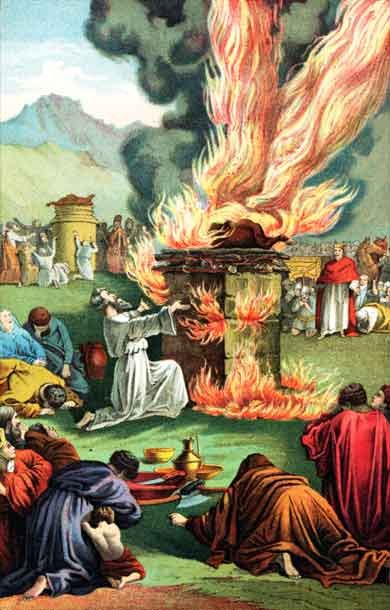
John Loftus has posted a video making a provocative comparison between Elijah's Apologetic methodology recounted in 1 Kings 17 and 18 with the Apologetic argument used often by William Lane Craig. The video misrepresents what the Bible says happened on Mt Carmel in some fundamental ways. The video also is also unfair to the arguments that Dr William Lane Craig uses. I think it is amazing how successful Dr Craig's arguments are in debates despite their flaws. I'm not going to spend much time on Dr Craig's approach but I think a good apologetic approach shares the characteristics that Elijah's approach had. I'd describe it as presuppositional and evidential. Here is the video and I think a discussion afterward of what Elijah's approach is in order.  The video's producer obviously missed understanding Elijah and missing William Lane Craig. 


From the videos description
Published on Jun 29, 2012 by DarkMatter2525

How the mighty have fallen. Perhaps it has something to do with no longer being allowed to kill the opposition. The story of Elijah on Mt. Carmel is such obvious bunk, probably ancient propaganda, and clearly opposed to Moses' and Jesus' sentiments of not testing God. I thought it would be funny to juxtapose it with a William Lane Craig-style debate. I guess somehow it wouldn't be as convincing for God to show up during one of Billy Craig's debates, with cameras rolling and a few billion potential viewers. Nope. A few hundred ancient desert people atop a drought-stricken Mt. Carmel are obviously much more important than the rest of the world. In fact, they're literally called God's "chosen people". Imagine if someone like the president had a "chosen" race of people he went out of his way to support above and against all other races. I'd dare say people would call him a racist. God is a racist according to the bible.
Obviously DarkMatter2525 has several presuppositions that  have many problems. Here is a start, I'm going to focus on these

1. Nothing happened on top of Mt Carmel.
2. The Bible tells us that we should not test God but that Elijah tested God.
3. Deuteronomy 6:16; Matthew 4:7; Luke 4:12 are in conflict with the story
4. That if God moved in a similar powerful way today (recorded with modern technology) it would carry more weight and more people will believe.
5. God choosing Israel as his chosen people means that God does not care about non Jews.

There is more that can be said but we'll stick to these five for now. The attempt here is to try to make an argument against the Bible and Christianity by using the Bible.  In this case, the attack falls apart if the Bible does not say what it is being accused of advocating. 

1. The argument concedes that we should look at what the Bible says happened. We should also consider that Israel just wasn't in a random  three year drought. It was in response to the sin and wickedness of King Ahab and Israel. 

 33 Ahab also made an Asherah pole and did more to arouse the anger of the Lord, the God of Israel, than did all the kings of Israel before him. - 1 Kings 16:33

Now Elijah the Tishbite, from Tishbe[a] in Gilead, said to Ahab, “As the Lord, the God of Israel, lives, whom I serve, there will be neither dew nor rain in the next few years except at my word.” - 1 Kings 17:1

Elijah was on the run all that time - the whole three years. We must also keep in mind that Elijah did not confront Ahab or issue this challenge on his own. God sent him. Just like God told Elijah about the drought, God told Elijah when he was going to send rain.
'
After a long time, in the third year, the word of the Lord came to Elijah: “Go and present yourself to Ahab, and I will send rain on the land.” So Elijah went to present himself to Ahab.
Now the famine was severe in Samaria, - 1 Kings 18:1

Elijah challenged the people's presuppositions. He challenged them to make a choice.

20 So Ahab sent word throughout all Israel and assembled the prophets on Mount Carmel. 21 Elijah went before the people and said, “How long will you waver between two opinions? If the Lord is God, follow him; but if Baal is God, follow him.” - 1 Kings 18:20-21

Then he challenged his opponents with evidence. 

22 Then Elijah said to them, “I am the only one of the Lord’s prophets left, but Baal has four hundred and fifty prophets. 23 Get two bulls for us. Let Baal’s prophets choose one for themselves, and let them cut it into pieces and put it on the wood but not set fire to it. I will prepare the other bull and put it on the wood but not set fire to it. 24 Then you call on the name of your god, and I will call on the name of the Lord. The god who answers by fire—he is God.” Then all the people said, “What you say is good.” - 1 Kings 18:22-24

Elijah gave them his opponents first choice on their bull and he poured water on his sacrifice to make it clear that it was not luck or a trick when his sacrifice was burned. This could not have been just ordinary lightning. Not only was the bull consumed, but the altar and the water was too. 

Points 2 and 3 really suck. Deuteronomy 6:16; Matthew 4:7; Luke 4:12 do not conflict with Elijah. 

16 Do not put the Lord your God to the test as you did at Massah - Deuteronomy 6:16

So what happened at Massah? Anything similar to what Elijah did on Mt Carmel. 

And he called the place Massah and Meribah because the Israelites quarreled and because they tested the LORD saying, “Is the LORD among us or not?” - Exodus 17:7

At Massah and Meribah, the Israelites tested God in the way of  an attitude of  thumbing their noses at God from an unbelieving  mindset. Their attitude was one of rebellion. They tried to call God down to the carpet. This was not Elijah's attitude at all. So did Elijah sin like his ancestors at Massah? "Massah" means "testing" and "Meribah" means "quarreling". They testing God in the was a petulant two year-old defies his parents.  No parallel there with Elijah, but a good one with John Loftus and DarkMatter2525.

When  Satan tried to trip up Jesus, Jesus quotes part of Deuteronomy 6:16. 

Then the devil took him to the holy city and had him stand on the highest point of the temple. “If you are the Son of God,” he said, “throw yourself down. For it is written:
“‘He will command his angels concerning you,
    and they will lift you up in their hands,
    so that you will not strike your foot against a stone.’[a]
Jesus answered him, “It is also written: ‘Do not put the Lord your God to the test.’[b] - Matthew 4:5-7

We know that Jesus was not just quoting the words but referring to the same context. Again Elijah was not in that context but Satan tried to get Jesus to fall into the same attitude as the people at Massah.

The devil led him to Jerusalem and had him stand on the highest point of the temple. “If you are the Son of God,” he said, “throw yourself down from here. 10 For it is written:
“‘He will command his angels concerning you
    to guard you carefully;
11 they will lift you up in their hands,
    so that you will not strike your foot against a stone.’[a]
12 Jesus answered, “It is said: ‘Do not put the Lord your God to the test.’[b]” - Luke 4:9-12

As anyone can plainly see that Matt 4:7, Luke 4:12, and Deuteronomy 6:16 are all referring to the same thing and it's not against what Elijah did at Mt Carmel!

Fourth point. I'm not convinced at all that something like what Elijah experienced on Mt Carmel would make a difference on a lot of people. I have witnessed God acting on a person's behalf and they recognized that it was not them but they still refused to turn to God. God knows what it takes and has put each of us in the exact place and with with the best circumstances, on an individual basis, to best find Him. 

26 From one man he made all the nations, that they should inhabit the whole earth; and he marked out their appointed times in history and the boundaries of their lands. 27 God did this so that they would seek him and perhaps reach out for him and find him, though he is not far from any one of us. - Acts 17:26-27

Point 5. There is no reason at all to think that God does not care about Gentiles. What did God choose the Jewish people for? It was not to be his special project and hate everyone else. It is through the Jewish people that God has blessed the entire Human race.

The Lord had said to Abram, “Go from your country, your people and your father’s household to the land I will show you.
“I will make you into a great nation,
    and I will bless you;
I will make your name great,
    and you will be a blessing.[a]
I will bless those who bless you,
    and whoever curses you I will curse;
and all peoples on earth
    will be blessed through you.”[b] - Genesis 12:1-3

There is no way God could be accused of being racist - that is if you are looking at the Bible. I don't think there is a problem for opponents of Christianity to try to use the Bible for their arguments. God welcomes it because it more than stands up to scrutiny. Just if you are going to engage is such folly bring your "A" game. Because if this was the best shot, we really have nothing to be worried about. Also if you are going to reject the Bible at least get what it says correct! One more suggestion: Don't forget that William Lane Craig is not the "end all" and "be all" of Christian Apologetics,  Jesus is.

Debunking Christianity: The Evolution of Apologetics and Concepts of God

Can You Name Them All: 52 Famous Weapons from Pop Culture [Pic]


Recognize these?

Can You Name Them All: 52 Famous Weapons from Pop Culture [Pic]
Enhanced by Zemanta

Thursday, November 22, 2012

FacePalm of the Day - Debunking Christianity: Two Scenarios From Dr. Matt McCormick and His Conclusions


John Loftus posted an article from Dr Matt McCormick's blog where Dr McCormick discusses the implications on atheism and agnosticism  from the Divine Arguments argument. Loftus quotes the following.

Scenario A: God isn’t real and we fail to find good evidence for supernatural beings.

Belief in situation A: irrational.
Agnosticism in situation A: irrational.
Disbelief in situation A: reasonable/rational.

Scenario B: God is Real, but Hiding.

Belief in situation B: irrational.
Agnosticism in situation B: not an epistemically responsible position.
Disbelief in situation B: reasonable/rational. Enjoy.

McCormick's whole argument is assuming that the Hiddeness of God is something that given weight falls and leads to atheism. There are many formulations for the idea but let's stick to McCormicks and examine if this philosophical idea holds any weight.

I’ve been thinking about the arguments for atheism from divine hiddenness.  Here’s a way to argue for atheism in that vein with some similarities to Drange and Schellenberg and with several improvements on the argument of my own. 
I've often thought about "divine hiddenness" and I don't think it squares with the Bible or observation. 

18 The wrath of God is being revealed from heaven against all the godlessness and wickedness of people, who suppress the truth by their wickedness, 19 since what may be known about God is plain to them, because God has made it plain to them. 20 For since the creation of the world God’s invisible qualities—his eternal power and divine nature—have been clearly seen, being understood from what has been made, so that people are without excuse. - Romans 1:18-20

The Bible does not tell us that God is hidden in the slightest. In fact it tells us the opposite. The idea of hiddenness comes from people who like to think they have an excuse for why they don't experience God the way they think they should if God exists. This thinking is backward. God reveals Himself to us on His terms not ours

24 “The God who made the world and everything in it is the Lord of heaven and earth and does not live in temples built by human hands. 25 And he is not served by human hands, as if he needed anything. Rather, he himself gives everyone life and breath and everything else. 26 From one man he made all the nations, that they should inhabit the whole earth; and he marked out their appointed times in history and the boundaries of their lands. 27 God did this so that they would seek him and perhaps reach out for him and find him, though he is not far from any one of us. - Acts 17:24-27

Add this one.

By faith Enoch was taken from this life, so that he did not experience death: “He could not be found, because God had taken him away.”[a] For before he was taken, he was commended as one who pleased God. And without faith it is impossible to please God, because anyone who comes to him must believe that he exists and that he rewards those who earnestly seek him. - Hebrews 11:5,6
 
We need to be like Enoch and remember that God is not hiding from us. We hide from Him.
Imagine two scenarios, both where it would appear that God is hiding. 
Scenario A:  God isn’t real and we fail to find good evidence for supernatural beings.
Suppose that beings humans find themselves in this situation: 
There is no supernatural being of any sort.
Furthermore,  
 a.  there are no empirical indications of a supernatural beings
No proof of that. We have creation,
b.    none of the conceptual arguments for supernatural beings are compelling
 Says him
c.    we have made substantial efforts to uncover supernatural beings. 
Like what? How about seeking God with a whole heart?
d.    none of our attempts to discover supernatural beings have succeeded
What are they?
e.    the available evidence concerning supernatural beings are inadequate.
So he admits that there is some available evidence but how does he know it is inadequate?
f.     there is a presumption that supernatural beings are the sort of entity that, if one were to exist, then it would manifest in some fashion that is detectable by beings with our cognitive faculties. 
This is a presupposition that God has not revealed Himself that is detectable to us. Not true.
g.    the presumption that supernatural beings would manifest in some way has not been defeated.
Yes it has because that is what God has done. 
h.    naturalized models of supernatural belief formation are well justified by the evidence and they provide a better alternative account of the origins of supernatural beliefs.   
I wouldn't agree to that all. Asserting it does not make it true. 
Question:  What is the reasonable conclusion to draw about supernatural beings in this situation? 
Would non-belief be epistemically inculpable in this situation?  That is, if humans  conclude that there are no supernatural beings, would that conclusion be unwarranted?  
What about believing in a supernatural being?  And would being an agnostic be epistemically culpable or inculpable in this situation? 
It seems to me for a number of reasons that disbelief in supernatural beings would be justified.  Disbelief would not be epistemically culpable.  Furthermore, believing in a supernatural being in this situation would be epistemically culpable and irrational.  I even think that being agnostic in this situation, particularly given the point in h., would be unreasonable/culpable.  
That is:
Belief in situation A:  irrational. 
Agnosticism in situation A:  irrational. 
Disbelief in situation A:  reasonable/rational.  
If McCormick's assumptions were true then I would agree with his conclusions. Unfortunately they are not and we have no reason to accept them. 
Scenario B:  God is Real, but Hiding
Suppose that humans find themselves in this situation: 
God exists and possesses the power and the knowledge to make himself known to humans. 
Yet for reasons unknown to humans, God insures that: 
a.    there are no empirical indications of God
False
b.    none of the conceptual arguments for God is compelling
That is true about all the concepts outside the Bible.
 
c.    we have made substantial efforts to uncover God,  
“And you, my son Solomon, acknowledge the God of your father, and serve him with wholehearted devotion and with a willing mind, for the LORD searches every heart and understands every desire and every thought. If you seek him, he will be found by you; but if you forsake him, he will reject you forever. - 1 Chronicles 28:9
Just follow the command Solomon got. 
d.    none of our attempts to discover God have succeeded
Maybe none of his, but there are a lot of people would beg to differ. 
e.    the available evidence concerning God is inadequate
The more we learn in science and technology the more we find  evidence concerning God.  
f.     there is a presumption that God is the sort of entity that, if God were to exist, then God would manifest in some fashion that is detectable by beings with our cognitive faculties.  
And God does exactly that. 
g.    the presumption that supernatural beings/God would manifest in some way has not been defeated.
The fact that there is a universe rather than nothing defeats the idea that there is no God. 
h.    naturalized models of supernatural belief formation are well justified by the evidence and they provide a better alternative account of the origins of supernatural beliefs.    
Naturalized models are not justified or explain all of our observations better than God's revelation of Himself. 
Question:  What is the reasonable conclusion to draw about supernatural beings in this situation? 
Would disbelief be epistemically inculpable in this situation?  That is, if humans  conclude that there are no supernatural beings, would that conclusion be unwarranted? [yes] Notice that the evidential situation for humans is exactly the same in both scenarios. [No it isn't, because God has revealed Himself]  So the answers to our questions about what is the reasonable conclusion to draw must be the same, with some interesting side notes. [Only if make the same mistaken analysis]  Ironically, despite the fact that God is real in this situation, it seems to me that disbelief, given the evidential situation would be justified.  That is, the atheist in the world where God is real but hiding, would have a well-justified but false belief. [God is not hiding.] We couldn’t find epistemic fault with the conclusion that this atheist has drawn.  The apocryphal story about Bertrand Russell is relevant.  After a lecture about atheism, a member of the audience asked him, “Prof. Russell, what are you going to do after you die and then in the afterlife you show up at the Pearly Gates and God and Saint Peter are all there and it’s obvious how wrong you are?”  Allegedly without missing a step, Russell said he’d say to God, “Not enough evidence, God!  Not enough evidence!” 
Only thing is Russell would never be able to say that because standing before God he would have to admit that claiming a lack of evidence would be a lie.  And don't forget that Russell has indeed gone on and I can't imagine that this excuse worked.  It won't work for anyone.
Furthermore, if someone were to believe in God in this situation, it would be irrational and unjustified.  Ironically, she would happen to get it right.  That is, she’d have  a true belief.  But her evidence did not justify her conclusion.  Her belief would have all the virtue of thievery over honest toil, to quote Russell again.  She’d be like a psychic who accidentally predicted the winning lottery numbers.  Her getting the numbers right by accident doesn’t vindicate her method or improve the reliability of her method of derivation.  
One one hand this is something one would want to be right about and wouldn't care if they were right for the wrong reason.  God has not really left this option open for us because God has plainly revealed himself to us. We are not left without evidence or witnesses. Therefore if you are wrong about God's existence you have no excuse.
Furthermore, if agnosticism was unreasonable and unjustified in scenario A, it would be here too.  That is, the agnostic who suspends judgment in scenario B, where a-h are also true, would be unjustified.  
Agreed. 
The interesting question here concerns the reasonable limits to agnosticism.  Under what circumstances should one be an agnostic.  It seems to me that a-h, if they are true, are enough to warrant moving from agnostic to atheism.  Some other examples are suggestive:  Suppose we insert Bigfoot or Leprechauns into scenario A. 
Suppose there are no Leprechauns.  And suppose further that we have searched diligently, no compelling evidence in their favor has been found, Leprechauns are the sorts of things that would be revealed in some way to our cognitive faculties if we were to search and encounter them, and furthermore, we have other natural explanations of why people have believed in Leprechauns.  In that situation, you should not be agnostic.  Being agnostic would be irrational.  
If you search for God with your whole heart you will find God and God will not cast you out or ignore you. So being an atheist or agnostic is irrational. 
Many agnostics have the view that God is not like Leprechauns, so there is a disanalogy here.  God is unlike Leprechauns in ways that require us to be agnostic about him, but atheist about the Leprechauns.  I think there could be a plausible argument here, but I’m not sure.  The central issue for these agnostics, I think, would be to deny that condition g. has been met in the case of God.  There are good reasons to think that the presumption about God’s manifesting to our cognitive faculties in h. is defeated in the case of God but not in the case of Leprechauns.  
 God does condescend to us to have a relationship with God so the presumption is flawed.
The really interesting question to me right now is, what are those reasons that defeat the presumption?  Why should we think that God is not the sort of thing that would be manifest to our cognitive faculties in any of the relevant ways? 
 Because God does come to us. We can't go to him on our own. In short that is what the incarnation is all about and why all of history hinges on Jesus.
 Pretty clearly, on lots of theistic hypotheses, God is the sort of thing whose existence or non-existence makes some manifest difference in the world.  The world or the arguments, would look different if there were no God in some way that we could discern.  The existence of gods of that sort is undermined by this argument.  But if there were a supernatural being whose presence or absence would not be manifest to our cognitive faculties, then our not finding any manifestations would not be adequate grounds to conclude that no such being exists. 
I'd like to see some proof that God has not interacted with us in a way our cognitive faculties can recognize Him,  
This agnostic might argue for this thesis:  There may yet be some sort of supernatural being that we can have no cognitive access to and that we can form no positive thesis about.  We should be agnostic about that being because the absence of evidence for it isn’t indicative either way about its existence.  
Does not fly. God has not left that open to us. 
My question here is this:  What exactly are we being agnostic about in this case?  Which hypothesis am I suspending judgment about?  Is it this:  there may yet be some truths about which I can form no idea, I can have no comprehension, and that elude my cognitive faculties altogether.  
Agreed. But that does not describe the God of the Bible. 
It doesn’t seem to me that suspending judgment is the right way to describe the attitude we should take about those proposals.  We should suspend judgment, it seems to me, about whether there are extra terrestrial forms of life in our universe.  That is a clear proposal about which our evidence is split or about which we do not have enough evidence yet to draw a conclusion.  The mercurial transcendental entity that the agnostic proposes is utterly unlike alien life.  We have no access, and we can have no access, perhaps in principle, to such an entity.  It would seem that we cannot hope to form any sort of propositional attitude at all about it, not even enough to suspend judgment about it. Furthermore, it is relevant to point out that this agnostic is taking a conservative attitude about the possibility of something that is utterly unlike any of the divine beings that are typically proposed or believed in.  This agnostic seems to have tacitly agreed that in situation A or B, the only reasonable conclusion is to be atheist, not agnostic, about the overwhelming majority of the gods that humans have believed in.  This agnostic is a very wide atheist, but not quite as wide as the widest atheist.  It just not clear to me that suspending judgment in this case even makes sense or is the epistemically responsible position. 

Options A and B are flawed. But McCormick is correct that suspending judgement is not open to us either - not if you want to be both truthful and rational. So if hiddenness is off the table, how do we understand why some people seem to have no access to God? They don't hear Him and they experience Him? Why? Simple. The Bible gives us the answer.

19 This is the verdict: Light has come into the world, but people loved darkness instead of light because their deeds were evil. 20 Everyone who does evil hates the light, and will not come into the light for fear that their deeds will be exposed. 21 But whoever lives by the truth comes into the light, so that it may be seen plainly that what they have done has been done in the sight of God. - John 3:19-21

Debunking Christianity: Two Scenarios From Dr. Matt McCormick and His Conclusions
Enhanced by Zemanta

Wednesday, November 21, 2012

Debunking Christianity: You Can’t Judge an Argument By Its Conclusion

John Loftus posted an article today that I think it is worth paying attention to. I'm not going to reproduce the whole article. I just want to consider the beginning of it here.  Feel free to read all of his ramblings at the link given at the end of my post. In this article Loftus calls attention to Dr Barbara A. Drescher research into cognitive psychology.

Barbara A. Drescher taught courses in quantitative/experimental research methods and topics in cognitive psychology at California State University, Northridge. She wrote a provocative post where she argues as follows:


The tendency to judge conclusions based on current beliefs is a product of how our brains evolved and developed – a side-effect of what makes us successful organisms. It is human nature, it is wrong and must be overcome if one is to be consistently rational. This problem pops up in a host of cognitive tasks and is a manifestation of the most influential of human frailties: the confirmation bias. This makes it extremely resistant to correction, especially in real-world contexts.


Reason is about the validity of arguments, so judging a conclusion as valid or invalid without examining the argument is itself an irrational act. Without the argument, your only yardstick is your own belief about the truth of that conclusion. Link.
I am convinced that confirmation bias runs amuck in the minds of most all believers. They judge the merits of any argument based on whether they agree with the conclusion. I am also convinced that apologists who defend Christianity start with their conclusions and then construct arguments to support them. So I am convinced that to embrace and defend the Christian faith is irrational. I cannot even hope to convince most Christians of this, since they aren't usually reasoned into their faith in the first place. But let me beat my head against the wall one more time:

I agree that all humans are subject to confirmation bias and irrationality. It's a bi-product of sin. What I disagree with is that only religious people are enslaved to such things and I disagree that godless people are free of it. Think about it. When you look at what Loftus is arguing against is it any different for those who reject Christianity. Let's rephrase Loftus' last paragraph:

I am convinced that confirmation bias runs amuck in the minds of most all [unbelievers]. They judge the merits of any argument based on whether they agree with the conclusion. I am also convinced that apologists who [attack] Christianity start with their conclusions and then construct arguments to support them. So I am convinced that to [reject] and [attack] the Christian faith is irrational. I cannot even hope to convince mos[unbelievers]  of this, since they aren't usually reasoned [out of] their faith in the first place. But let me beat my head against the wall one more time:

Switching the terms to their opposite does not destroy the logic of the paragraph. I think this show that atheists are subject to the same failures and inconsistencies they accuse Christians of having.  When I hear most atheists describe Christianity they describe a system that I don't recognize and also reject as well as all other Christians that I know. How do people like John Loftus know that they haven't just traded one delusion for another? If you read the rest of Loftus' article he attempts to answer that. He says he is in pursuit of the the truth but given that people defend what they want to believe how does he know he's found the truth? He cannot. An atheist may be thinking he/she is free, but he/she is not.

Debunking Christianity: You Can’t Judge an Argument By Its Conclusion

Monday, November 19, 2012

FacePlant of the Day - Debunking Christianity: Quote of the Day, by articulett


Today, John Loftus posted a quote from one of his readers known as articulett.  I found it interesting because not only does it seem to embody a real strong hatred for God but it is based on some faulty presuppositions.
No matter the horror, all religious folks seem fine with the fact that their supposedly omnipotent deity acts like he doesn't exist at all. On occasion though, he appears to step in and help them find car keys or help their sports teams to win games.
articulett's presuppositions rest on the thought that if God exists there would be know suffering and that Christians erroneously think that such a God would care about mundane things in our lives and allow the horrors of war, famine, pestilence, and death that we see all around us.  So what is wrong with the thought process? I want to know how does she or anyone knows that God does not intervene to stop horrors and disasters and mitigate the terrible things that God does allow to happen? It is not enough to assert that if God is good nothing bad would ever happen. Why not? Obviously, her beef is with the God of Christianity. There is nothing in the Bible where God promises that His people would never suffer. If you are not a believer then why would you think that God would exempt you from suffering if His people are not? The Bible tells us that God always intervenes and the God is always in control.  God protects people, even people who reject him, from seen and unseen dangers. Not one of us know just what is around the corner or how close to the edge of oblivion you are or have been. The fact that any of is around to wonder why there is so much suffering is amazing. When we do experience suffering what keeps it from being worse? God.

I don't think you can think of this subject without wondering why there is suffering.  The whole Bible speaks to this but let's look at a single passage for a  general answer:

18 I consider that our present sufferings are not worth comparing with the glory that will be revealed in us. 19 For the creation waits in eager expectation for the children of God to be revealed. 20 For the creation was subjected to frustration, not by its own choice, but by the will of the one who subjected it, in hope 21 that[h] the creation itself will be liberated from its bondage to decay and brought into the freedom and glory of the children of God.
22 We know that the whole creation has been groaning as in the pains of childbirth right up to the present time. 23 Not only so, but we ourselves, who have the firstfruits of the Spirit, groan inwardly as we wait eagerly for our adoption to sonship, the redemption of our bodies. 24 For in this hope we were saved. But hope that is seen is no hope at all. Who hopes for what they already have? 25 But if we hope for what we do not yet have, we wait for it patiently. - Romans 8:18-25

I think people tend who disbelieve God get angry that believers can see how terrible the world is and still have hope and trust in God. 


Do not be anxious about anything, but in every situation, by prayer and petition, with thanksgiving, present your requests to God. And the peace of God, which transcends all understanding, will guard your hearts and your minds in Christ Jesus.
Finally, brothers and sisters, whatever is true, whatever is noble, whatever is right, whatever is pure, whatever is lovely, whatever is admirable—if anything is excellent or praiseworthy—think about such things. - Philippians 4:6-8

I have done this and I have found this to be true. God did exactly what he inspired Paul to write.

Debunking Christianity: Quote of the Day, by articulett
Enhanced by Zemanta