Tuesday, September 20, 2011

Fistbump of the Day - THEOparadox - The Biblical Paradox Blog: Why "God Hated Esau" is of No Use to Randal Rauser - Addendum

THEOparadox has posted an addendum to his posts responding to Randal Rauser.


A question facing every Evangelical theologian is this: am I going to accept the whole of the Bible as God's unique and inerrant self-revelation - and the only light by which I see - or will I impose my own system of thought upon it?

I totally agree. The thing is I think that when most people, especially non-Christians, see something like that they think that means Christians think that if something in the Bible or our theology we should just turn our minds off. This not what Christians believe we should do at all. It's not Scripture is the only light by which we see because that we have chosen to blind ourselves to everything else. Scripture is the only light there is by which we can completely see reality even when we don't understand everything..

THEOparadox - The Biblical Paradox Blog: Why "God Hated Esau" is of No Use to Randal Rauser - Addendum
Enhanced by Zemanta

THEOparadox - The Biblical Paradox Blog: Why "God Hated Esau" is of No Use to Randal Rauser

On 

13 Just as it is written: “Jacob I loved, but Esau I hated.”


THEOparadox - The Biblical Paradox Blog: Why "God Hated Esau" is of No Use to Randal Rauser - Part 1

THEOparadox - The Biblical Paradox Blog: Why "God Hated Esau" is of No Use to Randal Rauser - Part 2
Enhanced by Zemanta

Changing Education Paradigms [Video]

Now, obviously neither you or me are going to agree with everything this guy is saying, but the conversation has got to happen!


This animate was adapted from a talk given at the RSA by Sir Ken Robinson, world-renowned education and creativity expert and recipient of the RSA's Benjamin Franklin award.
For more information on Sir Ken's work visit: http://www.sirkenrobinson.com


Changing Education Paradigms [Video]
Enhanced by Zemanta

Negotiation Station

Negotiation Station

The Anatomy of Nerds & Geeks

Turns out that there are some definable differences! But I think that there is more overlap than no mutual exclusion.

The Anatomy of Nerds & Geeks
Enhanced by Zemanta

FacePalm of the Day #125 - Debunking Christianity: How Christian Apologists Work

John Loftus had posted the following on his blog. My comments are in red.

If you read Christian works you'll see something very interesting that should tell us all they are wrong. Here's what I see. First off, there are more apologists authors than there are skeptics. So they can write five or even twenty essays and books for every one that skeptics write (and produce more YouTube videos too). There are no atheist universities but there are a plethora of Christian colleges and seminaries that support these authors while they do their research. So these apologists and philosophers refer to each others works. If a skeptic hasn't read a particular philosophical or Biblical work (which are being spit out at an unbelievable rate) the apologist can point to something and say if we read it our objection would fall to the ground.

Hear that?  Yup, that is the sound of whining. 


The assumption behind this seems to be obvious. The assumption is that if we were "better" informed we would believe. Get that? If we were "better" informed then we would believe because our objections would all be answered. If that's not it then what is it? That believing means being informed, that only the informed can be saved. That the uniformed, or the uneducated, the simpleton, and the mentally challenged need to be "better" informed. And to whom should we turn to in order to become "better" informed? The plethora of Christian works being produced? Why? Don't they believe Jesus came to reach the downtrodden, the lower classes of people who were not scholars? Why then would that same God require of us to become better informed in order to believe?

Don't people like Loftus and Richard Dawkins make the same assumption that the more facts that people know  the more atheists there will be?  This isn't true either way you slice it. Further, no where does the Bible tells us that Jesus came to just scholars! The Gospel is for everyone - the educated and uneducated. Rich and poor.

Do these apologists have a clue about cultural anthropology and/or psychology when it comes to how real people come to accept religious information and/or authorities? Do they? I think not, not by a long shot.

Does Loftus? Recall Loftus often argues that people are only Christians because of being indoctrinated at a young age and by learning about the "truth" people will stop being Christians. Hmmmm. Now he's arguing the opposite that there are too many educated Christians writing in defense of Christianity. Sure wish he would make up his mind.

They are clueless, utterly clueless, especially the evangelical types. Do they really want to say that the billions of people who disagree are simply not informed? Is it truly the case that being informed is the key to salvation? Isn't that bordering on Gnosticism, if it isn't already squarely in that camp? That only the enlightened can achieve salvation?

Sure wish he would clearly state who thinks that enlightenment is the only way to achieve salvation. Last I checked the only way Christians believe that salvation is obtained  was through faith in Jesus Christ. It's statements like these that make me wonder if John Loftus knows anything about what Christians believe. As a Christian, I would say that there are billions of people who don't know of Christ, that is why we are supposed to be telling them. Besides there are billions of more religious people than Atheists. Does Loftus really want to argue that we are all wrong? Here's a hint: If your argument can be turned against your position, don't use it.

Perhaps the assumption is instead that we merely need to be correct about what we think (or believe) and this is all there is to it. Is that what they really think, that believers merely need to be right about their faith? That so long as the uniformed, the uneducated, the simpleton, and the mentally challenged are taught correctly what to believe that's all that matters?

Again, how is this different than what John Loftus has argued ad nauseum against Christianity.

Again, do these apologists have a clue about cultural anthropology and/or psychology when it comes to how real people come to accept religious information and/or authorities? Do they? I think not, not by a long shot.

These are question that Loftus should ask himself. He most definitely does not understand what he's talking about. 

They are clueless, utterly clueless, especially the evangelical types. Most people who cannot think or become better informed will accept anything that a believable person tells them, and as such, these people are truly like sheep without a shepherd who will be led to believe anything. This means that if these people are taught the "correct" beliefs then they are saved by being lucky enough to be taught them. Those who are unlucky and taught the wrong beliefs literally have little or no chance to be correct about their religious beliefs and become saved, because they are uneducated and/or simpletons.

Rather a simplistic explanation for how the Gospel has spread all over the earth. Loftus does not seem to respect people. He doesn't really think that people think about their beliefs and have reasons why they embrace what they believe.  Sad. 

So choose ye this day: Either being "better" informed saves people, or being lucky does. In either case this is not what we would expect from a good intelligent God at all, knowing what we do about cultural anthropology and psychology.

Neither saves people. Jesus saves people. It doesn't matter if you believe the Bible or not. The Bible does not say what Loftus seems to think it says. Disagree all you want but at least get it right. 

24 “The God who made the world and everything in it is the Lord of heaven and earth and does not live in temples built by human hands. 25 And he is not served by human hands, as if he needed anything. Rather, he himself gives everyone life and breath and everything else. 26 From one man he made all the nations, that they should inhabit the whole earth; and he marked out their appointed times in history and the boundaries of their lands. 27 God did this so that they would seek him and perhaps reach out for him and find him, though he is not far from any one of us. 28 ‘For in him we live and move and have our being.' As some of your own poets have said, ‘We are his offspring.’ - Acts 17:24-27


5 Moses writes this about the righteousness that is by the law: “The person who does these things will live by them.” 6 But the righteousness that is by faith says: “Do not say in your heart, ‘Who will ascend into heaven?’”(that is, to bring Christ down) 7 “or ‘Who will descend into the deep?’” (that is, to bring Christ up from the dead). 8 But what does it say? “The word is near you; it is in your mouth and in your heart,”[d] that is, the message concerning faith that we proclaim: 9 If you declare with your mouth, “Jesus is Lord,” and believe in your heart that God raised him from the dead, you will be saved. 10 For it is with your heart that you believe and are justified, and it is with your mouth that you profess your faith and are saved. 11 As Scripture says, “Anyone who believes in him will never be put to shame.” 12 For there is no difference between Jew and Gentile—the same Lord is Lord of all and richly blesses all who call on him, 13 for, “Everyone who calls on the name of the Lord will be saved.”
 14 How, then, can they call on the one they have not believed in? And how can they believe in the one of whom they have not heard? And how can they hear without someone preaching to them? 15 And how can anyone preach unless they are sent? As it is written: “How beautiful are the feet of those who bring good news!” - Romans 10:5-15


Your God is dumb. Or, he's throwing the dice with our lives.

Lofus hasn't described my God. We agree his god does not exist.  The God of the Bible is not throwing dice or making mistakes. Thanks for illustrating a facepalm, Mr Loftus.


Debunking Christianity: How Christian Apologists Work
Enhanced by Zemanta

Monday, September 19, 2011

Answering Muslims: Sharia Down Under: An Interview with Pastor Daniel Scot

David Wood interviewed Pastor Daniel Scot who was a Christian from Pakistan but immigrated to Australia due to threats against his life. In Australia he again faces persecution


Answering Muslims: Sharia Down Under: An Interview with Pastor Daniel Scot

Harry McCall on: Did Moses write the Torah? | True Freethinker

Mariano has written a series of articles responding to the assertion Harry McCall made on the Debunking Christianity blog that Moses did not write the Torah and because Jesus said he did, Jesus was wrong and therefore could not be what Christians believe him to be. Look at Mariano's arguments against McCall assertions.

Harry McCall on: Did Moses write the Torah? | True Freethinker
Enhanced by Zemanta

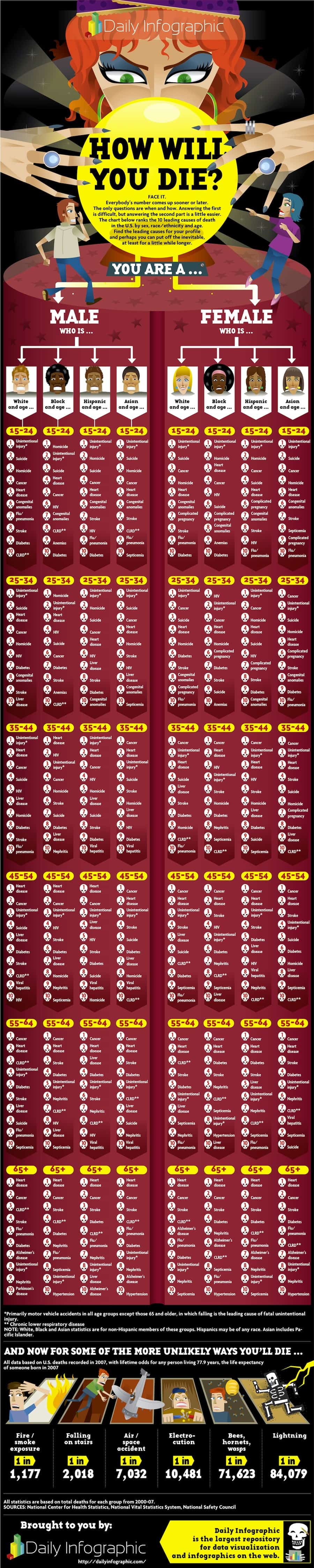
How will you die? [infographic]

How will you die?

\


How will you die? [infographic]

Grad School Webcomic 'PHD Comics' Screens Its Live-Action Film at Schools This Fall [Video] - ComicsAlliance | Comic book culture, news, humor, commentary, and reviews

Comics Alliance has posted an article about a film based on a comic strip about being a graduate student. The following video is the trailer.


PHD Movie Trailer from PHD Comics on Vimeo.


Grad School Webcomic 'PHD Comics' Screens Its Live-Action Film at Schools This Fall [Video] - ComicsAlliance | Comic book culture, news, humor, commentary, and reviews
Enhanced by Zemanta

What does it feel like to fly over planet Earth?


What does it feel like to fly over planet Earth?

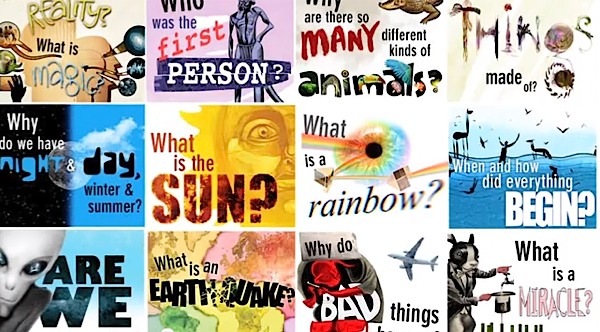
Richard Dawkins: The Magic of Reality

I've heard very little from Richard Dawkins that make me believe that he's qualified to teach children (or anyone for that matter) about the nature of reality. He has many a bias and presuppositions that makes very little sense in light of what can plainly be known of the real world. Not all scientists agree with his conclusions and it's strange to me how he claims to be rational yet denies even the possibility of reality being designed because of the theistic conclusions it draws.


I have no problem with children seeing Dawkins views but I also think they should see the following video


I am wondering if he is really qualified to answer questions like:
What is a miracle?
What is magic?

I mean in the video, he seems to think that "Supernatural miracles" like Jesus turning water into wine as being on the same level as unicorns and fairies. News flash: They are not the same thing.

Richard Dawkins: The Magic of Reality
Enhanced by Zemanta

FacePalm of the Day #124 - Debunking Christianity: Has Christianity Passed the Outsider Test for Faith?

John Loftus has posted the following post on his blog. My comments are in red.

It is said that Christianity has been passing the Outsider Test for Faith (OTF) from the very beginning, and is still doing so as the gospel penetrates non-Christian cultures. Let me respond briefly.


This ought to be good.

There is a big difference between what takes place in cross-cultural mission work and how reasonable people should evaluate the extraordinary claims of Christianity. I have documented how very superstitious people were in the days when Christianity sprung into existence from the Bible itself, in chapter 7 of Why I Became an Atheist. So I don't see that people reasonably assessed the probability of Christianity in order to accept the claim that they were rationally converted to it.

I think Loftus makes that claim because when he was a "believer" he had not reasonably addressed the validity of Christianity. Therefore assuming that everyone is as gullible as he is really shoddy reasoning.

When it comes to the growth of Christianity in the Southern Hemisphere and in Asia right now, Phillip Jenkins has documented in his book, The New Faces of Christianity, that the people being converted actually share much of the same superstitious outlook. Superstitious people who share the same outlook can hardly be considered to reasonably assess the extraordinary claims of another superstitious outlook. So these so-called cross-cultural conversions are irrelevant to whether Christianity passes or has passed the OTF.

So because Loftus traded one fantasy (that he was born-again)  for another (the there is no God), no one can be born again? I don't think so. He is arguing that people from the Southern Hemisphere or in Asia are not sophisticated enough to correctly evaluate Christianity and determine it to be correct. Better examples of Hubris are scant.

Additionally how one person evaluates a religious set of extraordinary claims means nothing to another person, otherwise Islam is passing the OTF since it is the fastest growing religion in the world right now. If Christianity is passing the OTF then so is Islam, which would lead us to conclude they are both probably true, even in their fundamentalist forms. But that cannot be the case given their essential differences. If the successful growth of a religion into other cultures means that a particular religion passes the OTF then many religions have done so, rendering growth as a factor null and void.

I agree that this isn't about growth but if its truly irrelevant how people evaluates a religion's truth claims then  the OTF is also irrelevant because then there is no good ways to determent if a religion is true or not.

The only thing that is relevant is how a person assess the religion he or she was enculturated to believe. How others assess the case should mean little or nothing. The OTF simply asks believers who were raised to believe in their particular religion, or sect within it, to adopt a non-double standard approach to assessing it. Approach your own inherited religious faith with the same level of skepticism you use when assessing other religious faiths.

If the OTF is only relevant to access the religion he or she was "encultured to believe", then the OTF looses relevance and credibility. Besides, you can't be be a born-again Christian and believe only because that's what you were raised in. Being born-again means knowing God on a relational level and not just going on what you have been taught. It verifies what you have been taught if you have been taught correctly. It does not seem like Loftus ever truly knew God only what other said of God and sometime he does even get that much right.

I have seen nothing that has disabused me of this approach to religion. It's the only consistent and fair way to do so.

Consistent? Maybe. Fair? Not even close. Load with presuppositions that don't line up with reality? Yup.  Surprise? No.

9 The true light that gives light to everyone was coming into the world. 10 He was in the world, and though the world was made through him, the world did not recognize him. 11 He came to that which was his own, but his own did not receive him. 12 Yet to all who did receive him, to those who believed in his name, he gave the right to become children of God13 children born not of natural descent, nor of human decision or a husband’s will, but born of God.- John 1: 9-13

Debunking Christianity: Has Christianity Passed the Outsider Test for Faith?
Enhanced by Zemanta

Sunday, September 18, 2011

Faithful Thinkers: Video: Free Will and Evil

Thanks to Luke Nix for posting the following video on his blog.


I realize that "Free Will" is often taken as a given and is usually defined as being able to act or act otherwise without influence or force from outside of oneself - motivated by one's own interests and desires. I think the fact that people have minds and wills of the their own is undeniable. My question: Is it "Free". The Bible says we are enslaved to sin and incapable of  living without transgressing God's standard. Some of us are so lost and blind we can't even see the need. for salvation. That doesn't seem "free" to me. Our inability to do right in every and all circumstances is not the root cause of evil - its a symptom. We are cursed to sin and death because of evil. I think the question that we must attempt to answer is: What is Evil?

Evil is what you get when anyone acts outside the will of God. We know that God has our best interests in mind so that when ever something happens not in our best interest, we experience evil. At the same time, God uses evil in the best interest of his people.

20 You intended to harm me, but God intended it for good to accomplish what is now being done, the saving of many lives. Genesis 50:20

 28 And we know that in all things God works for the good of those who love him, who have been called according to his purpose. 29 For those God foreknew he also predestined to be conformed to the image of his Son, that he might be the firstborn among many brothers and sisters.  - Romans 8:28-29

Faithful Thinkers: Video: Free Will and Evil
Enhanced by Zemanta

FacePalm of the Day #123 - Debunking Christianity: Feuerbach Was Right All Along, We Create Our Own Gods

John Loftus recently posted the following on his blog:

Some people might be interested in knowing that humans are creating their gods in their own images.
For many religious people, the popular question “ What would Jesus do?” is essentially the same as “What would I do?” That’s the message from an intriguing and controversial new study by Nicholas Epley from the University of Chicago. Through a combination of surveys, psychological manipulation and brain-scanning, he has found that when religious Americans try to infer the will of God, they mainly draw on their own personal beliefs. Link
I think most Christians would totally disagree because we recognize that what Jesus would do in most situations is markedly different than what we would do by default without Him. Skeptics and Atheists can't have it both ways. On one hand they say that God is a moral monster whom commands evil acts that we know are evil and would never do today. On the other, they say that Christians are merely projecting their own personal beliefs on what is right and moral behavior. I don't think these positions can be reconciled with one another.

I find it interesting that the questions asked during the study were "hot-button" political issues regarding same-sex marriages, homosexuality, abortion, and other social issues that most Christians are very vocal about and have firm Biblical basis. These are also "easy" issues for most Christians. Statistically, one is far less likely to be attracted to someone of the same sex than one from the opposite. Of course more Christians would be against homosexuality than for it - that's easy. The study doesn't mention studying how people's brains respond to things that they do or did that the Bible speaks against us. You know the things....one struggles with or gave up because they don't think it's a sin because they liked to do it?  For example: what about pre-maritial and extra-maritial sex? The Bible is very clear about it, but our society is so lax on it that even some committed Christians would rather condemn and call-out homosexuality but are silent on adultery, un-wed  mothers and pornography. As if homosexuality is the worst possible thing you can do. It isn't. 

Being a born-again Christian means publicly acknowledging that we have attitudes and behaviors that are not like God and that we need to change. It is not about God agreeing with us. We agree with God. To do this day there are things that God is against that I wish He weren't. I recognize the need to align my thoughts and deed with Him because He is not going to change. 

The truly facepalm worthy thing about this study is that it doesn't address the things that God cares about that would handle all the other issues that they did ask about. A better study would be to look at how brains react to Jesus' teachings as they appear in the Gospel. Like to the question "Who do men say I [Jesus] am?" What do people think about Peter's answer! I assure you that an Evangelical and Unitarian will react differently.


Debunking Christianity: Feuerbach Was Right All Along, We Create Our Own Gods
Enhanced by Zemanta

Saturday, September 17, 2011

Question: How Many Continents are There? [Video]

This is a really cool video. It shows that people from different places and walks of life answer this question differently.


Question: How Many Continents are There? [Video]
Enhanced by Zemanta

Friday, September 16, 2011

FacePalm of the Day #122: Debunking Christianity: Why the Idea of a Spirit is Full of Hot Air

TGBaker posted the following on the Debunking Christianity blog. I've put my comments in red.

Long ago in a cave a caveman looked at his friend who then died. He was upset. His friend would not move. He noticed that air no longer came out of his friends mouth. He knew the air had left him.

I wonder how long ago would something like this have taken place? Were these homo sapiens or one of the hominids who some people think we evolved from? Also weren't we descended from African hominids who lived on the African savanna and not cave-dwelling Europeans who came later if you believe evolutionists? Wouldn't our ancestor's been asking about this stuff well before they began living in caves?  What's the chronology?

So he gathered up his friend and some food and a few of his friend’s possessions and buried them all. Perhaps it would all go where ever his air went.

Not all human cultures bury their loved ones with their possessions. Where would this have come from?


Sounds silly doesn't it. But when we look at the words for spirit we are confronted with things like "ruach" the Hebrew word that means "spirit," "wind," "air" and "breath." So in the Old Testament God "breaths" into man his "breath" and man becomes a living "soul."

Yes, the scenario is indeed silly and can't be substantiated.  What if they those who lived before us actually understood more about reality than we do today? Why assume that we are so much better?  Remember a lot of information has been lost and needs to be rediscovered.

From the Greeks we get what still functions as our philosophy. But we find the word "pneuma" in Greek which means guess what, "spirit", 'wind," "air" and "breath." The Greeks thought that there were four elements: "air," "earth," "fire" and "water."

And how does that men that there is no such thing as a human spirit? Here's a hint: It doesn't.

Air was often seen as supreme and the ultimate nature which was like god. It was invisible but could move things and be felt. It went in and out of man. When it left you were dead!

Given that we are all more that material, they were smart enough to understand that while many people today try to run from that.  We should know that we are more than material because there is more than just brain, body, and DNA that makes you who and what you are.

"Spirit" comes from the Latin "spiritus" "to breath." Are you starting to see a pattern? It is interesting that we still have millions of primitives all around us that believe in such things as spirits but have no idea where their beliefs really originate

Here is the truly facepalm worthy comment. Just because the word "spirit" has roots in Latin and Greek and Hebrew regarding air, breath, and wind does not mean that this is where the concept of "Spirit" came from. Just because they decided to use the imagery does not mean that there is no "Spirit"..

Debunking Christianity: Why the Idea of a Spirit is Full of Hot Air
Enhanced by Zemanta

Infographic: How Outsourcing Government Work Fattens the Federal Budget - Business - GOOD

This is a really great infographic. It's interactive. Go to the following link to experience it. I think the article makes some good points and I see it happening. Today, the federal government seems like it tries to outsource everything but it's not ways a good idea!

Infographic: How Outsourcing Government Work Fattens the Federal Budget - Business - GOOD
Enhanced by Zemanta

Breakdown of Internet Arguments [Diagram]

Breakdown of Internet Arguments [Diagram]